There is a moment, early in “Toledo,” when a younger Lestat tells his mother that she belongs to him. She has just finished telling him about her dreams of being free, of sleeping with whoever she wants, of being unowned by her husband or her sons or anyone. She gives him a look, and Jennifer Ehle is able to communicate with absolute and devastating clarity: no, I do not belong to you either, Lestat.
Then she starts to cough, visibly and gravely ill, and the episode pivots, and we are off into the rest of the hour. But that look is the entire show. That look is every relationship Lestat has ever had, every relationship he is going to have, every relationship the show has spent two (now three) seasons delving into. You do not have me. Maybe you will have me for a time, but you will never truly have me forever. You will spend forever asking.
This week, the season delves further into his past, into the cold, unloving, incestuous childhood that turned a stuttering boy into a man who can only love at maximum volume. If “Detroit” was about Lestat losing the narrative, “Toledo” is about why he was never going to win it. And he has been playing variations on this theme ever since.
Cabbage people
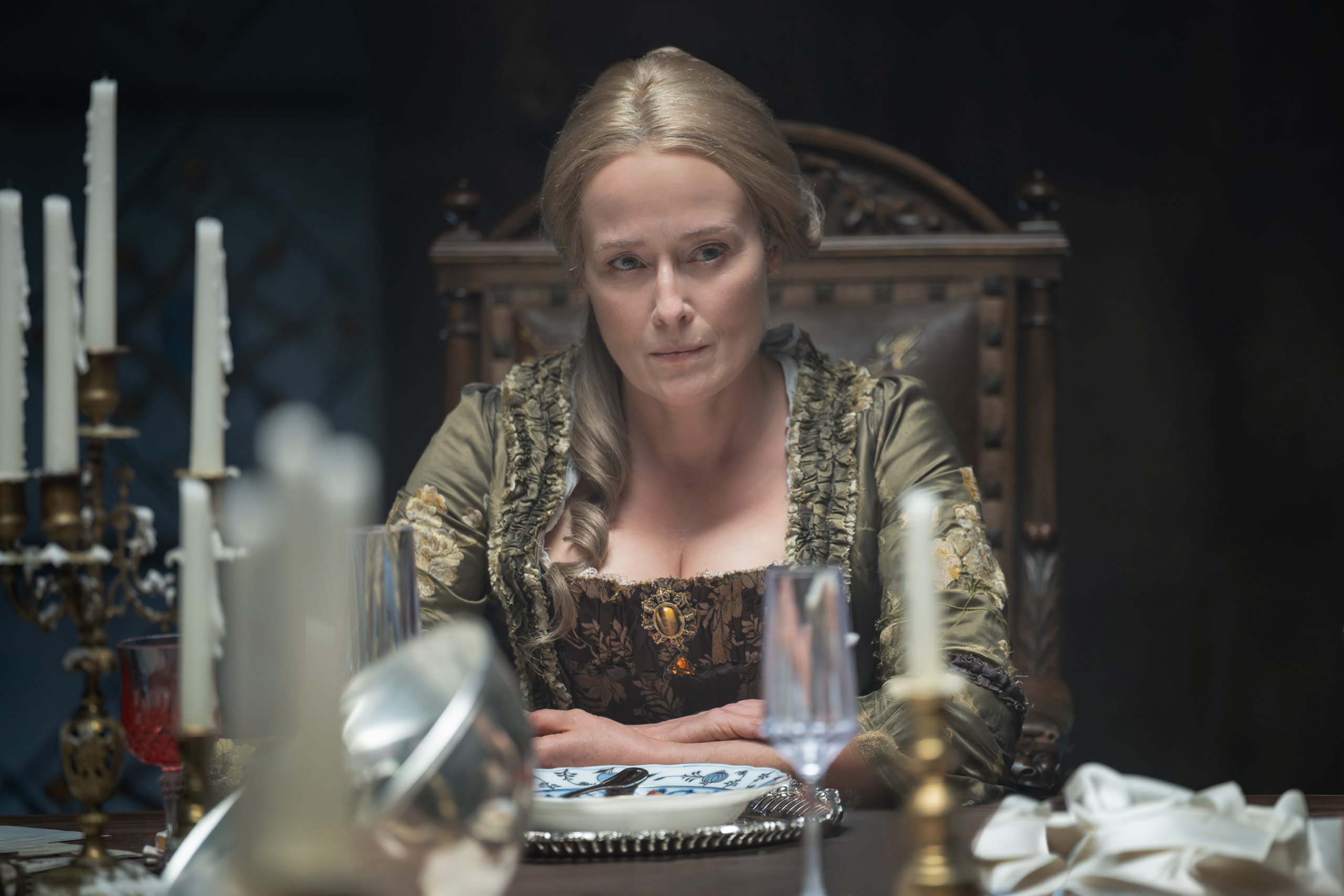
We open in France, at Lestat’s childhood home, where the show immediately frames him as an outsider within his own family. From the very first scene, he’s separated from his father and brothers, sharing private jokes with his mother as they mock the others as “cabbage people” speaking “cabbage” nonsense. But even then, Gabriella is never truly on his side. She’s simply less cruel to him than everyone else. That difference between being loved and merely being tolerated is something that will shape the rest of Lestat’s life.
Jennifer Ehle plays Gabriella with what Lestat himself describes as “a cold beauty”, and even in these early scenes, it’s obvious that she sucks up all the oxygen in the room. Lestat is a powerhouse all on his own in this series, so we needed an actress with serious gravitas and presence to make it believable that this is the woman who shaped him and still has so much of his attention 500 years later. And Ehle delivers.
She doesn’t step in when violence is done to him by the family, and she’s happy to use little putdowns to goad him into action, but she isn’t protective, warm, or emotionally present in any meaningful way. At the same time, the show is careful to make clear that Gabriella is trapped too. She is a woman stuck with an idiotic husband and sons, longing for a life she’ll never get to live. In the world of Interview with the Vampire and The Vampire Lestat, there’s no such thing as a “villain” — everyone just has their own shades of gray, but I would argue she is one of the darkest. And luckily, the series also refuses to excuse the ways she fails her brilliant, frightened, stuttering youngest child.
You can already see the adult Lestat taking shape here: the superiority complex, the need to perform, the way he fills every room with noise and charm because somewhere deep down he already believes he’s the least wanted person in it. The theatricality, the arrogance, the desperate need to be seen… all of it starts in this house.
Wolfkiller
Wolves are killing the village sheep, and Lestat decides to go after them himself when his aging father refuses to. But he only really does it because Gabriella pushes him into it, mocking the men around her and saying there’s nothing left to do “but be men about it.” It works because Lestat has never been able to resist trying to earn her approval.
I know a lot of fans have been disappointed that Gabriella isn’t trans-masc, or as male-presenting as she was in the books (where she begins wearing more masculine clothes after her turning, and prefers her hair be cut short), but I think you can easily see her gender-envy of Lestat all over this episode. Here, you can feel her anger at these men around her for doing nothing, for not using the power they have to take action, and how she feels she could do it all better.
I’m paraphrasing, but at ATX, showrunner Rolin Jones told a fan that while those details didn’t make the final drafts (and that those details were also just a small detail of Gabrielle/Gabriella in the book series as a whole), he did feel that those sentiments were in the show if you were looking — and for me, they are.
The scene is also Gabriella’s way of doing a kindness to Lestat, in her own way, as she believes him going out after the wolves will get him killed. But better to meet an untimely end than to keep rotting away in this house, as she has, in Gabriella’s worldview.
But he doesn’t die. He kills eight wolves. Or maybe five. Even Lestat seems fuzzy on the number, which makes it feel like he’s either exaggerating the story or trying to play it down. We don’t see much of the actual wolfkilling, because that isn’t going to tell us anything about the character (and also probably for budget reasons, but like, have you ever seen a good CGI wolf on screen? Ever? Is that really what you wanted?), but the aftermath of the fight has left permanent scars that will define Lestat for years to come.
Either way, the actual number of wolves and those scars don’t really matter to Gabriella, who still isn’t impressed. Nothing Lestat does is ever really enough for her.
And instead of giving him comfort or pride or even simple affection, Gabriella responds with something much more damaging and confusing. She turns the moment sexual, with a servant still standing there, while talking about how badly she wants freedom, how she wants to belong to no one, sleep with whoever she wants, and live outside the limits of her life.
This is the point where the show really lays bare how unhealthy this relationship is. Even while touching him, Gabriella is telling Lestat that she does not want to belong to anyone, including him. It’s hard not to look at the rest of Lestat’s life through that lens, constantly chasing permanence and devotion from people who keep warning him they aren’t able to give it to him.
This scene is obviously uncomfortable (and even Lestat knows it, as we can see a tear rolling down his cheek), but it’s the series telling us with no equivocation where Lestat’s psychosexual map got drawn. The line between maternal love and erotic love was never clear in this household, and Gabriella was the one blurring it. The show is also establishing (for any viewer who hasn’t read the books, where the incest is heavily implied but never explicit, or who missed that not-subtle kissing scene last week) that The Vampire Lestat is going to take what was subtext on the page and make it explicit. Very explicit.
Toledo rom-com
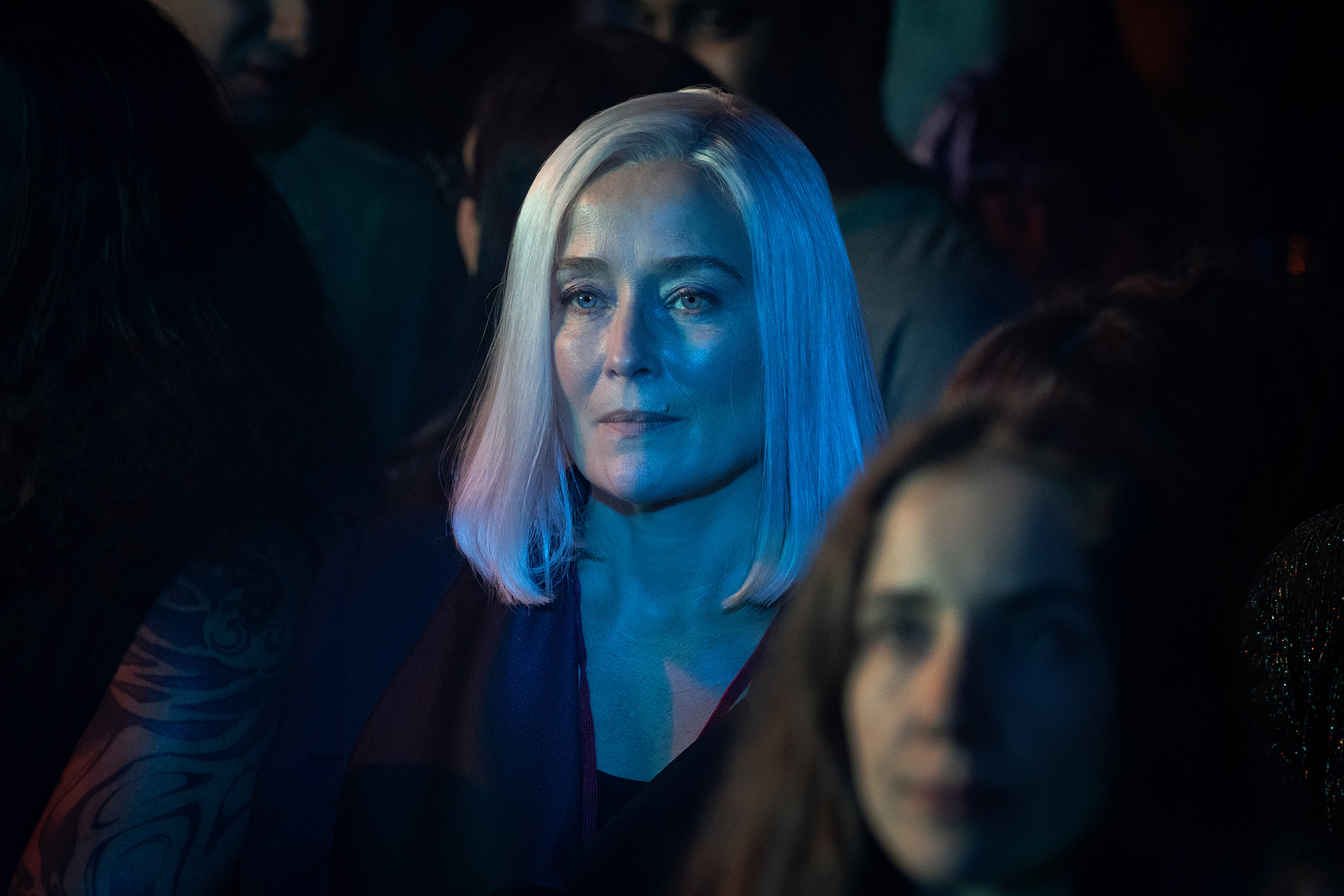
Back on the tour bus, Lestat wakes to find Daniel taking a shower (Eric Bogosian told Vulture back in 2024 he’d “get naked” for this show, and here we are. The prophecy foretold). The band, now in possession of the small detail that their frontman is a real vampire, has uh, some questions. More questions, in fact, than they do about the strange new blonde woman who has appeared on the bus. That would be Gabriella, traveling under the assumed name “Sofia”.
Daniel meets her, and immediately starts flirting with her.
Daniel is currently in his let-me-live-a-little vampiric youth phase, getting high and feeding nightly and generally enjoying this new lease on afterlife, and when Gabriella floats the idea of a rare blood type, he is, shall we say, interested. Bogosian is playing this season so far with the buoyancy of a man who has spent his whole life being too smart for his own good and is now too smart and immortal and a little bit horny. It’s a fun look.
It’s all too much for Alex, who leaves to go to rehab.
The real meat of the present-day storyline, though, is Lestat and Gabriella hitting the town of Toledo together. The show plays it like a romantic comedy — two former lovers (sort of, kind of, technically) reconnecting, catching up, momentarily setting aside everything that has ever gone wrong between them in favor of the prospect of the modern wonders of today, like food courts and corn hole and whatever else Gabriella has missed in her absence.
It is fun. It is also, of course, deeply wrong, and the show is deliberately allowing us to enjoy it before it pulls the rug.
The moment Lestat asks for “companionship without the cum” is the closest he has come so far to articulating what he actually needs from her. Sam Reid plays it with real discomfort, clearly afraid she’s going to turn down this offer, while still projecting the deeper plea underneath: please just stay, please just be my mother, please. But Gabriella is not a woman to be pinned down, and she refuses to even tell him how long she’ll be in town.
But for tonight? Sure, she’ll play house. So they make a loose pact, and spend the evening chasing down a group of glass-building salesmen to a strip club for some “dinner” plans.

Thomas Pitt would like a meeting
Lestat receives a notice that a “Thomas Pitt” wants a meeting, regarding the damage from the hotel afterparty in episode one. Thomas Pitt is, of course, Louis (Jacob Anderson), and yes, it is a nod to Brad Pitt and Tom Cruise from the 1994 film.
Louis casually mentions he has a new boyfriend, which the show drops into the scene like a lit match tossed into gasoline. Whatever uneasy warmth existed between Louis and Lestat in episode one, the iPad conversations and the wary friendliness have turned sour and radioactive again the moment the book came up. Jacob Anderson plays it cool as Louis, unbothered, almost amused and like he’s fucking with Lestat; you can feel Louis refusing to give Lestat anything to work with (and knowing that’s just going to drive Lestat even more crazy).
In the end, Lestat invites Louis to his show, stops time, and sings directly to him. The performance is packed with every emotion that has always defined them: desire, resentment, heartbreak, fury, longing. But the actual point of the whole thing is even pettier. Lestat hands Louis his own heavily annotated copy of Interview with the Vampire, filled with notes correcting every detail he thinks Louis got wrong.
Nice to see you too, sweetie.
And through it all, Gabriella watches from below, clearly not loving that anyone else could captivate her son’s attention for even a moment.
Of dinners and bowling
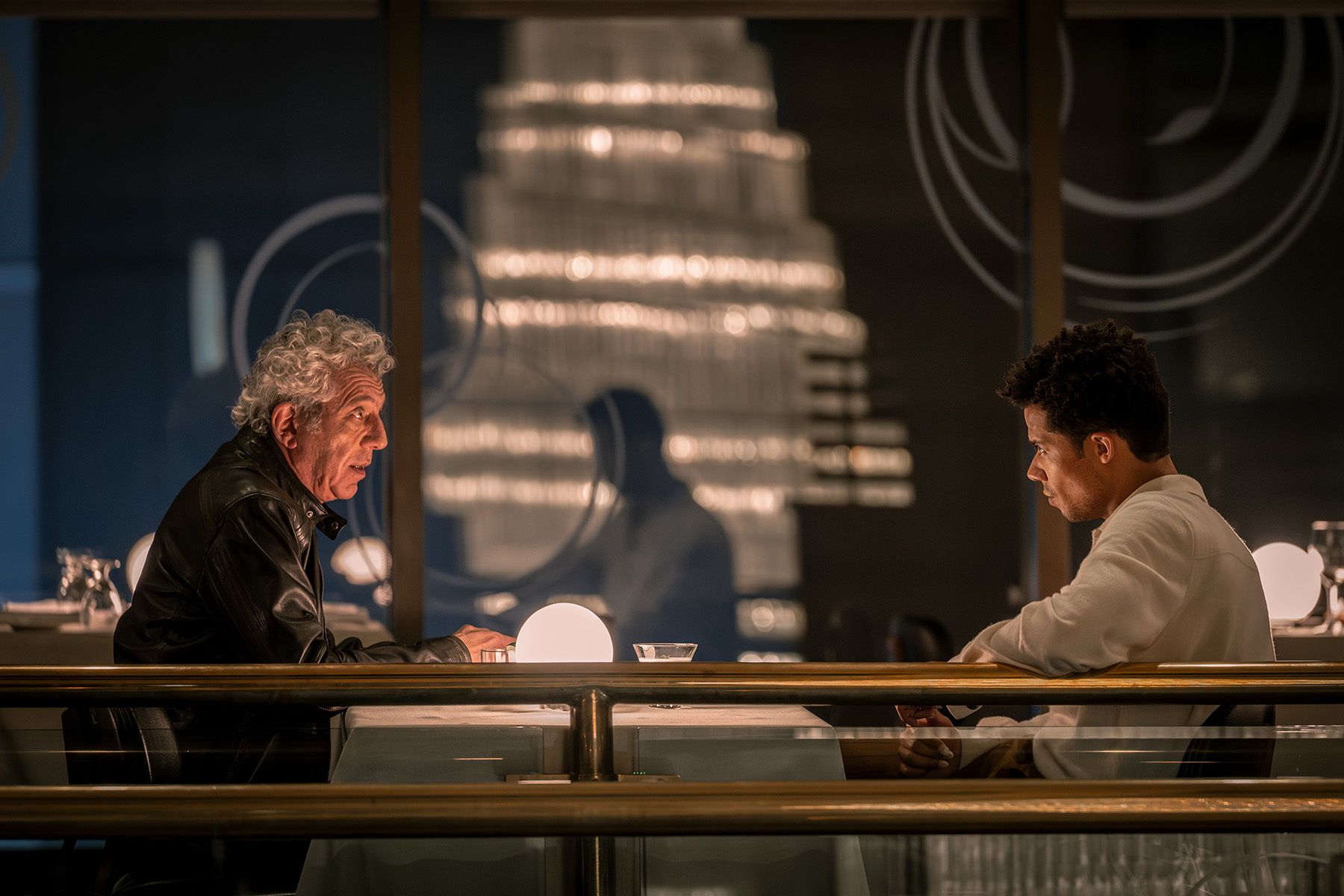
We jump to Daniel and Louis having dinner later, and the whole thing carries an awkward tension that clearly wasn’t there at the end of last season. The publication of Interview with the Vampire hangs over the conversation almost immediately, with Louis admitting that he doesn’t like the version of himself captured in its pages and that, had Daniel actually asked first, he would have told him not to publish it. Daniel, of course, never asked.
But from my perspective, that is wildly unfair on Daniel. There was no world in which he wasn’t going to publish that book or tell that story. He is, after all, still that bright young reporter with a point of view. That is literally the guiding star that Armand and Louis planted inside him. They made Daniel who he is, and now Louis is angry when Daniel behaved exactly like the person they made him to be?
The book isn’t a betrayal of Louis, it’s a fulfillment of his destiny.
But I digress. So now whatever friendship they had managed to rebuild has gone a little cold around the edges.
Which has left Daniel lonelier than ever. To fill the endless hours of immortality, he has apparently taken up bowling (hey, a man needs hobbies!). But he is also experiencing much stranger: moments where the world around him suddenly fades away, the noise drops out completely, and he can feel Armand. Be still my Devil’s Minion heart (and you can read my book-canon thoughts on how this ties into Devil’s Minion over here).
Book readers (myself included) have basically been vibrating in anticipation waiting for the show to get here. And while Louis and Lestat were also maker and fledgling, this phenomenon, what Daniel and Armand have, appears to be different. They are tethered to each other, and if essentially “time stops when I feel you” isn’t romantic, I don’t know what is.
You can tell how embarrassed Daniel is when Louis says he’s never experienced what Daniel is describing, and that it “sounds weird”. But Louis offering no guidance on this subject, it’s nothing new for Daniel. He’s been navigating these newfound vampire waters alone for awhile now. Daniel has been given the dark gift and abandoned with it, like a kid handed the world’s most dangerous violin and told to figure it out. (Can’t fly, can’t start fires… so he takes up bowling!).
Louis, meanwhile, is lonely in an entirely different way. Over dinner, he tells Daniel about spotting a young woman on the subway who looked so much like Claudia that he followed her off the train and into a diner, even knowing it could not possibly be her.
Somehow, two seasons in, this show keeps finding new ways to portray Louis’s grief over Claudia, and each one hurts worse than the last.

The piano and the queen
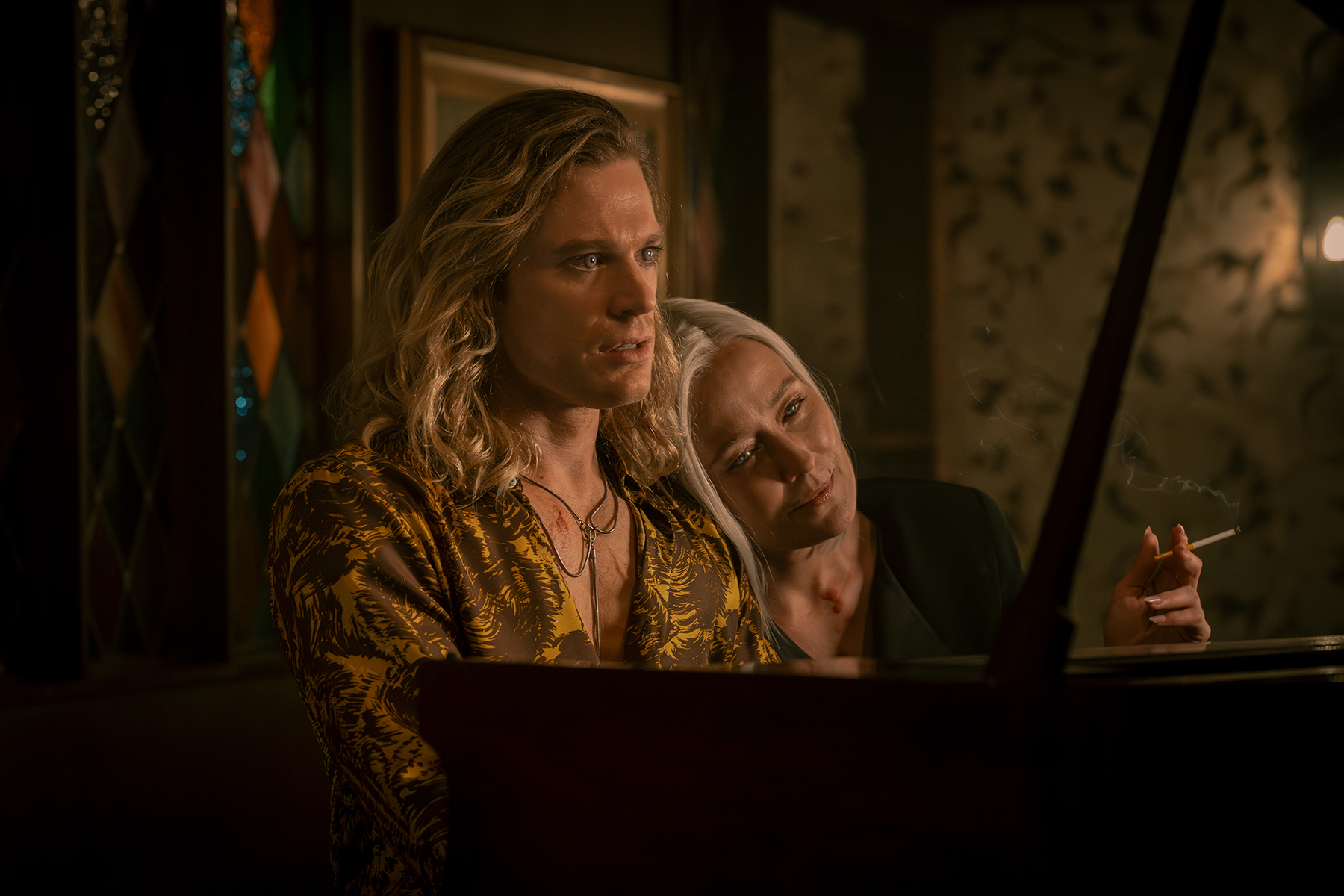
Meanwhile at the hotel, Lestat is at the piano playing for Gabriella, while the show cuts in glimpses of flashbacks of him turning his dying mother, of the two of them slaughtering the rest of the family together, leaving together in a carriage.
While Louis’s flashbacks were always long, sustained, and narratively coherent, Lestat’s are often more like shards and glimpses, feeling like intrusive thoughts or flashes that Lestat maybe doesn’t want to fully recall. They’re greatest hits played at 2x speed, and you can fill in the details.
Yes, the flashback pacing in this episode is fast, like bursts of memories. If you’re expecting the long, drawn-out flashbacks of the first two seasons, you simply aren’t going to find that here, that isn’t who Lestat is or how he thinks about things. And yes, I absolutely think if you haven’t read the books, you’re going to be missing some of the nuances of Lestat’s character and history. Show-only viewers are probably going to get less out of this season as a result… but that’s been true for every season of this show.
But let this episode simmer (and re-watch), and I think you’ll start to understand that there’s something truly beautiful and devastating here, and that the quick flashes are an easy, visual way to represent Lestat’s trauma and psyche.
The one defining light of Lestat’s past that the show has decided truly matters is his relationship with Gabriella. Everything else regarding both the past and the present is reflected through that lens. And as masterful as Jennifer Ehle is in the role, anytime a new character enters a season, it’s hard for fans to fully connect with them right away. Mommy dearest sucks up all the oxygen in the room because she’s a force to be reckoned with and requires all of Lestat’s attention — it’s an astonishing performance. But it can leave the rest of the episode or moments feeling slightly shortchanged in the moment. But without understanding her, there’s no real way to understand Lestat.
I have faith the time spent here is earned, even if it costs us elsewhere in the meantime. Just give it time.
Bruce
Talamasca crash the dinner with Louis, which they had Daniel set up in the first place. Raglan James and Real Rashid have come to Louis with a favor: they would like him to dispatch a group of vampires in Detroit who have been causing trouble for the order. The carrot dangled to get Louis to agree: one of those vampires is Bruce, the vampire who kidnapped and raped Claudia.
This is something tangible Louis can do with that grief, and we all know he’s going to take it.
Other thoughts:
- The Thomas Pitt meeting feels like a song we all know the words to by now, thanks to the original trailer being out for months now. “I bet! I BET!”
- Justin Kirk’s accent as Raglan James continues to be an absolute gift. The aside about how to pronounce “Rashid” was perfection. Just Benoit Blanc levels of goofiness.
- Salamander is clearly obsessed with Armand from the book, and I get you, Salamander. He would also settle for Lestat, but Lestat doesn’t sleep with band members. Poor Salamander. I still love you, buddy.
- Given how much Eric Bogosian spoke of bowling at SDCC last summer, I screeched when he mentioned it here.
- Daniel Death Watch: Nothing explicit this week to make me think my favorite vampire journalist is going to meet an untimely end, but I am definitely still on alert after last week’s comment.
- For book readers, David Talbot being killed off in a throwaway comment (and Louis being the one that killed him!)… that should certainly settle the argument of whether or not we’ll see him in the show!