Everyone is reaching for someone in “The Devil’s Road,” but almost no one is reaching back.
Lestat is literally desperate for Gabriella, who has run away… yet again. Louis is trying to find a surrogate for Claudia, by way of a young waitress named Regina, who has no interest in being a replacement daughter figure for him. Armand is reaching for Daniel, two years (or 52 years?) too late. Gabriella is reaching for freedom and a life free of responsibilities and burdens, who keep blowing up her phone. And somewhere in the middle of all of this, the vampires of the world are reaching for Lestat. Not because they love him, but because they have heard him on the radio and decided they would like to be louder too.
This is, really, an episode about the lengths we’ll go to in order to find connection. And it ends with Louis paying a woman to pretend to be his dead daughter, so… yeah.
The brat phase
Gabriella has run away, again, and Lestat has responded with what he is referring to as his “brat phase.” The band, riding high on the post-reveal publicity, seems much more comfortable with Lestat’s vampirism now that being adjacent to it is giving them a bit more fame. They have collectively decided to be cool with it, particularly after Lestat’s powers prove useful for, say, keeping a cop from looking too closely at the drugs all over their van.
Lestat, meanwhile, is unraveling on a slow simmer. His mother left him in the present day, and the flashbacks make it very clear she has been leaving him for as long as he has been her son, and she had the means to do so.
But more on that in a minute.
A bowling alley apology
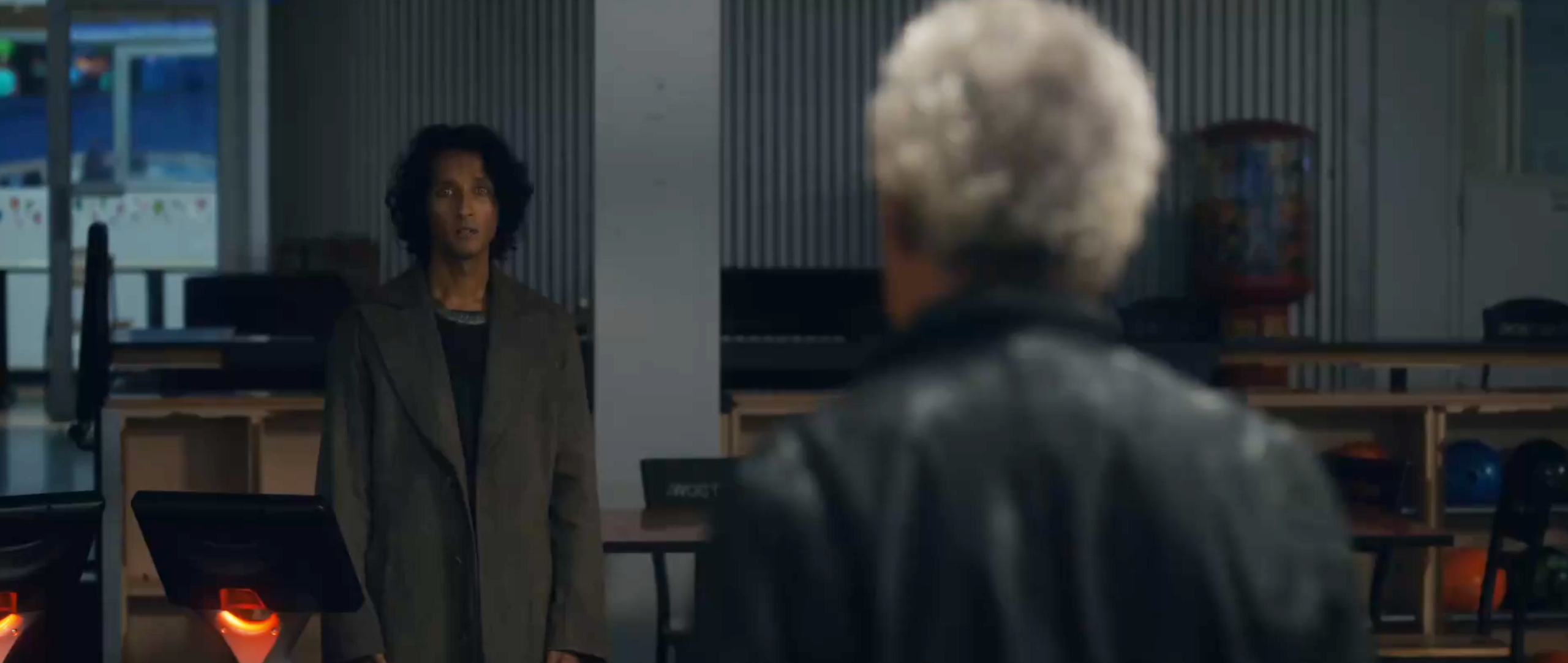
Daniel is out here just trying to enjoy a night of bowling by himself, and then… time stops and Armand makes his entrance.
A few thousand theories have been written about this ultimate reunion, and I’m not sure any of them included Armand appearing fresh out of an AA meeting to read an apology letter. But this is the most downtrodden we have ever seen Armand, which is saying something for a vampire who once spent decades living underground in Paris, refusing baths and venerating Satan with a coven of equally unwashed Children of Darkness.
It’s him at his most stripped down (unless, of course, you think this too is a trick, which… I think the show absolutely wants you to). But for now, he’s come to read Daniel a letter, which starts, “Dear Daniel, of all things that walk the garden, it is you I have done the most harm to.”
“Of all things I have done the most harm to” is a heavy claim from a man who ran the Théâtre des Vampires for centuries, burned his lover’s daughter on stage, and lied to his partner about it for decades… But no one hates Armand more than himself, and I think he truly does view turning Daniel into a vampire, something he swore he would never do, as the most harm he has ever done.
Of course, there could also be other reasons Armand might be feeling guilty when it comes to Daniel. Past Devil’s Minion truthers, stay strong.
Daniel is too furious to give Armand the satisfaction of this conversation. He has been alone for two years, stumbling through figuring out how to be a vampire by himself. And he is pissed. He lobs everything he can think of at Armand — his death (above Newark, which I have so many logistical questions about, though I love that they kept the plane location from the book’s turning scene), his year-long obsession with the band Phish, all of it and the kitchen sink. This is arguably the most “classic Eric Bogosian”-style monologue we’ve ever gotten in the series, and Eric absolutely tears into it, all raw nerves, bitterness, and fury, while Assad is doing beautiful work with just his facial expressions, as Armand can do little more than stand there and absorb his anger.
When he walks away, Daniel looks as emotionally bruised by the encounter as Armand.
[As an aside, while bowling, Daniel is calling out the names of journalists who have won — you guessed it! — Pulitzer prizes, like the journalism nerd that he is. The names he calls out are:
- Rosenthal — Brian M. Rosenthal (2015/2020 Pulitzer winner)
- Apuzzo — Matt Apuzzo (2012/2018/2021 Pulitzer winner)
- Farrow — Ronan Farrow (2018 Pulitzer winner)
- Greenwald — Glenn Greenwald (2014 Pulitzer winner)
Never change, Daniel.]
A second apology
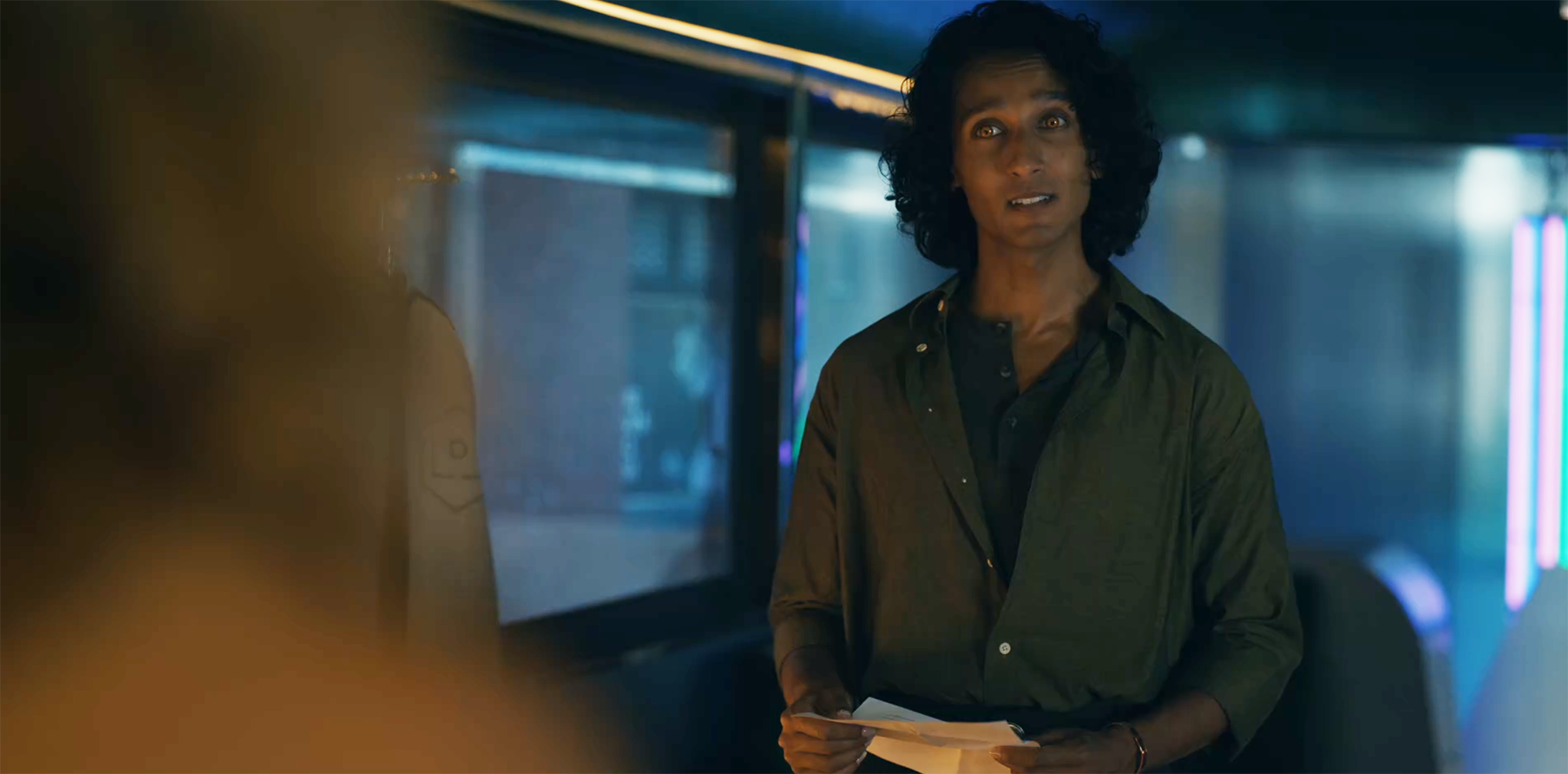
Later, Armand also goes to visit Lestat. Different letter, and different energy entirely. Where the Daniel reading was raw, nervous, and seemed genuinely apologetic, the Lestat letter reading is filled with a sort of crackling energy underneath. You can’t tell if these two are about to murder each other or start making out, which is basically their book relationship in a nutshell.
Lestat, for his part, doesn’t scream Armand out of the room, unlike Daniel. He does, however, immediately start undressing in front of him, provoking, testing, baiting, and refuses to let Armand get off with a simple, pre-rehearsed apology.
It’s all just a prelude to what Armand actually came to say, which is: stop playing your music. The vampires of the world are listening, and they want to be like Lestat, out and proud. They’re turning too many people, and the Great Conversion (the desire for as many vampires in the world as possible) is happening because of him.
Lestat, though, has no intention of stopping with just five shows left on the tour, but he does invite Armand to that night’s concert.
Let’s talk about these letters for a moment. They are Armand literally reading from a script he’s written, which, given his history with the Théâtre des Vampires, feels both on brand and undeniably performative. Especially given both letters even have the same script at the start.
There is manipulation here, yes. But the two apologies are performing very different jobs. The letter to Lestat feels almost theatrical in itself, filled with flowery praise (“your visionary conceit of a vampire theatre”, Lestat’s “beyond generous endowment”) and carefully chosen words that sound less like an apology than someone trying to stage-manage the conversation. It’s a vehicle to get in the room, warn Lestat against continuing to sing to the masses, and perhaps Armand manages to throw in a few vague apologies while he’s at it. Lestat doesn’t let him get away with that, though, pushing back on the specifics at every turn.
We already know Armand has another game in motion by joining Alex’s AA group and apparently becoming his sponsor, so it’s impossible to separate that letter from everything else he’s quietly setting into place (but more on that in a moment).
The earlier letter to Daniel, though, immediately felt different. The opening alone is more focused on admitting harm, and he looked and sounded genuinely remorseful in a way that I don’t think he does with Lestat. We never hear more than the opening lines because Daniel shuts it down almost immediately, but what little we do hear sounds more like something Armand needed to say, even if he knew Daniel wasn’t going to be receptive.
With Armand, the truth has always come in slivers. He can be genuinely remorseful and still manipulative. Those two things aren’t mutually exclusive. In fact, they may be the most Armand combination imaginable.
Big Boss
And then it’s time for the song of the summer.
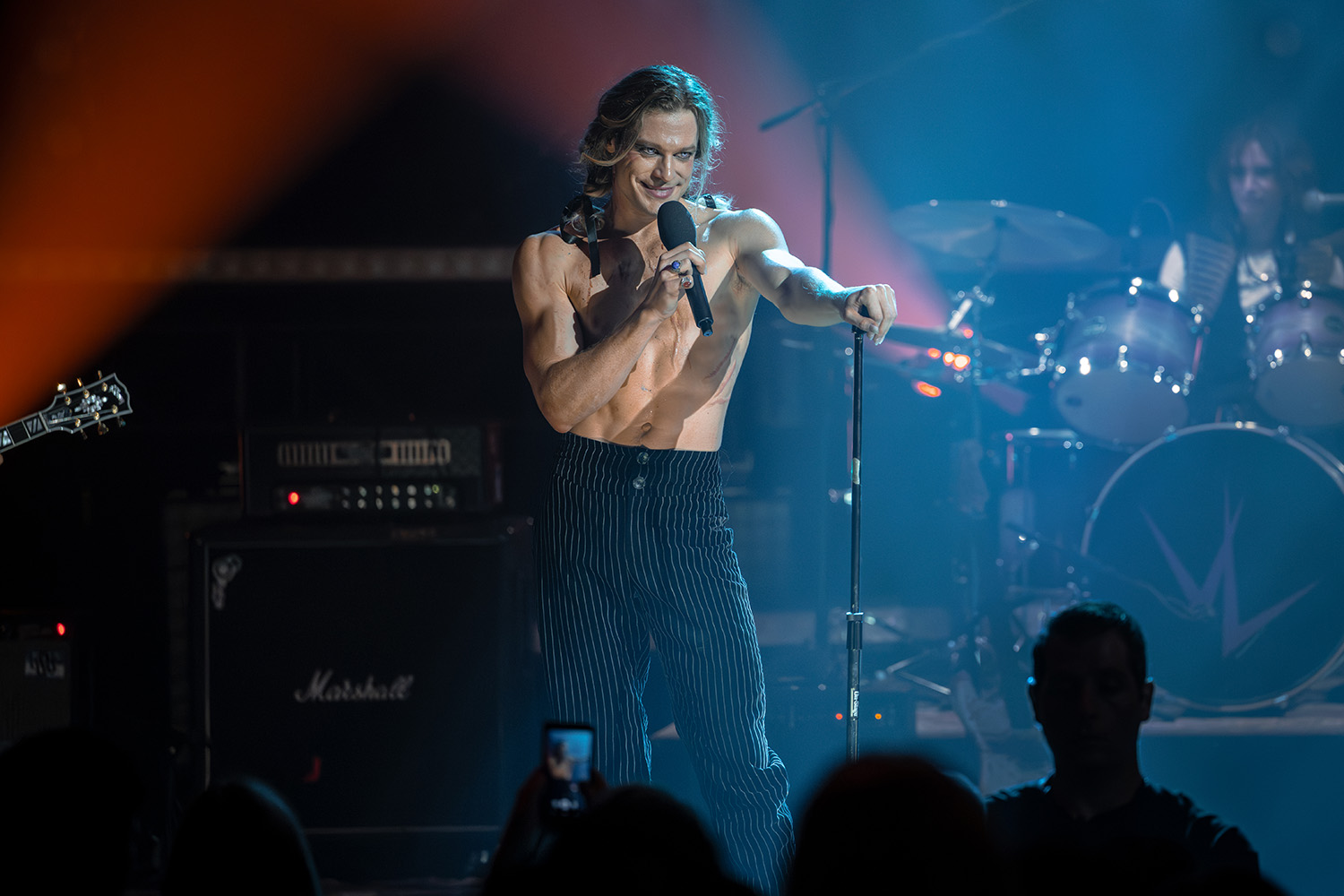
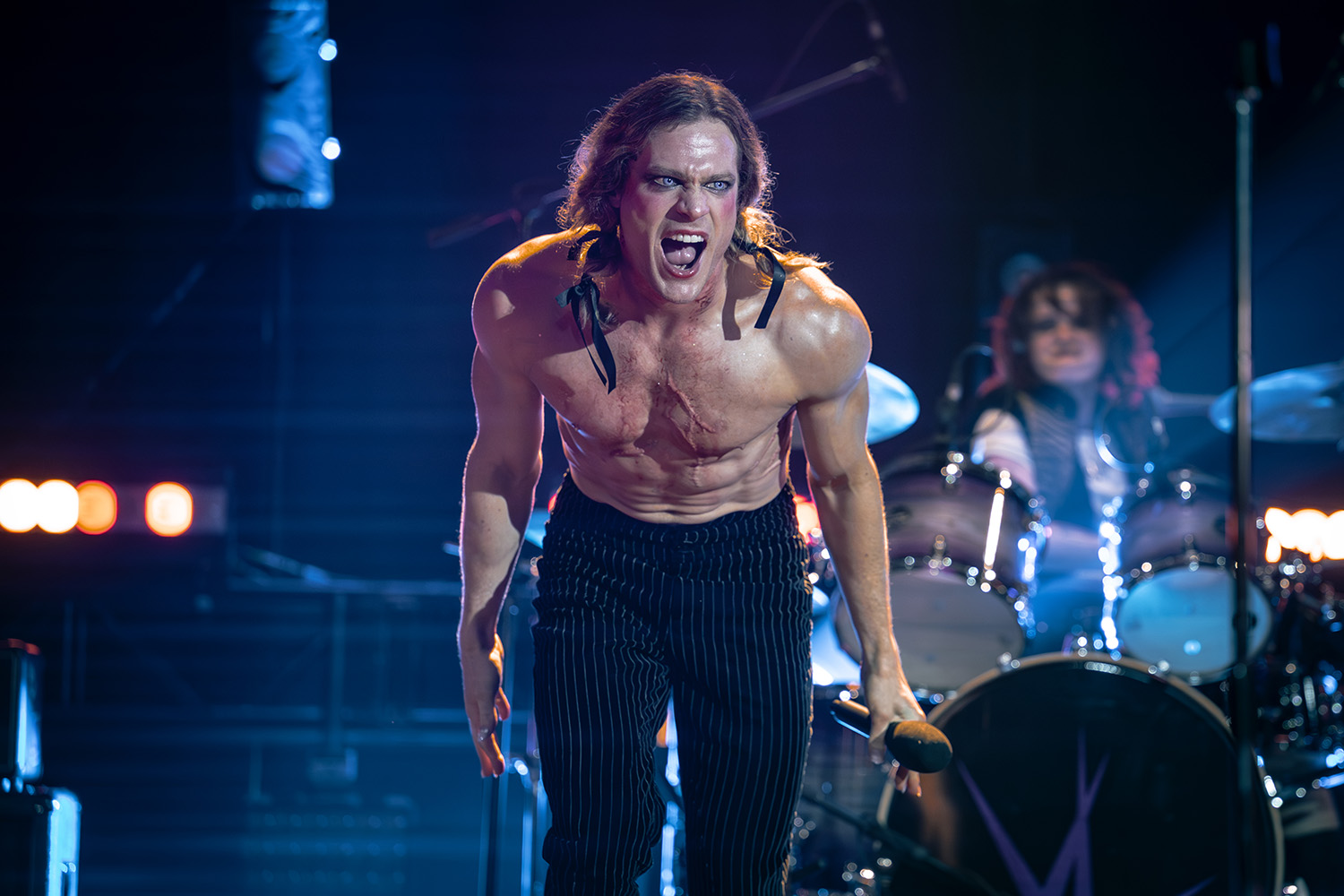
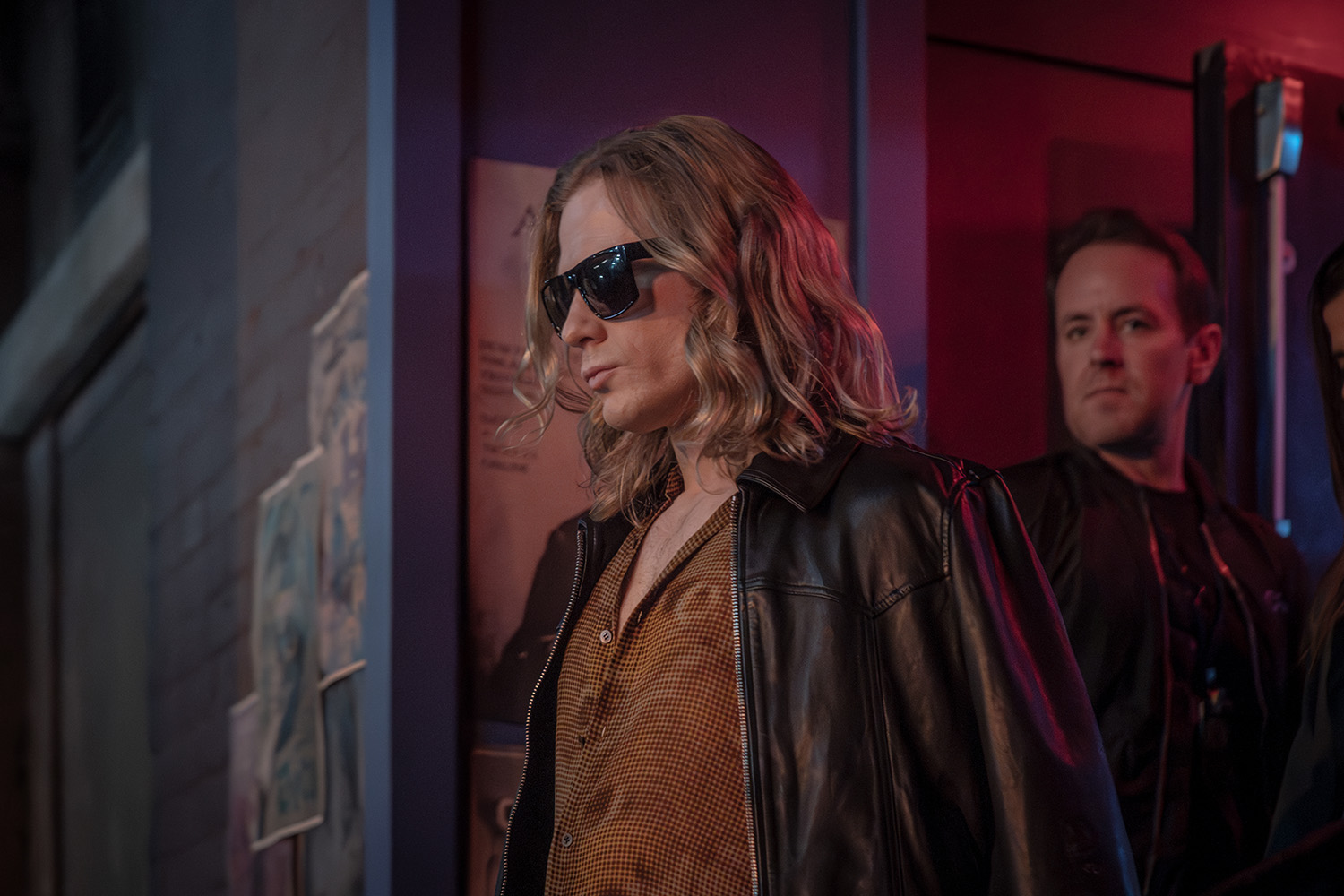
Lestat takes the stage in pigtails and eyeliner, wearing camp like armor before a fight (and the fact that the costuming is like a funhouse mirror version of the “My Baby Loves Windows” costume and eyeliner Armand forced Claudia to wear during her time at the Théâtre des Vampires is surely not lost on Armand. Even the pants echo the ones Lestat wore during the trial).
He introduces Armand to the crowd both by name and as a “French Bengali smokeshow,” then puts a literal spotlight on the man who has spent 500+ years trying very hard not to be perceived. He does it in front of a crowd, on a microphone, with barely contained manic delight. This is his revenge against Armand for everything that happened with Claudia, and if we’re being honest, it probably doesn’t go far enough. But gosh, is it fun (for us — it’s definitely not fun for either Armand or Daniel).
Then he sings “Big Boss.”
It is the most unhinged, gleefully cruel, deliriously campy pop song of the season, and it is also an eviscerating diss track. He hits Armand where I think hurts him the most: “Oh no, are you having a bad hair day?”, and pouts and preens while singing lines like “You’ve got a lot of rules for a theatre kid”.
Sam Reid is clearly having the time of his life, Daniel Hart delivers as he always does, and every Armand apologist (myself fully included, to steal a line from Nerdist’s Rotem Rusak) is going to be playing this on repeat while feeling just a little guilty about how much they’re enjoying it.
Armand, unsurprisingly, leaves through the side door before the song is even finished.
[What I want to know is… When exactly did Lestat write this song? Salamander sings a truly terrible song earlier in the episode called “Big Bus”, so Lestat clearly quickly repurposed that. But has he been holding onto some version of these lyrics all tour, just in case Armand stopped by? Did he hastily write it the second Armand exited the tour bus that evening, and then make his band rehearse it immediately? These are the important questions.]
The world stops for them
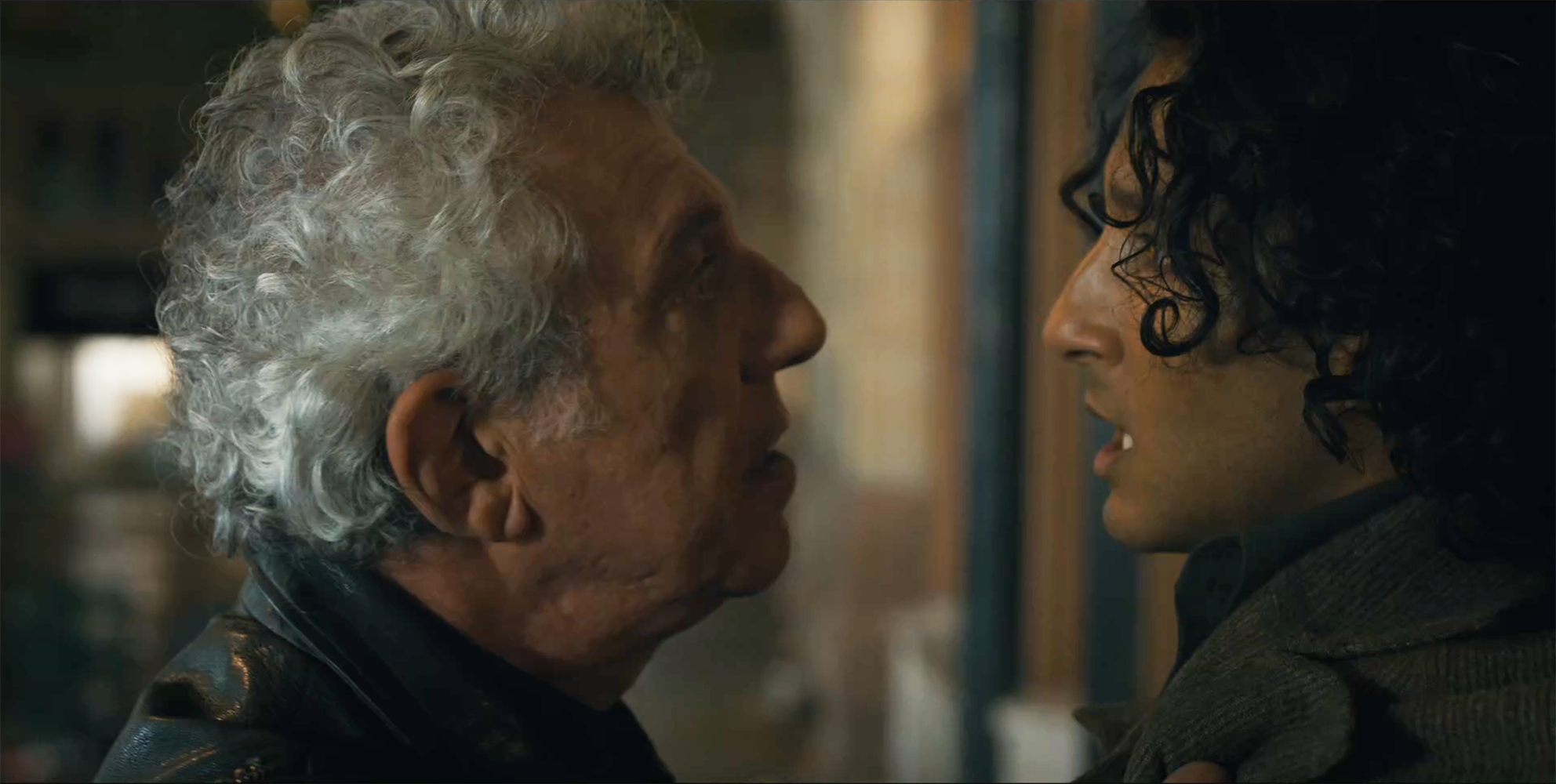
Daniel follows Armand outside, and the thing happens again where the rest of the world goes quiet and everyone else but these two vampires disappears. If this is not the most romantic shit in the world, I don’t know what is.
Daniel, predictably, yells at Armand to knock it off, shoving him up against a wall. But Armand, just as frustrated, insists he is not doing it. And that it’s happening to him too.
He thinks it is their vampire bond, the maker-fledgling connection that exists between every maker and every fledgling. Except, the show has gone out of its way to establish that it does not look like this for other vampires that we know of. Whatever is happening between Armand and Daniel seems to exist entirely in a category of its own. A love for the ages, kids.
Something has clearly been eating at Daniel, though. Earlier, Lestat suggested that back in Dubai, Daniel did not have nearly as much control over the interview as he thought he did, when laying Armand’s secrets out on the table. Maybe Armand was simply pretending to be caught off guard, letting Daniel believe he was staying two steps ahead. And Daniel can survive a lot of indignities, but the suggestion that he is a bad journalist clearly hits a nerve.
So he asks Armand directly about it, and Armand explains he was not pretending at all: he was blinded by love.
Not love for Louis, but love all the same.
This is the Devil’s Minion that fans have been waiting for since the series was even announced. And what a proper introduction to the pairing it is, with the literal push-pull that defines these two. Their relationship has never been about effortless romance. It’s about resistance. Two people who challenge each other, infuriate each other, and somehow keep finding themselves drawn back together anyway. By making that dynamic literal, with the wall-shoving and their bond causing the rest of the world to fall away, the series finds a visual language for Devil’s Minion that feels entirely its own while still capturing the spirit of Anne Rice’s version.
Armand is, obviously, one of the most unreliable narrators on this series. He dances around the truth the way the rest of us breathe if he thinks it’s going to serve him and help him survive. But I think here, Armand is telling the truth about loving Daniel (and Assad Zaman backed up that reading in tonight’s The Vampire Lestat: After Dark, by literally saying “The little truth here, I think, is that it is the admission that the love that was distracting him in season two was for Molloy and not for Louis”). The fact that he’s confessing it in a moment he cannot control, with the world stopping around him and his bond pulling him toward Daniel involuntarily, makes it much harder to dismiss as another Armand maneuver.
Around Daniel, Armand loses control of himself a little.
In this universe, that may be the clearest proof of love there is.
Give ’em the ol’ razzle dazzle
What we haven’t talked about though, is that as exciting as all of this is, I feel like the writing team is performing their own version of “Razzle Dazzle” from Chicago over here. Give ’em the ol’ Devil’s Minion they’ve been asking for, give them Lestat in pigtails and eyeliner on stage, bead and feather them.
Pay no attention to the fact that Lestat is implying Daniel is taking antibodies, just the latest in a very long string of signs that something is very wrong with Mr. Molloy. Don’t notice the two men following Armand out of the concert, who were definitely not there for the music (and who take a sharp right turn when Armand waves his hand, as if they’re following his command). Couldn’t possibly have anything to do with why Lestat, on his future recordings, refers to Armand as doing “more damage than the Queen ever did.”
How can they see with sequins in their eyes? Or something.
Louis, oh Louis
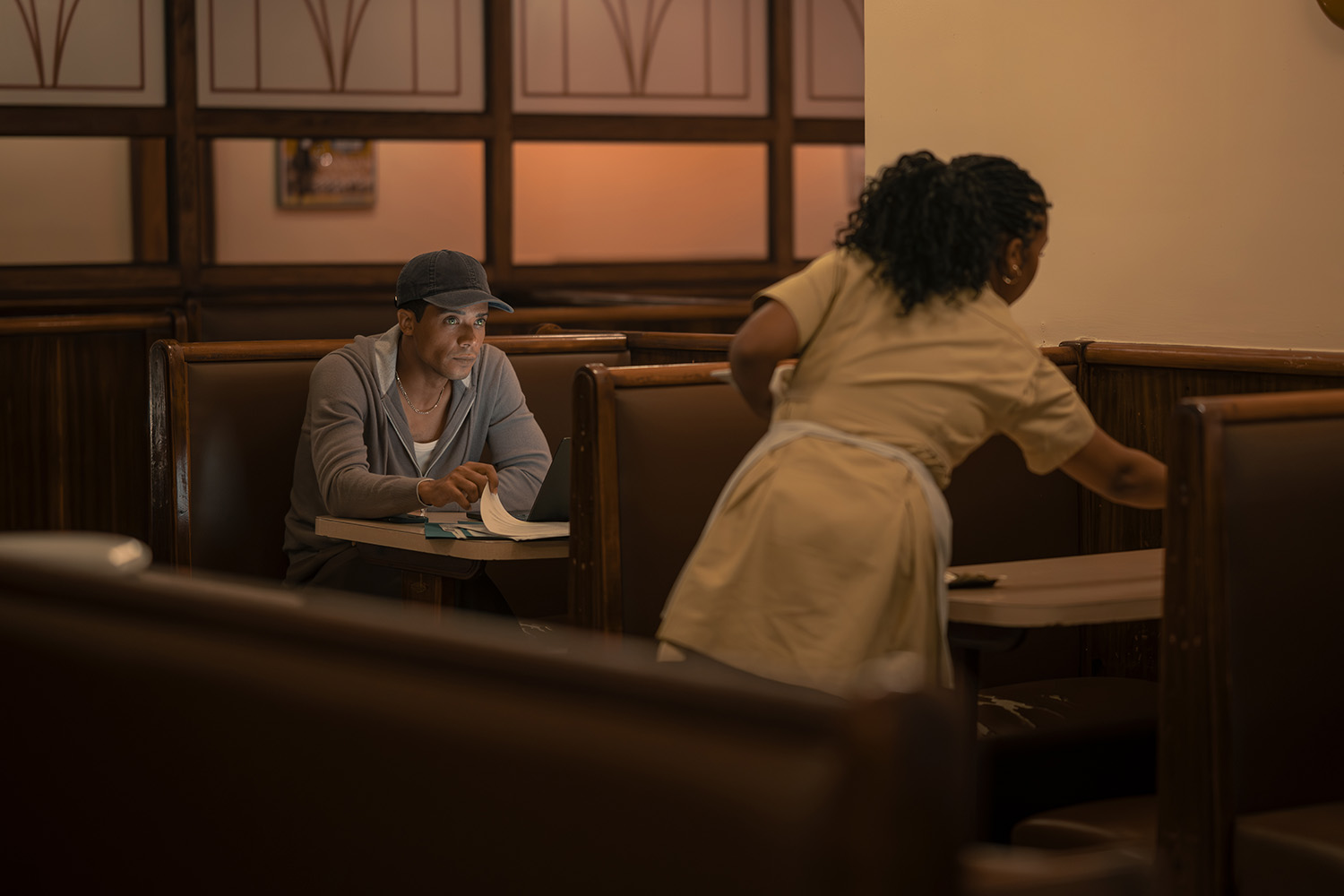
Elsewhere throughout the episode, Louis continues to visit Regina, the young woman who looks like Claudia. She figures out why he’s been visiting her diner, who and what he is, and she is angry about all of the above. She didn’t sign up to be a stand-in for his dead daughter.
But Louis, for his part, can’t seem to stop. After all, as he explains, “being in the same space as her was satisfying in a way the destruction of the vampire Bruce was not.”
Revenge didn’t bring Claudia back, and killing Bruce didn’t make him feel any better. This is Louis basically wallowing in his grief, trying to hold onto Claudia in any way possible.
As many of you know, the creation of Claudia in the books was Anne Rice’s response to losing her own young daughter at the age of five. The character is, on the page, a literal monument to grief. The show has always taken her seriously as that. What “The Devil’s Road” does is acknowledge that grief, after a certain point, becomes a thing you choose — that after enough time, staying miserable can start to feel safer than moving forward. Anyone who has lost someone close to them can probably relate to that feeling, and how all-encompassing grief can be, like the only emotion that feels real anymore.
Louis tries other ways of making amends with Regina. He offers to help financially, to pay off her debts, to make her life easier. But what becomes painfully obvious is that what Louis wants from Regina and what Regina wants for herself are two entirely different things, and Louis cannot fully see the difference. He has never learned that loving someone does not automatically mean knowing what is best for them.
So we end the episode on the most devastating beat yet… if he can’t win her over any other way, he’s going to start paying Regina to pretend to be Claudia. Oh Louis.
It’s also a familiar pattern for Louis. When he doesn’t know how to ask for connection, he tries to buy it instead. He paid Lily to spend time with him back in season one, yes in part as a cover for his homosexuality, but also because he was just lonely. He paid Daniel to hear his story in Dubai. And now he’s offering Regina money to step into Claudia’s place.
To quote Daniel Molloy, “You’re still Louis the pimp, paying a whore to sit in a room and talk to you.”
Louis isn’t trying to exploit Regina for cruelty’s sake. He’s trying to keep Claudia alive in whatever fractured way he still can. But grief has become so consuming that he can no longer distinguish between honoring Claudia’s memory and erasing another woman’s identity to soothe his own pain. Regina isn’t Claudia. She never asked to carry that weight, and she shouldn’t have to.
Delainey Hayles deserves enormous credit here, because she never lets us forget that. It would have been easy to play Regina as simply “Claudia 2.0,” but Hayles gives her a completely different rhythm, demeanor, and inner life. Even when Louis can’t see the distinction, the audience can. Regina exists as her own person from the moment she appears on screen, which makes Louis’s inability to let Claudia go all the more devastating.
Mommy dearest
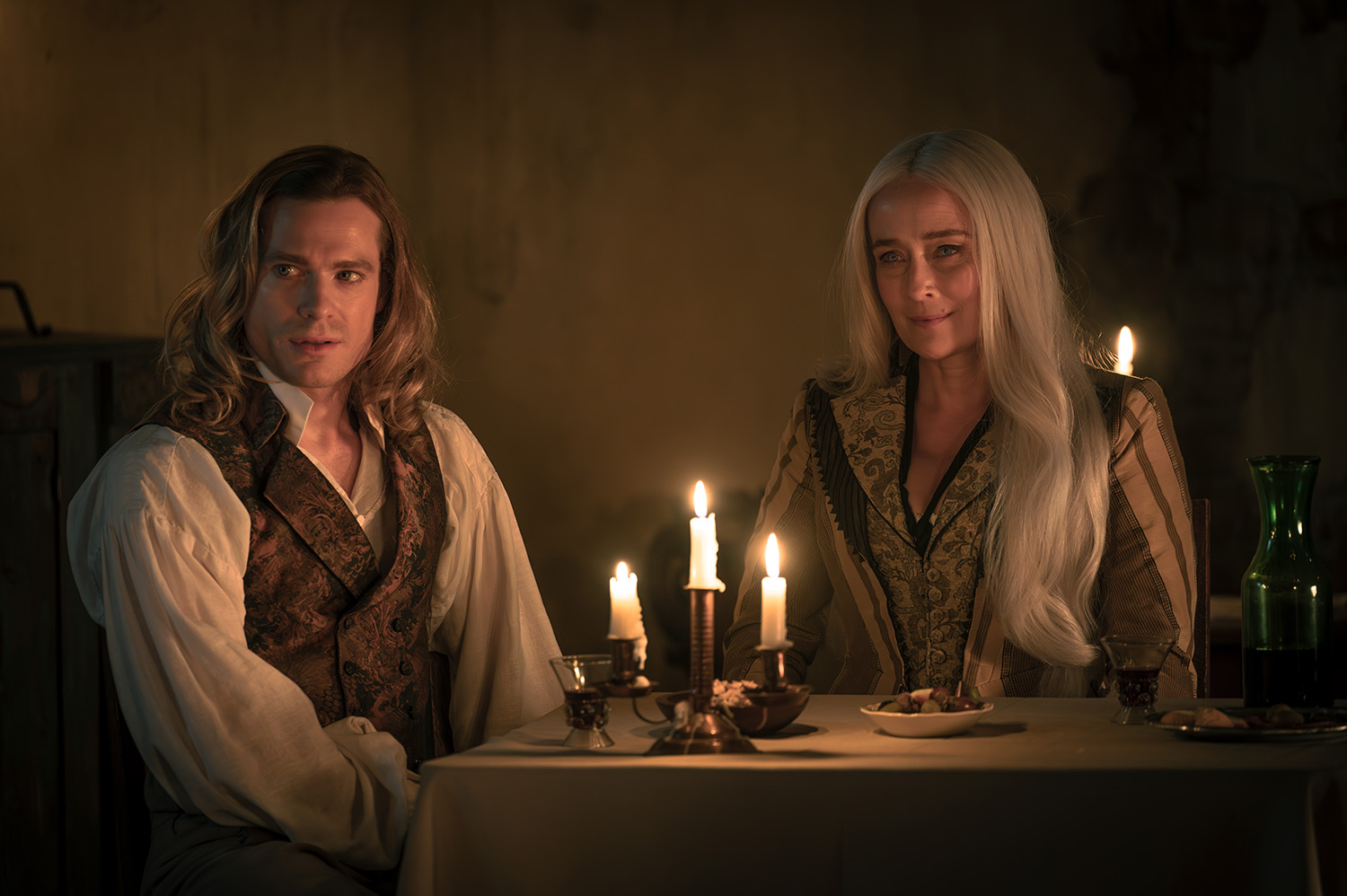
Throughout the episode, we get a series of flashbacks: Gabriella provoking Lestat by seducing and sleeping with a stranger until Lestat enters the room. Lestat’s confusion over what she wants from him. His jealousy. The kiss. The first time they have sex together. And, finally, Gabriella leaving him alone on a beach at sunset.
It gradually becomes clear that these aren’t isolated moments, but pieces of the same pattern. Gabriella has spent years collapsing the boundaries between mother and son, leaving Lestat unable to separate maternal love from romantic intimacy. By the time they finally have sex, the scene isn’t interested in shock value; it’s interested in showing the impossible emotional position Gabriella has maneuvered Lestat into. She has spent his entire life withholding the affection he craves, only to offer it when she wants something from him in return. It is the first, and perhaps only, time she tells him she loves him, and that timing makes the moment impossible to read as anything other than manipulation. Whatever Gabriella may believe she feels, what she does to Lestat is sexual abuse.
For Lestat, though, the moment isn’t driven by desire so much as longing. He isn’t chasing sex. He’s chasing the same thing he has always chased: some version of his mother finally loving and choosing him.
Even then, Lestat can’t bring himself to tell any part of this story honestly.
He lies to Daniel about what happened after he turned Gabriella, claiming she was weak, withdrawn, and barely hunting. The flashbacks reveal the opposite. For a brief stretch of time, Gabriella is freer than she has ever been. She laughs with Lestat in the back of a carriage, they invent stories together, they hunt together. She is finally free from her husband, from the expectations of motherhood, and from the suffocating life she spent enduring as a human. It’s a lovely callback to episode two, when they delighted in inventing an entirely different story about how they first met in the present timeline. For one fleeting moment, Lestat gets the version of Gabriella he has spent his life wanting: engaged, affectionate, fully present. They make a pact to stay together forever.
By morning, she is gone.
And that, more than anything else, becomes the blueprint for the rest of Lestat’s life. Gabriella is the original wound. Every relationship that follows echoes it: fall in love with someone who can leave you, cling tighter, try to control the relationship and how you’re perceived, hide the parts of yourself you fear will make them leave anyway, and ultimately drive them away. Louis. Claudia. Nicki. Lestat keeps trying to write a different ending, but he’s always starting from the same first chapter.
It’s also, I think, the best Jennifer Ehle has been all season. She plays Gabriella here not as the melodramatic villain she’s been in much of the season, but as someone whose yearning has become so profoundly distorted that she can no longer distinguish love from possession.
But the scene ultimately belongs to Sam Reid. This is Lestat at his most emotionally exposed, and Reid never plays it as lust. He plays it as a son trying to reconcile two irreconcilable truths: that this is the closest his mother has ever come to giving him the love he has always wanted, and that somewhere inside him he knows the love she’s offering has become something monstrous. It’s a devastating performance because you can watch hope and horror exist on his face at the same time.
Bang bang
Things finally spiral out of control when the same fan from episode one (the one who asked Lestat to sign a copy of Interview with the Vampire) pulls a gun post-show and opens fire. The plan, apparently, is to publicly prove Lestat is a vampire by forcing him to survive an assassination attempt in front of a crowd. In the process, he also hits Christine, Lestat’s lawyer, in the chaos.
The incident gives the band and Lestat’s team exactly the opportunity they need. Rather than fight the narrative, they lean into it and fake Lestat’s death entirely, turning the shooting into the perfect disappearing act.
And almost immediately, Gabriella comes back… and of course, the timing is not accidental. She returns to find Lestat gone from the band, the music stopped, and the great loud supernatural spectacle of it all suddenly silenced.
The show continues hinting that Gabriella believes strongly in some version of the Great Conversion, the idea that vampires should stop hiding and multiply openly, that their numbers should grow, that the world should hear their call and answer it. And what she wants is not to soothe her son’s traumas, but to give him the push he needs to get him singing into the void again. She wants the chorus to swell.
She’s not a mother coming back for her son, she’s someone arriving to pull a prophet back onto the stage.
Other thoughts
- “Dear Daniel, of all things that walk the garden, it is you I have done the most harm to.” Sure, the garden reference could just be about the “Savage Garden” that all vampires must walk, but I choose to believe it’s also a reference to the turning scene in Queen of the Damned, in which Armand creates a beautiful, fictional garden in Daniel’s mind in which to transform his dying lover.
- I have so many questions about the “above Newark” detail for how and where Daniel died, especially given people smarter than me have figured out that the interview ended on June 26, 2022 and we know from last week that Daniel died on July 18. So what exactly happened in the interim? And did Armand stow away on a private jet and wait until they were almost ready to land, then jump out of the pilot bay or cargo hold? Did Daniel hang around Dubai for three weeks and Armand asked to share the jet? I need answers (and luckily Rolin Jones has promised to provide them next season).
- Given that Jonathan Ceniceroz wrote tonight’s episode, co-wrote last season’s “Don’t Be Afraid, Just Start the Tape” with Hannah Moscovitch, and wrote the Night Island web series that never wound up happening (but never say never)— I think it’s safe to say he may be the strongest soldier in the Devil’s Minion army. Thank you very much for your service (and your excellent writing), Jonathan.
- Are all of these stray thoughts about Daniel and Armand? Yes. Not sorry.
- Here is one that isn’t: Salamander (and writer/actor/musician Ryan Kattner), I love you.