Although fencing has been part of Hollywood’s history since movies began, it’s not often the first thing that comes to mind. Classics like The Adventures of Robin Hood, Star Wars, The Duellists, and so many more featured fencing in some form. Moderator Gary Miereanu’s “Hollywood’s Love Affair with Fencing,” held in Room 6BCF on Thursday, July 23, brought together a diverse group of panelists seeking to bring awareness to fencing’s strong influence on Hollywood’s best and most cherished works.
Panelists included Iron Maiden lead singer Bruce Dickinson, writer/producer/director Rob Edwards (Captain America: Brave New World, Disney’s The Princess and the Frog, The King of Kings), and Content Republic head of creative (and former Legion M VP) David Baxter, who discussed the upcoming movie they’re currently producing, Fencer.
Also on the panel were Head of USA Fencing Phil Andrews, as well as actor Asher Grodman (Trevor “T-Money” Lefkowitz on Ghosts), who were there to discuss their passion for the sport and dispel some myths surrounding it.
Bruce Dickinson
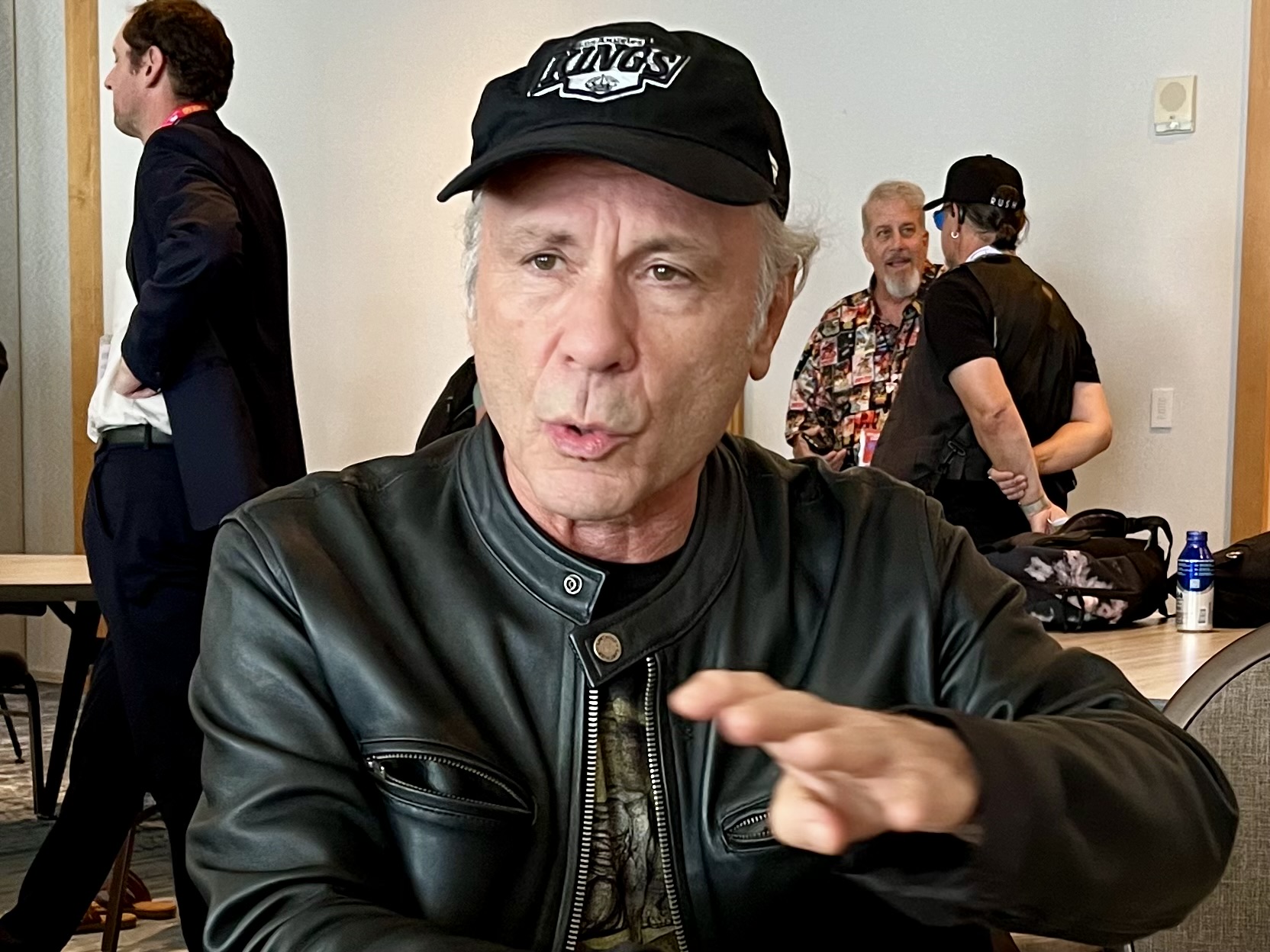
In Fencer, Dickinson portrays the “evil English fencing instructor, who’s ruthless as hell and who will stop at nothing, unmercifully, to get what he wants.”
“It’s a little bit… like Karate Kid, somebody from a background that you would never expect, who wants to achieve something, and he’s going to be able to achieve it by becoming a fencer,” Dickinson said.
For Dickinson, Fencer is semi-autobiographical.
“Fencing is such an unexpected sport. I’ve been fencing since I was 14. I wanted to box, because I wanted to fight all the kids that were beating me up at school. They didn’t do boxing at my school, and by accident, our metal shop teacher happened to be an amateur fencing coach. He turned up one day with ‘Excalibur’ that he’d made as an apprentice, and we went, ‘Oh, my God,’ and he said, ‘Yeah, I can show you how to make one of these, make it, forge it, do all the stuff, and then, I can show you how to use it,” he said.
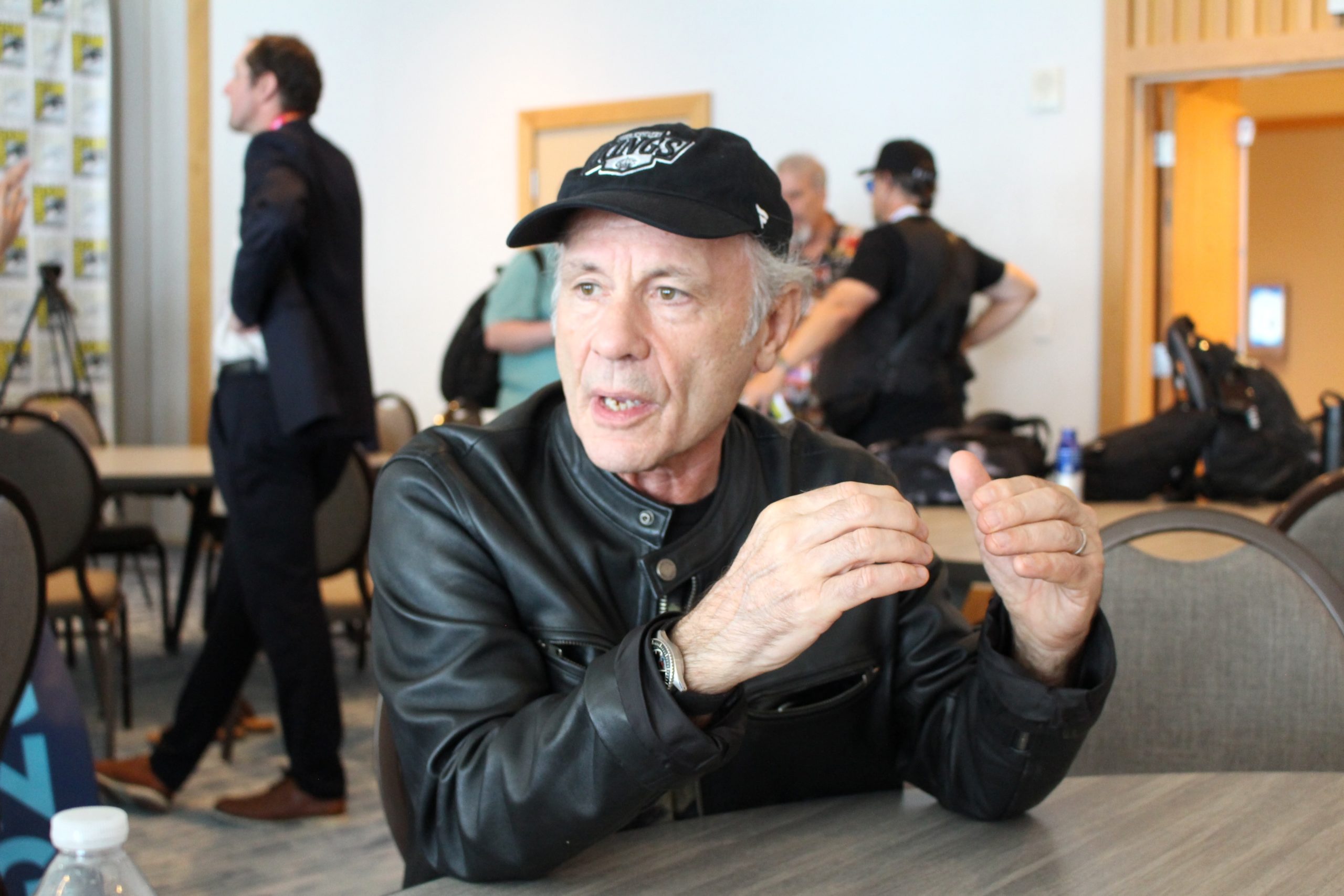
Dickinson stuck with the sport, winning national titles.
“I was reasonably good at it, so I carried on,” he said. “I had a moment when I was middling away, national teams and things like that, so I was #7 in the UK in the 80s, and that was the highest I ever got.” Pretty impressive when you consider that was also the peak of Iron Maiden’s popularity.
The Iron Maiden front man also sees fencing as an equalizer. “As soon as you put on your white outfit and everything, people think, ‘Oh, my God, they must be upper-class…’, and there is a bit of that, but the great thing is, now that there’s fencing worldwide, it can be anybody from any background, anywhere,” he said. “It’s a great leveler. I mean, I’m 5’6-and-a-half” (the half is really important), and David, the producer, is 6’5″ (or something like that), and I’ve been fencing David for 40 years, but… the sword is the same length [for each of us],” Dickinson said.
As someone who is also “5’6-and-a-half inches” tall, I completely agree that the extra half-inch is important.
David Baxter
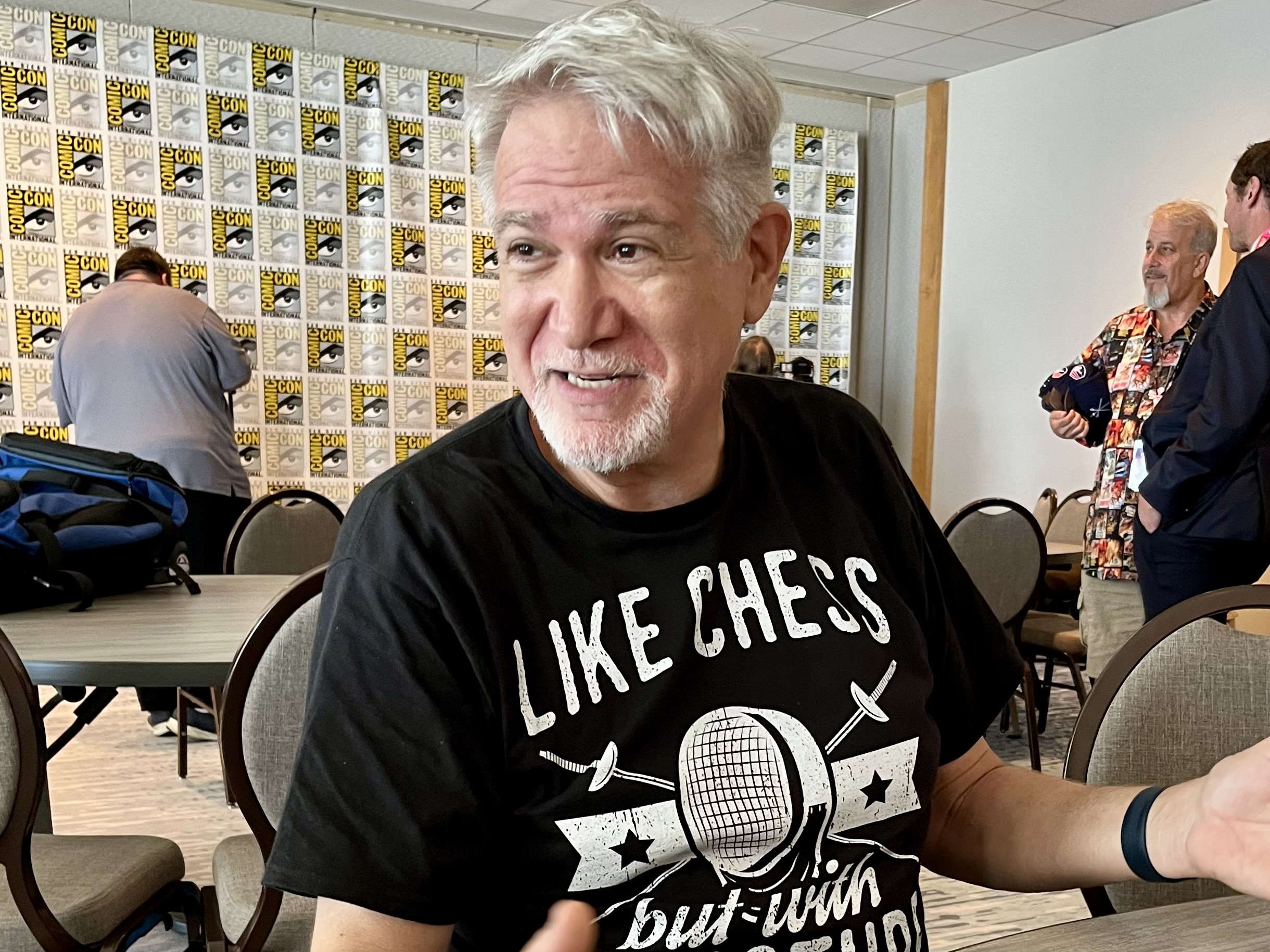
Next up at our round-table interview was Head of Creative for Content Republic and Fencer producer (as well as former Legion M VP), David Baxter.
Baxter also began fencing at a young age when his mother would drag him along to his brother’s fencing lessons.
“The stage fencing coach happened to be the best in the nation at the time. This Hungarian, who looked like Dracula, came up to me, and he goes, ‘Little boy, if you come here, you must fence,’ and he put me in an en-garde position, and he goes, ‘Ah! Put your buttocks in, or I cut it off,’ and he literally hit me in the ass! Of course, that turned to great love and respect… and I went on to becoming the Division II National Champ.”
Life always gets in the way, and Baxter ended up pausing his fencing career.
“I stopped fencing for 40 years. My son started doing it, and he became very good very fast, said, ‘Dad, I’m a really good fencer, but I don’t love fencing. You do! You should start competing again.’ And I just came back from US Nationals (US Fencing National Championship),” Baxter said. At that National Championship, Baxter just so happened to take 30th in the nation.
Baxter also referred to his height advantage when competing against shorter fencers like Dickinson.
“When you’re very tall, I’m 6’8″, it’s a huge advantage in fencing, because my arm is so long,” he explained. The key is to beat the blade and hit them on the hand. “If I can keep away from them, there’s very little they can do. If I have to pull my hand back, it’s tough. Sometimes, I have to go over my head to get these little hobbits,” he said, a not-so subtle reference to his battles with Dickinson. “By the way, I met Bruce Dickinson in 1988, when I had no idea who he was; he was ‘Bruce with the Long Hair.'”
Rob Edwards
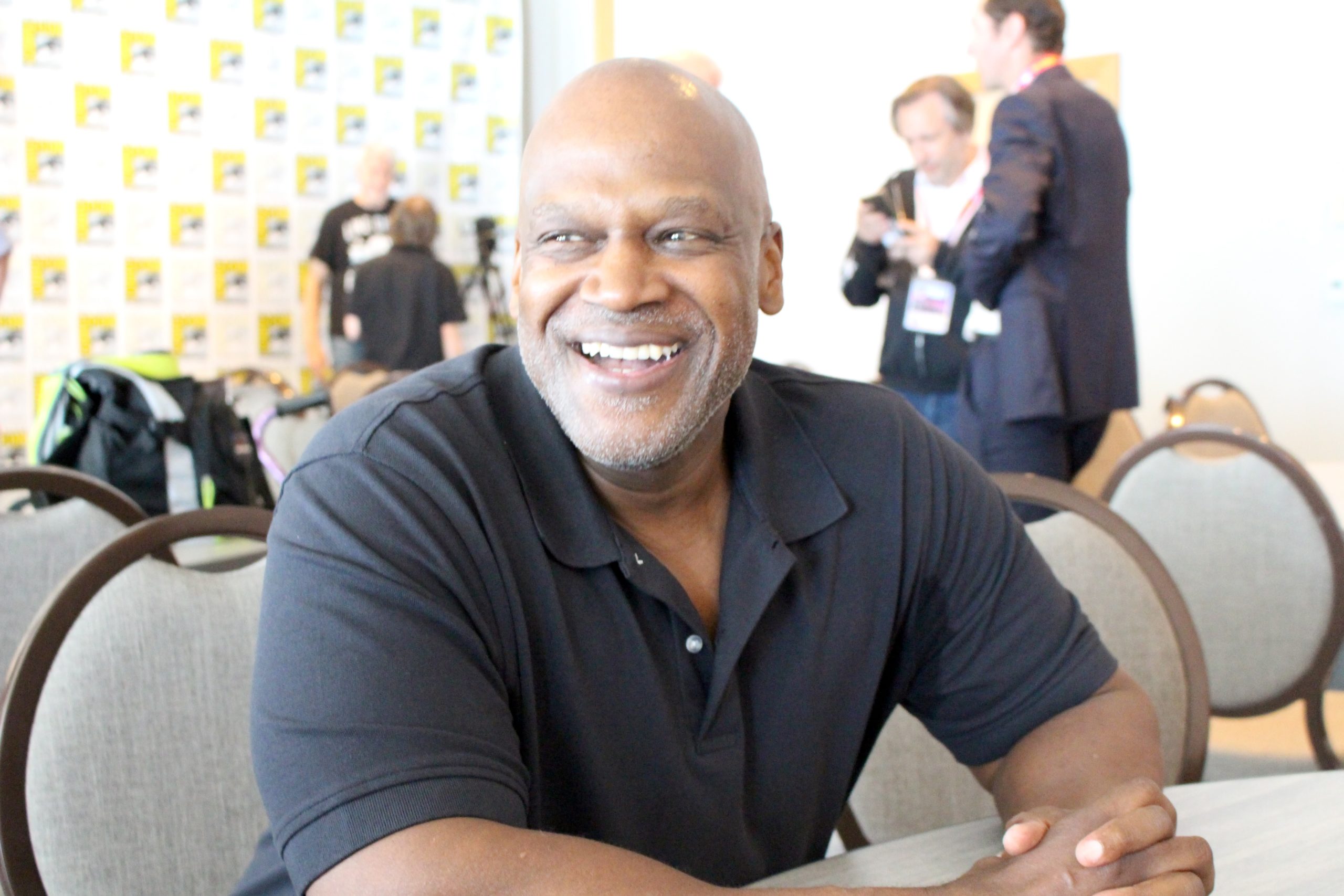
We had to say good-bye to David Baxter, but we also got to say hello to writer/producer/director Rob Edwards, who shared with us just how he became involved with Fencer.
“David [Baxter] and I went to high school together, and David fenced,” Edwards said. “I had a couple of friends who fenced on the team, so I’d hang out with them. I actually drew the design for their t-shirt — like chess, but with more puncture wounds — because I had a comic strip when I was in high school. So, it’s always been in the back of our heads [to make a fencing movie]. Every time I’d do another big movie, he’d say, ‘Now’s the time! We can get this movie done!’ And then when Cap (Captain America: Brave New World) happened, [I knew I was] in high demand, I could do whatever I want, so now if I don’t do it, I’m a bad friend.”
Edwards pointed out the parallel between the film’s plot and the filmmakers’ own experiences.
“A lot of them have very similar stories, which is they fenced to move themselves up. They fenced in high school, they got really good at it, they fence at some Ivy League school, and it changes their lives,” Edwards said.
He brings his unique philosophy to his filmmaking, which also includes portraying fencing as a sport that doesn’t rely on social class.
“Don’t be elite; don’t be boring. It should appeal to everybody along the way. One of the best things about great sports movies is that they’re not about the sports at all. You look at The Natural… you don’t need to understand baseball to appreciate The Natural. Or Field of Dreams, you’re not saying, ‘Is that a curve ball?’ No, you’re just like, ‘The guy loves his dad! He misses his dad!’ That’s all you need to know. They’re about us as people, which makes them great genres to tell stories in,” he said.
Edwards told us that the film will “probably take place in New Jersey, because Princeton… is a place where the suburbs are castles, and the urban area is unlivable, like a third-world nation. To go from one to the other is almost impossible for many, many reasons, most of them being, ‘Do I see myself in that new world?'”
Phil Andrews
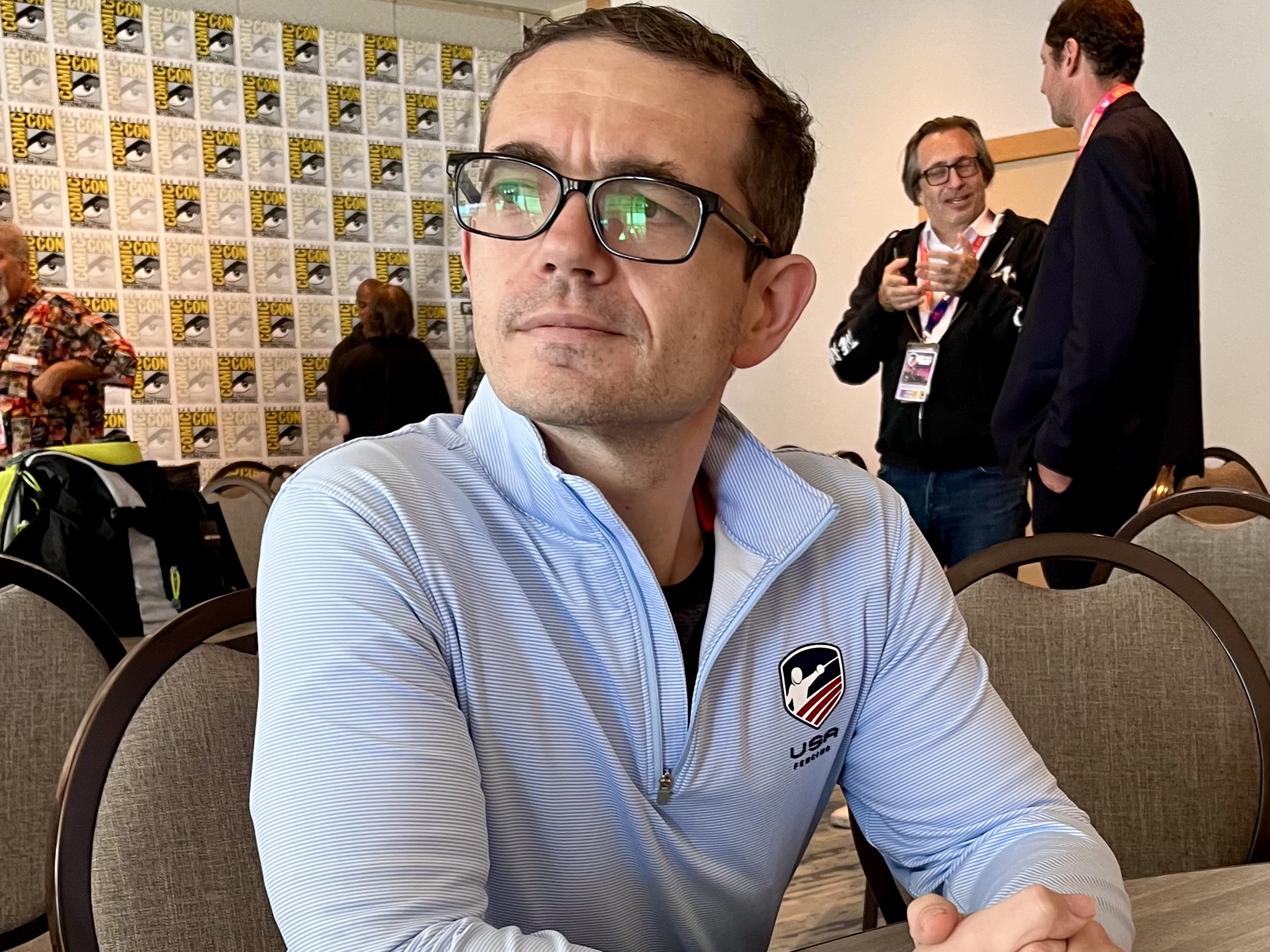
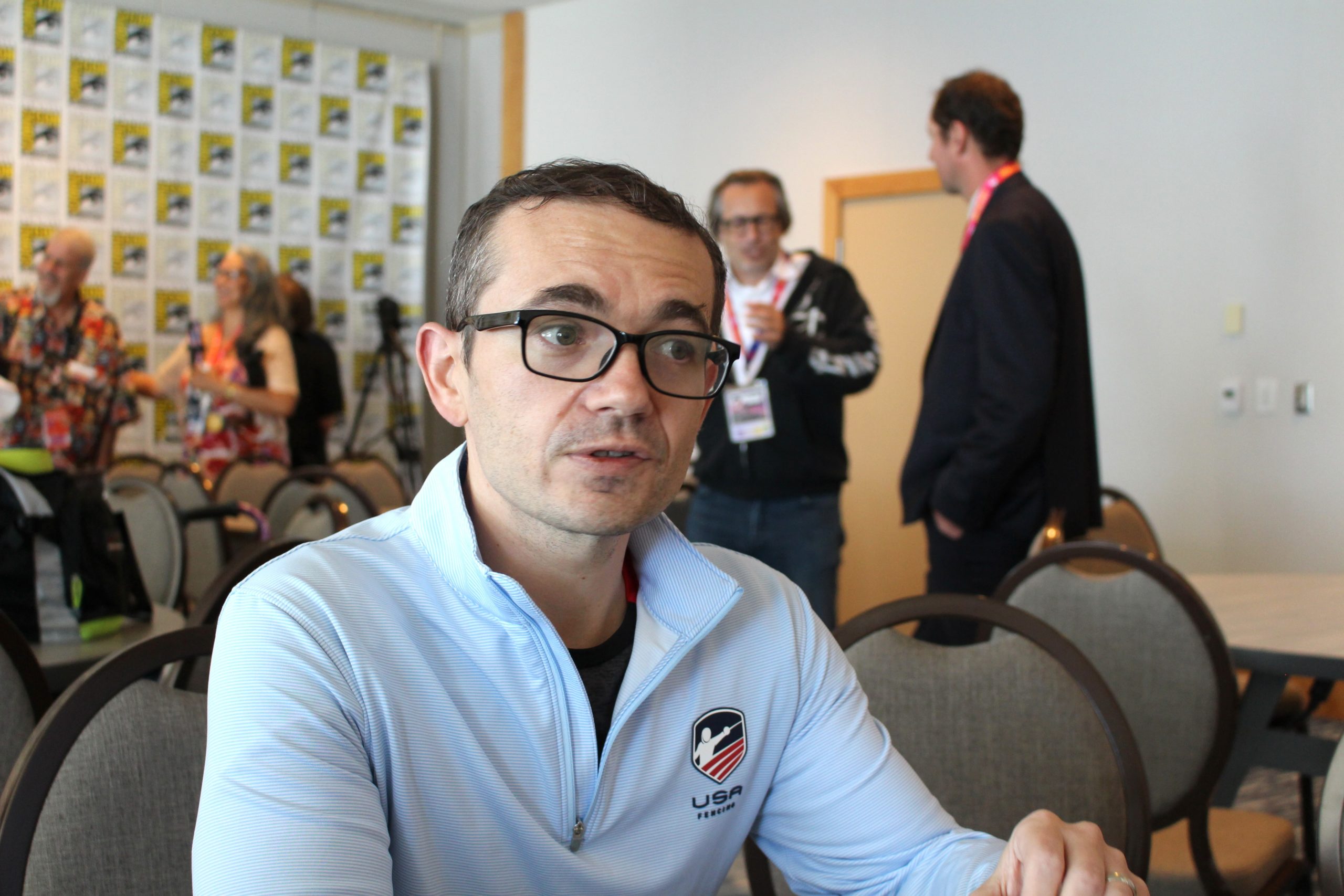
Next at the table was the head of USA Fencing, Phil Andrews. While not directly involved with the Fencer project, he’s supporting the film’s effort to raise awareness and attention for fencing programs.
“One of the things that, in a way, people forget is that we compete… against Italy and France,” Andrews said. “No, no, we actually compete against each other in a way. We compete for attention with our friends in gymnastics, in swimming, in taekwondo and judo, so I [thought], ‘What can we do in fencing that’s very different from everybody else?’ And the answer is we have this wonderful connection with the creative industry, particularly with the film industry.”
Andrews says he’s encouraged by Fencer and feels it will bring some much-needed attention to the often-forgotten sport, along with the 2028 Olympic Games. “It’s my belief that a movie moves the needle more than a documentary does. I believe that a combined media and content approach, where there’s a fiction-based movie written by a gentleman like Rob Edwards with someone like Bruce Dickinson in it, with other talent in it, is going to move the needle in one way. On the other hand, other people will buy in because of the Olympic Games… and each person [is an opportunity]… to put a sword in everyone’s hand,” he said.
He then pointed out the local San Diego connection to the fencing world and how the market is beginning to take off. “San Diego is actually a burgeoning market,” Andrews said. “You’ve got Rancho Bernardo, there’s a club up there called Elite that you can’t get into. There’s San Diego Fencing Center, that is enormous, up in Escondido. One of the red-hot centers of fencing’s growth is San Diego.”
“We’re seeing this massive growth in fencing right now in the club level. We’d love to see more public schools take it up, no question. Fencing in film, and the sort-of renaissance fencing’s having in the entertainment industry,” Andrews continued. “It’s been great walking through the media [hearing that] fencing is growing. So to hear that time and time again today is, frankly, gratifying.”
Asher Grodman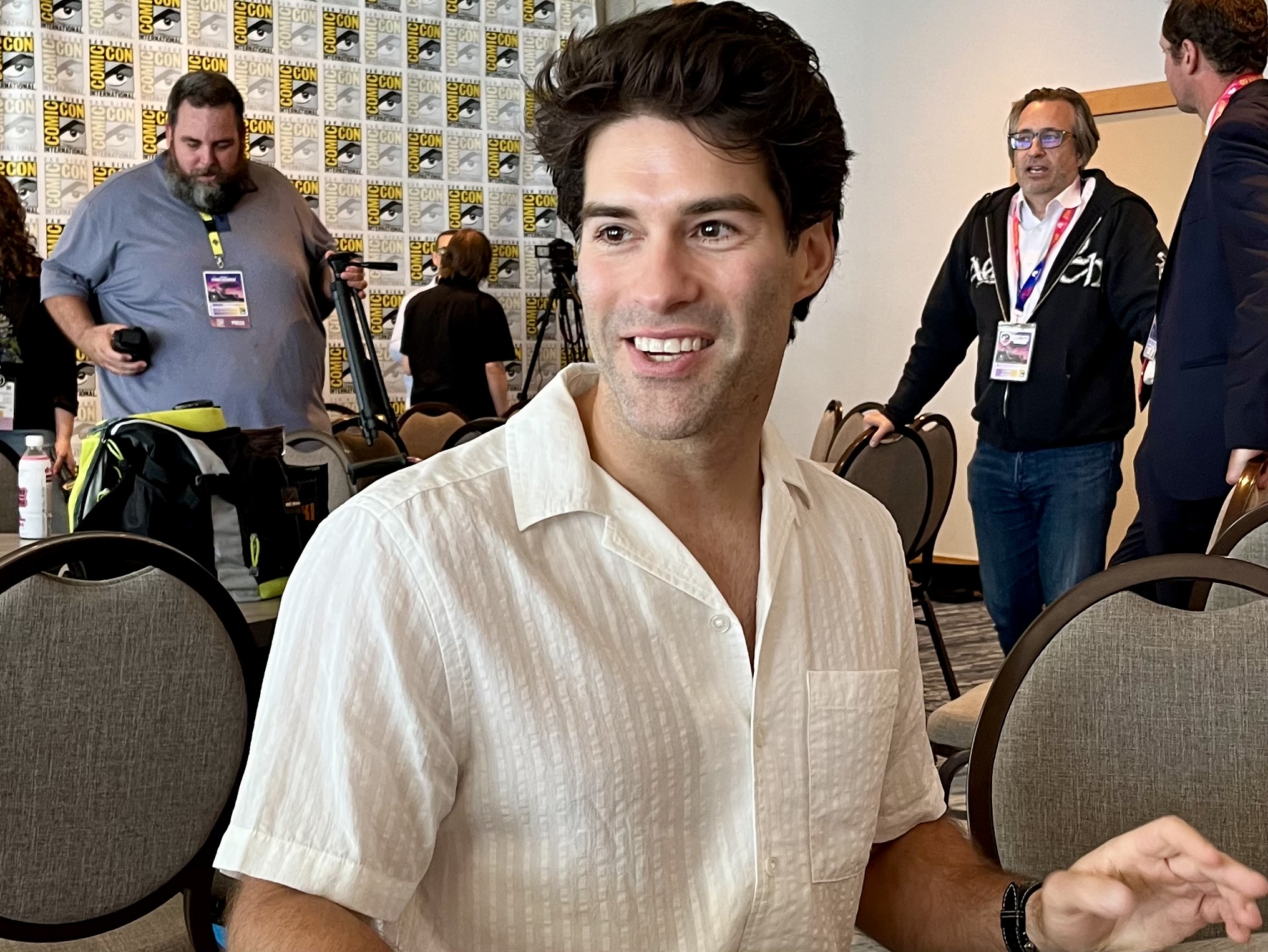
When Phil Andrews got the tap on the shoulder, he was replaced with actor Asher Grodman, currently known for his role as the pants-less ultimate 90s finance bro, Trevor “T-Money” Lefkowitz on Ghosts.
As one of the few ghosts in the show who knows what “going down on” and “getting sucked off” mean in modern slang, fencing is not the first sport that comes to mind when referring to Grodman.
As he explained, “I was a fencer for a very long time. I was okay… but when I got to high school and was part of a team, it was a whole other level. And then I fenced in college, at Columbia, and that was a blast, and then fenced on some teams, internationally, and that was fun.”
Grodman described how fencing helped him hone his acting skills. “It’s a very unique sport. It’s a very intense sport, and it turns your brain on in a way that kind of only acting does, so, there’s an overlap. So much as an actor, your job is to [invest in a scene], but there’s a camera here, and there’s lighting there, and all these people watching,” he said. “You and I have to key into each other and have this reality be so strong that everyone is gonna buy into what this is.”
He also remarked about how fencing is just as mental as it is physical.
“The thing with fencing is that I am trying to get in your head to manipulate you to think I’m gonna do something, and then I’m gonna do something different. And it’s about where I’m gonna be, when I’m gonna be there, how fast I’m gonna be there, and it’s all a mind game,” Grodman said.
While not involved with Fencer or its production, Grodman still found ways to bring fencing into his character’s story arc.
“When we had Trevor’s memorial [in the episode ‘Trevor’s Body’], I had to give them pictures from my childhood, and they picked which pictures would be on that little stand. And one of them, I didn’t realize this; someone caught it, is me in a fencing t-shirt. So, technically, Trevor fenced.”
As a Ghosts fan, I would personally love to see Trevor and Isaac face off in an episode.
“A Very Unique Sport”
One of the most common themes heard around the interview table is how much everyone loves seeing fencing and swordplay in movies, but it still doesn’t get the same attention that “mainstream” sports like football, basketball, and baseball do. Each panelist would love to see that oversight corrected, and films like Fencer are a great way to start. So, cry, “En garde!” when Fencer comes out and let it inspire a new interest in this unique sport.
Huge thanks to Gary Miereanu for the opportunity to interview “Hollywood’s Love Affair with Fencing’s” panelists.