 San Diego Comic-Con Unofficial Blog

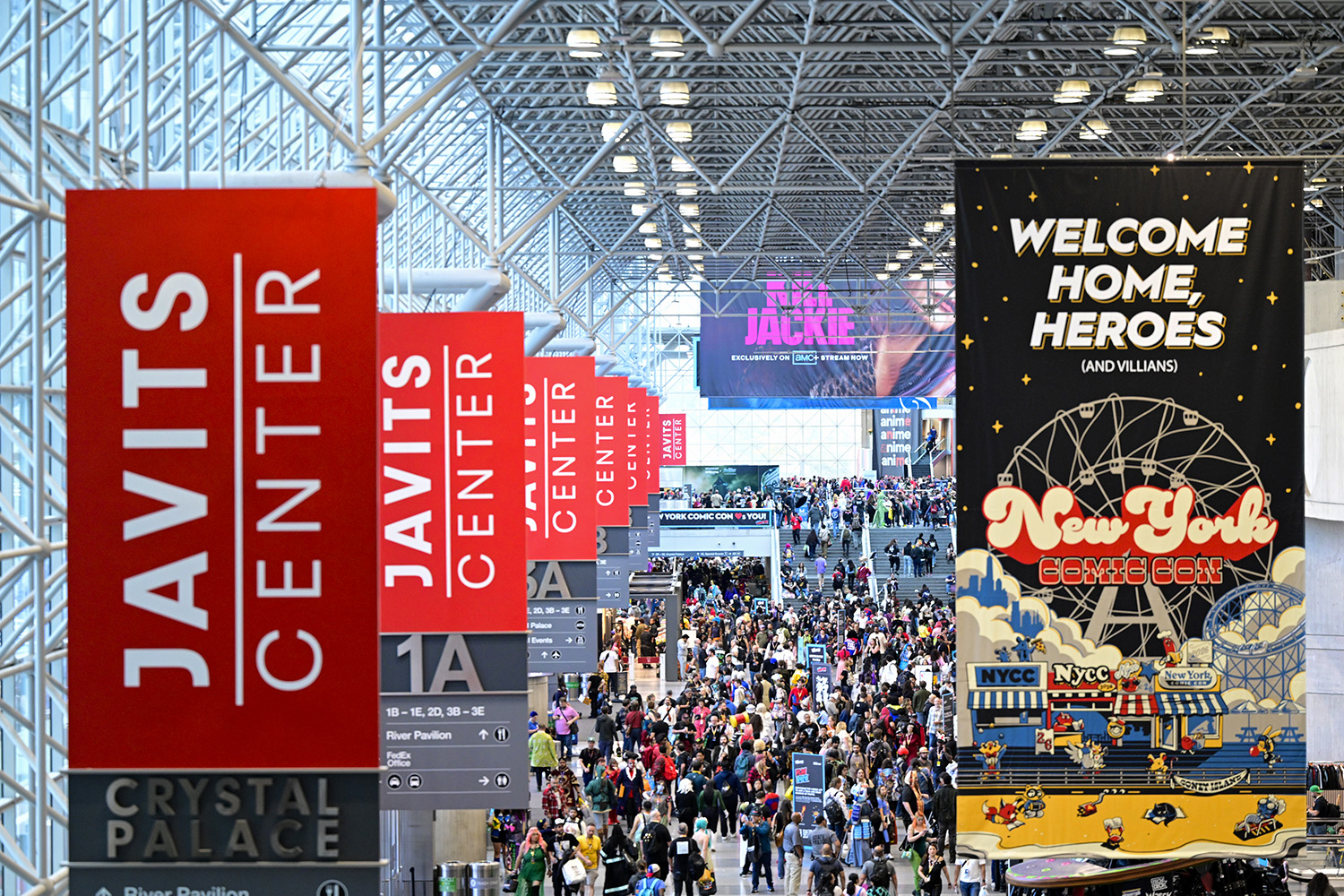
New York Comic Con celebrated its 20th anniversary in a big way this past weekend, welcoming a reported 250,000+ attendees to the Javits Center from October 8-11, 2026. That’s according to a press release from ReedPop, which also touted an estimated $91 million economic impact for New York City, more than 650 exhibitors, and over 500 Artist Alley participants.
Those are impressive numbers for a convention that started with just 33,000 attendees in a single hall back in 2006. But there’s one number in particular that deserves a closer look: 250,000.
After all, San Diego Comic-Con typically reports attendance of around 135,000 people. So does that mean New York Comic Con is now nearly twice the size of San Diego?
Not exactly.
In fact, we’ve been down this road before. Back in 2014, when NYCC announced attendance of 151,000, we took a closer look at how the two conventions count attendees. At the time, we spoke with Lance Fensterman, then Senior Global Vice President of ReedPop, who explained that NYCC’s attendance figures were based on tickets sold, rather than the number of individual people attending.
And now, more than a decade later, we’ve confirmed with New York Comic Con that they’re still using that same method when reporting attendance numbers.
So why does that matter?
Not All Attendance Numbers Are Created Equal
Let’s say you’re attending New York Comic Con on Friday and Saturday. You purchase a Friday badge and a Saturday badge, and head to the Javits Center for two days of panels, shopping, and cosplay.
Under NYCC’s counting system, you’ve just contributed two to their attendance total. But you’re still just one person, unless you’re a clone or a variant who has wandered in from some multiverse.
If you purchase badges for all four days, how you’re counted would depend on how you purchased your badges. If you purchased a combined four-day badge, you’re only counted once. But let’s say those were sold out, and you instead purchase four single day badges. Under this system, that would be treated as as four “unique” attendees — meaning that if even 10,000 people (which is only 4% of the number of attendees New York Comic Con is counting under this system) purchased all four single days, they would be counted as 40,000 people instead, which is 30,000 more than really purchased tickets.
Now multiply that across hundreds of thousands of badge sales, and you can start to see where things get complicated.
That example isn’t intended to represent NYCC’s actual ticket sales breakdown, as we don’t have that information. But it illustrates why a reported attendance figure of 250,000 doesn’t necessarily mean 250,000 different people walked through the doors.
It’s an important distinction, particularly when comparing conventions.

San Diego Comic-Con Counts Differently
San Diego Comic-Con uses a different system, with attendees registering through individual Member ID accounts. Its reported attendance figures reflect unique attendees, rather than counting someone with a four-day badge four separate times.
So someone attending San Diego Comic-Con for all four days is still counted as one person. As previously stated, that same person attending New York Comic Con with four individual single-day badges would count as four under NYCC’s system.
That’s a pretty significant difference.
And it means that putting NYCC’s 250,000 next to SDCC’s approximately 135,000 isn’t an apples-to-apples comparison. One figure represents admissions or badges sold, while the other represents individual attendees.
It’s also worth pointing out that NYCC isn’t necessarily doing anything wrong here. Counting ticket sales is a legitimate way to measure attendance, and the number of admissions across a four-day event is certainly relevant when discussing its scale.
Back in 2014 when we spoke to Fensterman, New York Comic Con hadn’t yet implemented their Fan Verified Accounts, so counting by days sold made much more sense, when it was hard to attribute badges sold to individual people. That system was implemented in 2016, and the first year they could have realistically reported real numbers. This is purely speculation, but I have to imagine they weren’t eager to report attendance numbers lower than what they had previously been reporting, just because they could now count more accurate numbers. So why change their reporting methods?
And again, the problem isn’t the counting method itself! That is a perfectly legitimate way to count attendance, and ReedPop is not alone in using that method. It’s what happens when those numbers are presented as though they’re directly comparable.
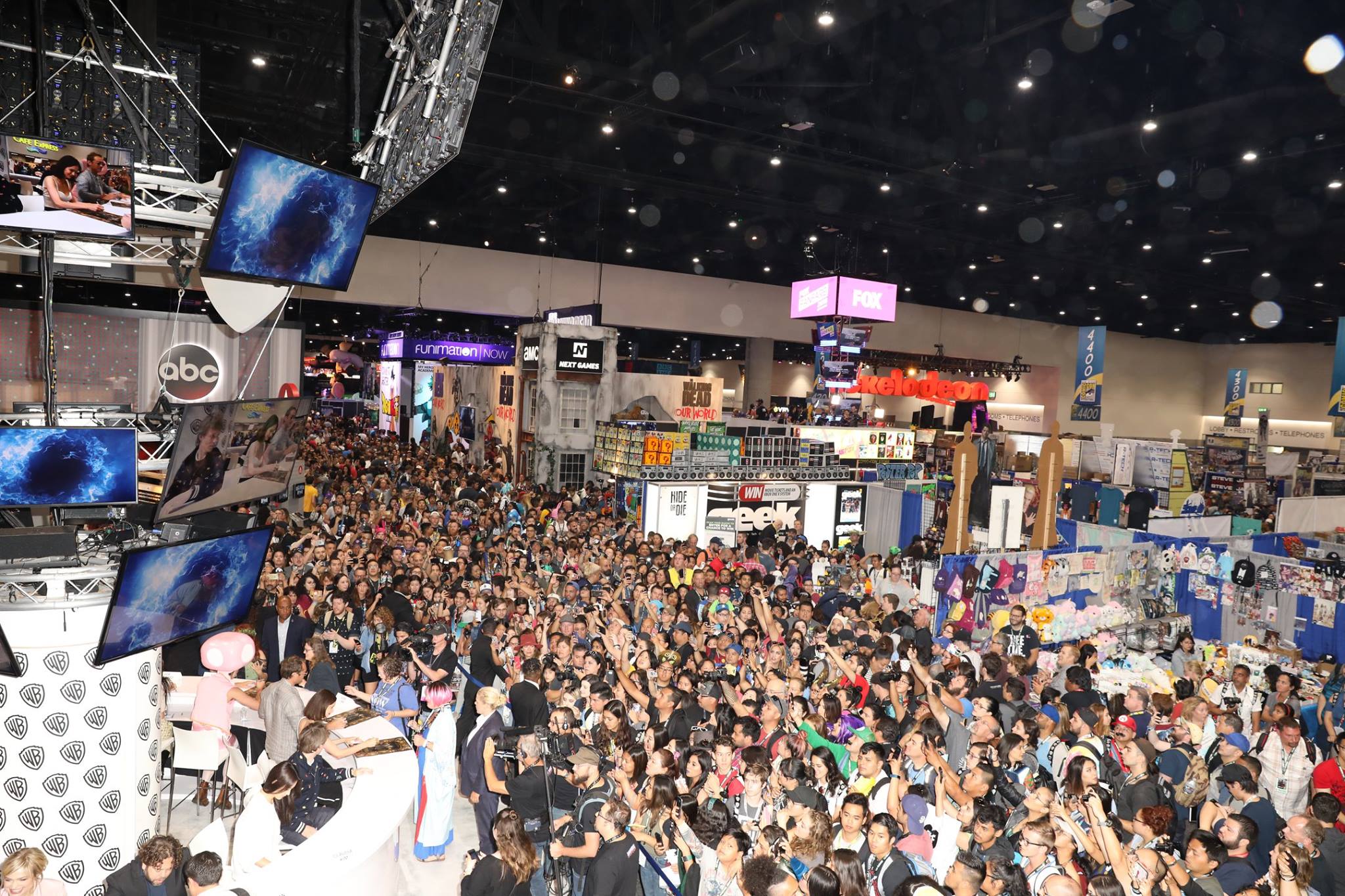
So Which Convention Is Actually Bigger?
That’s where things get tricky.
Without knowing how many NYCC attendees purchased badges for multiple days, there’s no way to calculate the convention’s actual number of unique attendees from its announced 250,000 figure. And there’s certainly no way to conclude that New York Comic Con is nearly twice as large as San Diego Comic-Con based on those numbers alone.
For NYCC to exceed SDCC’s approximately 135,000 unique attendees, its 250,000 reported admissions would need to represent more than 135,000 different people. That works out to an average of fewer than 1.85 days per attendee.
Is that possible? Maybe! If the vast majority of NYCC attendees only purchase a single-day badge, its unique attendance could exceed San Diego’s. But if a substantial percentage attend two, three, or four days, that changes the calculation considerably. And without a breakdown of how many people attend multiple days, we’re left making educated guesses.
There are, of course, also other ways to measure the size of a convention, including exhibit space, programming, exhibitors, and the broader footprint of events taking place outside the convention center.
And when it comes to physical space, the Javits Center actually has San Diego beat, both in terms of total square footage and exhibit floor space.
The Javits Center completed a major expansion in 2021, adding approximately 1.2 million square feet to the facility, bringing its total footprint to 3.3 million square feet. The San Diego Convention Center, meanwhile, has famously been stalled on expansion plans for years, remaining at approximately 2.6 million square feet. When it comes to exhibit space, Javits boasts roughly 840,000 square feet, compared to San Diego’s 615,700 square feet.
Of course, convention center square footage isn’t necessarily a perfect comparison, either. Total building size includes everything from meeting rooms and exhibit halls to loading docks and behind-the-scenes facilities, and not all of that space is available to attendees. Nor does it mean either convention utilizes every square foot of its respective building. But the Javits expansion has undoubtedly given NYCC more room to grow, and it’s entirely possible that the convention now draws more unique attendees than San Diego.
There’s also the experience outside the convention center itself to consider.
San Diego famously takes over much of downtown each July, with activations, parties, and experiences that don’t always require a Comic-Con badge. Thousands of additional fans and locals descend on the Gaslamp Quarter, turning the surrounding area into what feels like an extension of the convention itself, otherwise known as the “Comic-Con campus”. It’s part of what makes SDCC feel so massive, even beyond the convention center walls.
At New York Comic Con, outside its doors is just… New York. Which is great, we love New York City, but it’s definitely a different experience.
But again, none of that tells us how many unique badgeholders actually attended either convention.
The Bottom Line
None of this is meant to diminish what New York Comic Con has accomplished.
A convention that draws 250,000 admissions across four days, attracts some of the biggest names in entertainment, and fills the Javits Center with fans is unquestionably a massive event. NYCC has grown tremendously over the last two decades, and its 20th anniversary is worth celebrating. And on a personal note, I would just like to mention that it’s both a lot of fun and has one of the best Artist Alleys in the country.
But when it comes to the inevitable comparisons between New York Comic Con and San Diego Comic-Con, the numbers need context.
NYCC’s 250,000 figure isn’t necessarily 250,000 individual fans, just as San Diego’s approximately 135,000 isn’t a count of every single daily entry over the course of the convention.
They’re two different measurements, and comparing them directly doesn’t tell us which convention is actually bigger.
We made that point back in 2014, when NYCC reported 151,000 attendees. Twelve years and nearly 100,000 additional reported admissions later, the same distinction still applies.
New York Comic Con may be bigger than San Diego Comic-Con. Or it may not.