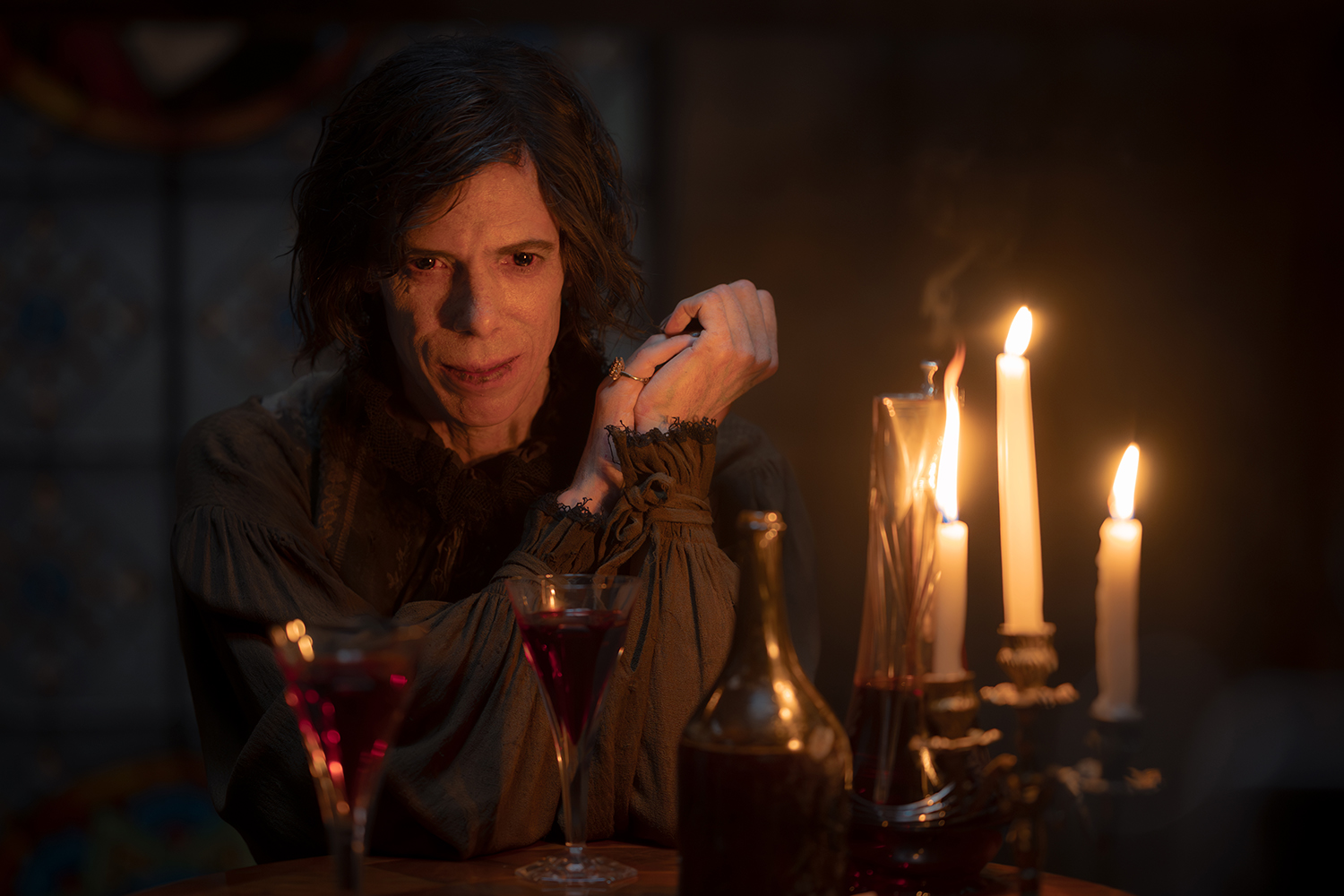
Tonight’s episode of The Vampire Lestat had a lot happening, so you may have missed a moment that seems to be foreshadowing what appears to be one of the season’s biggest moments.
If you’ve been watching showrunner Rolin Jones’ cut of the trailer on a loop (just me? cool) or paying attention to the weekly opening montage, you’ve seen the flashes: a long, ornate dining table, set against different backdrops, with a small group of characters seated around it like they’ve been called for a tribunal. The whole thing looks heightened and dreamlike, more theatrical than the show usually goes for (unless, of course, you’re telling me Daniel Molloy’s giant floating head really does appear out of the ceiling in our reality).
It’s clearly a hallucination, clearly surreal, and because it keeps appearing in the season’s marketing, it also feels like a destination. Lestat is heading somewhere this season, and all signs point toward that long table.
Tonight, Magnus finally gives us our biggest clue as to why. So let’s dive into what it means.
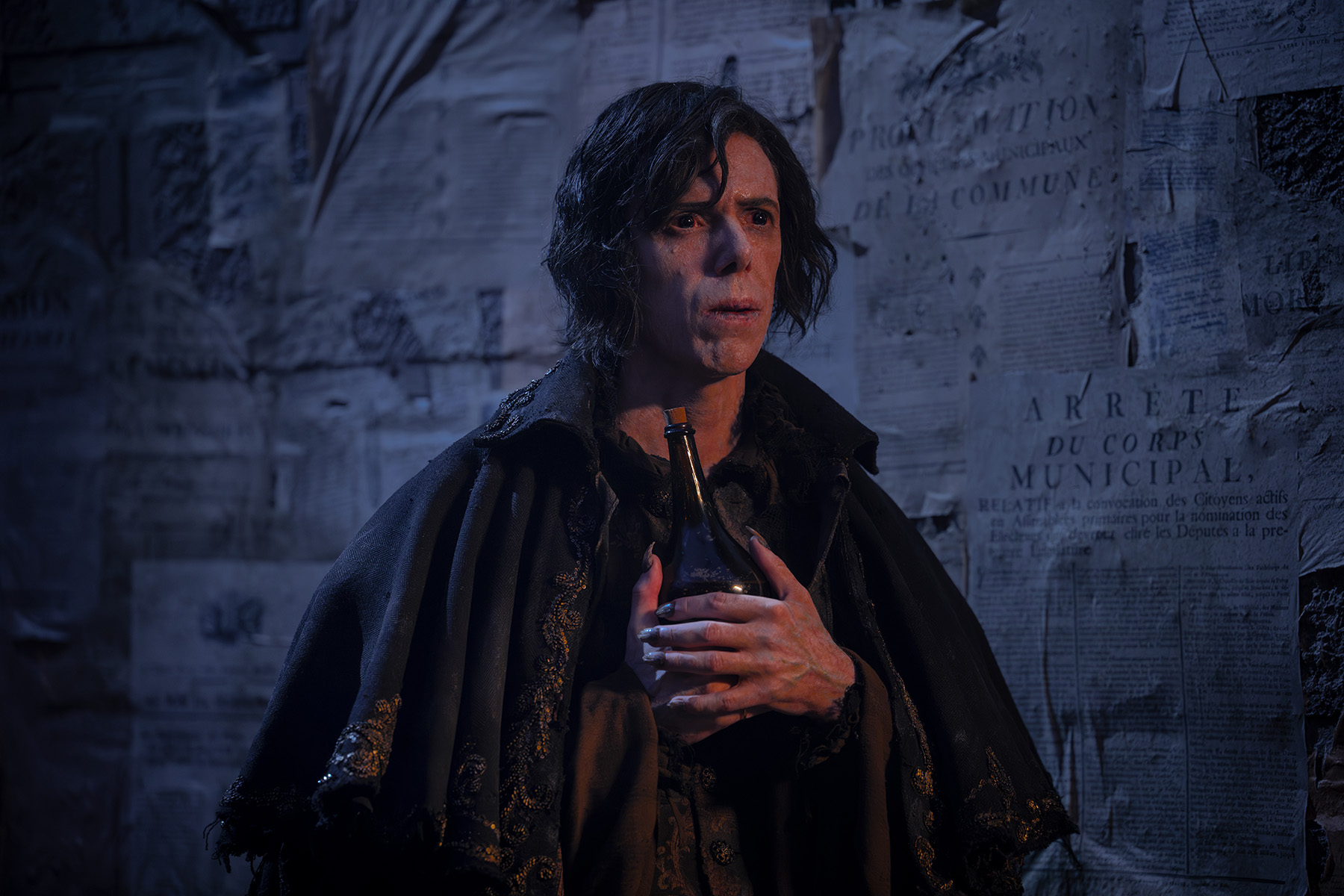
Who is Magnus?
As tonight’s episode made clear, Magnus is the obsessed vampire who witnessed Lestat’s turn as Lelio on stage back in Paris in the 1790’s (he saw the play nineteen times, a totally reasonable number). He then abducted Lestat out of the bed he shared with Nicki in their Paris apartment, kept him imprisoned and tortured, and brutally turned him into a vampire before burning himself alive in front of Lestat.
No amount of trying to gloss over that memory, to turn it into a hyperstylized 1980s music video to deal with that trauma, changes any of that.
Though Lestat certainly tries. After giving Daniel that fictional fairytale in an interview for the documentary they are filming, Lestat drives away, and it’s here that he sees Magnus and has a literal crashout. Obviously, it’s not really Magnus; he has been dead for over 200 years. But whether in this case it’s his ghost, an imagined figment of Lestat’s fracturing imagination, or something else entirely, isn’t clear.
What did Magnus say?
Magnus has a lot to say to Lestat about his recent interview with Daniel, and how he wasn’t entirely forthcoming with the real, brutal details of his turning.
But mostly what Magnus has to say is clearly foreshadowing what’s to come. Here is his speech again, if you missed it:
“You tripped over the collywobble shelf and took the cloth off the long table. We eat your soul at the long table. 68 courses so far. We keep waiting for the bill, but the plates keep coming. And we keep asking ourselves, when is he going to make an album? Very odd company at the long table. A hand. A finger. A drummer. A pimp. You. Mommy. Claudia.”
Let’s break this down slower.
What is the long table?
If the overall theme of this season is “The Failures,” as Lestat titles his future self-recordings, then I think the long table may be where those failures gather.
The table itself is almost certainly the dining table from Lestat’s childhood home. We see it repeatedly in the Auvergne flashbacks.
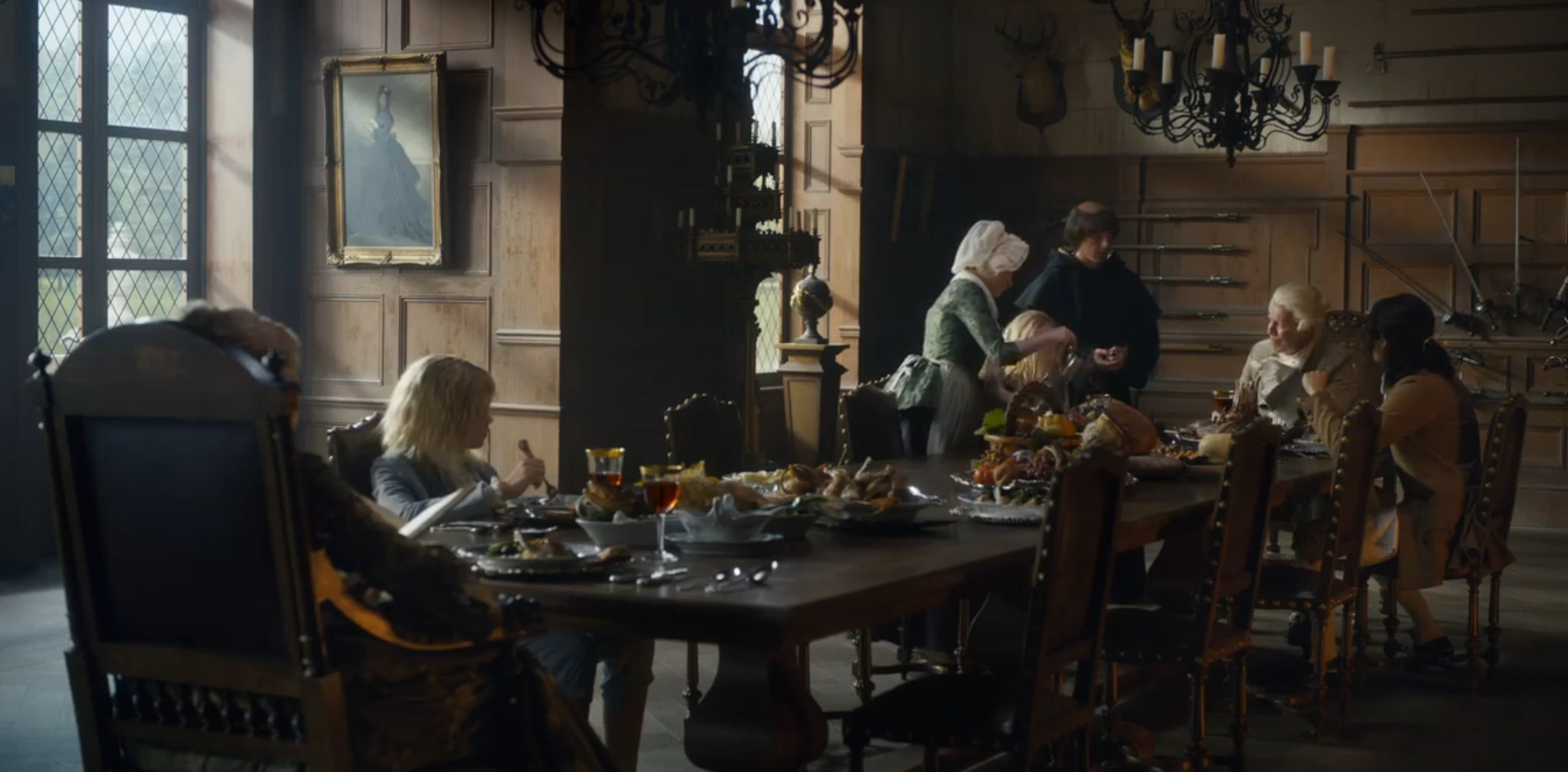
But even more than that, we’ve seen it repeatedly in the marketing for this season. In the weekly intro, we see it in Lestat’s childhood home, both in splendor and then starting to decay and rot, and then fully rotting as it sits out in the woods.
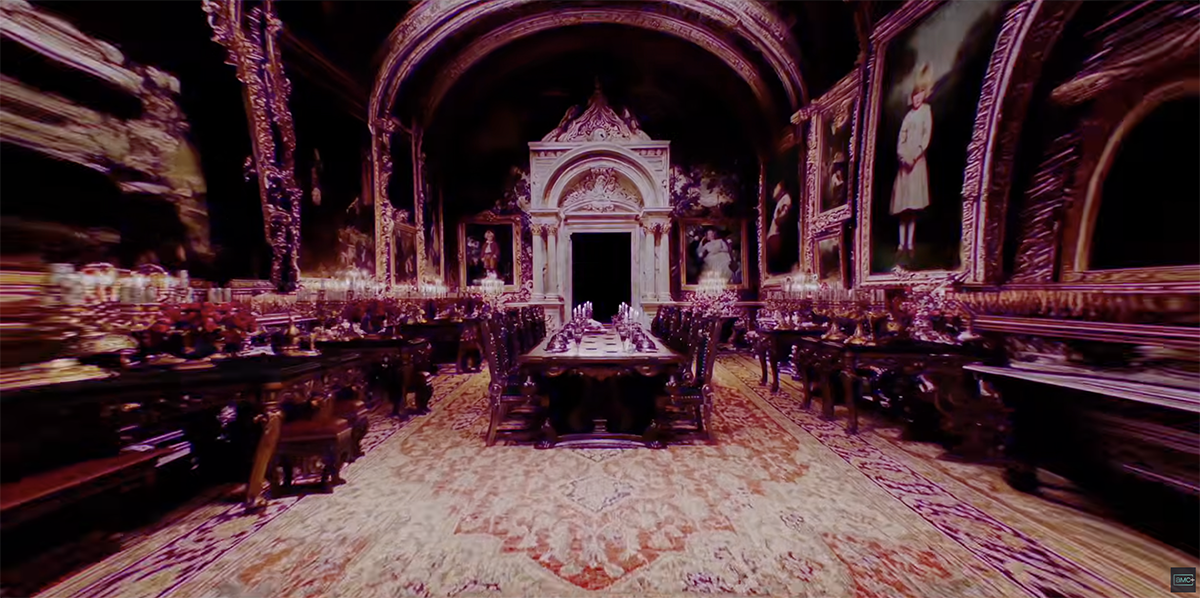
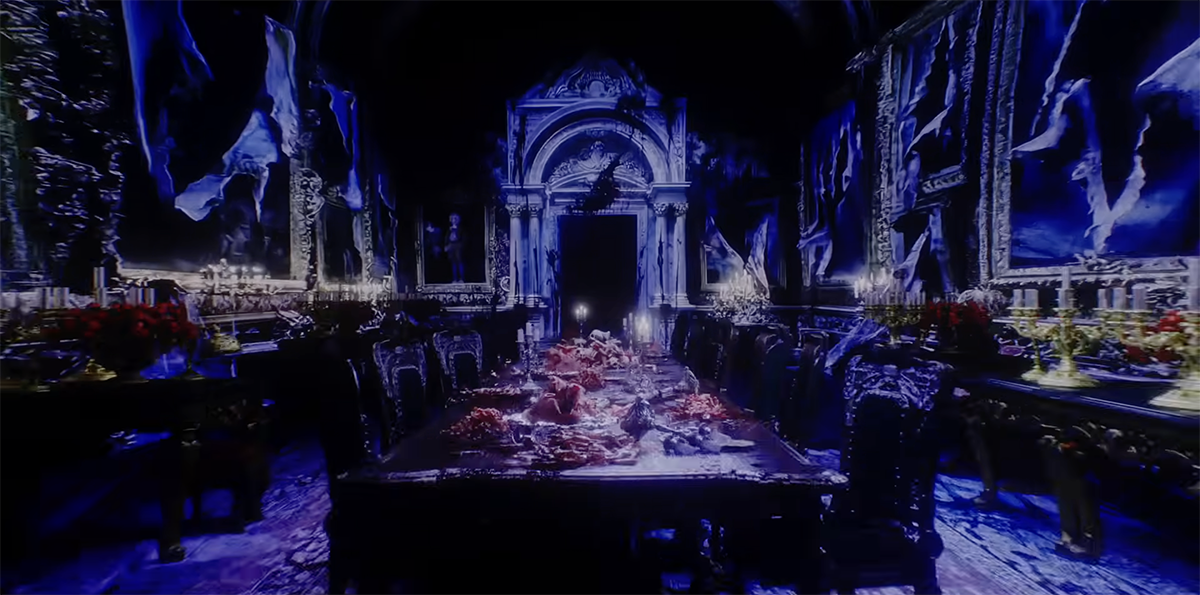
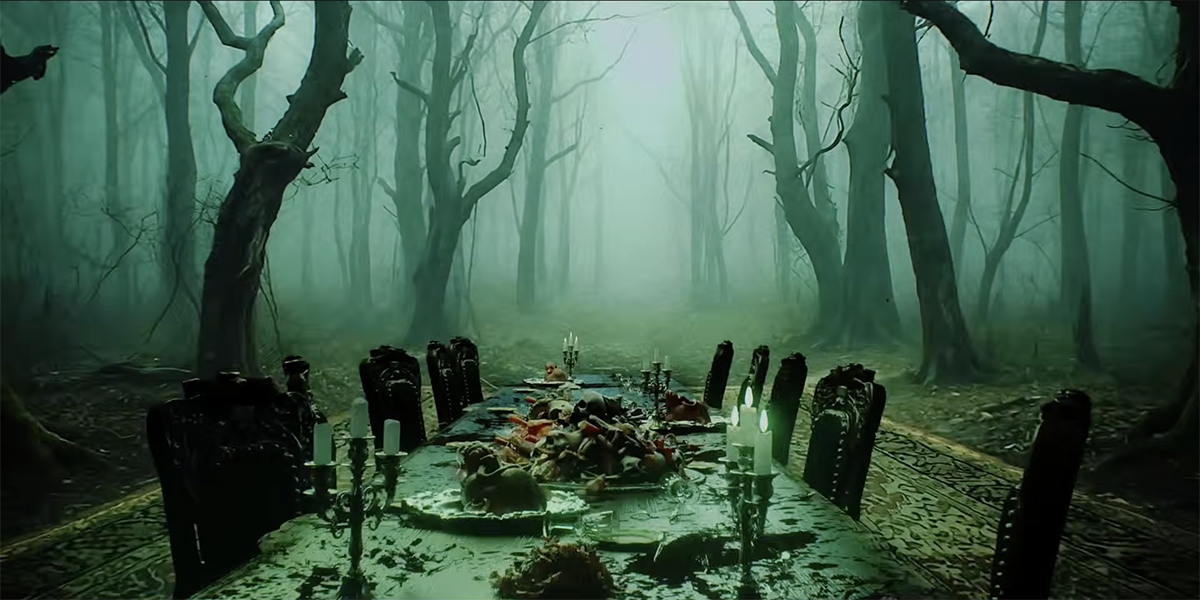
Again, we see it in the Rolin Jones cut of the trailer multiple times, in different locales, including the recording studio, and Lestat’s apartment in Paris with Nicki:
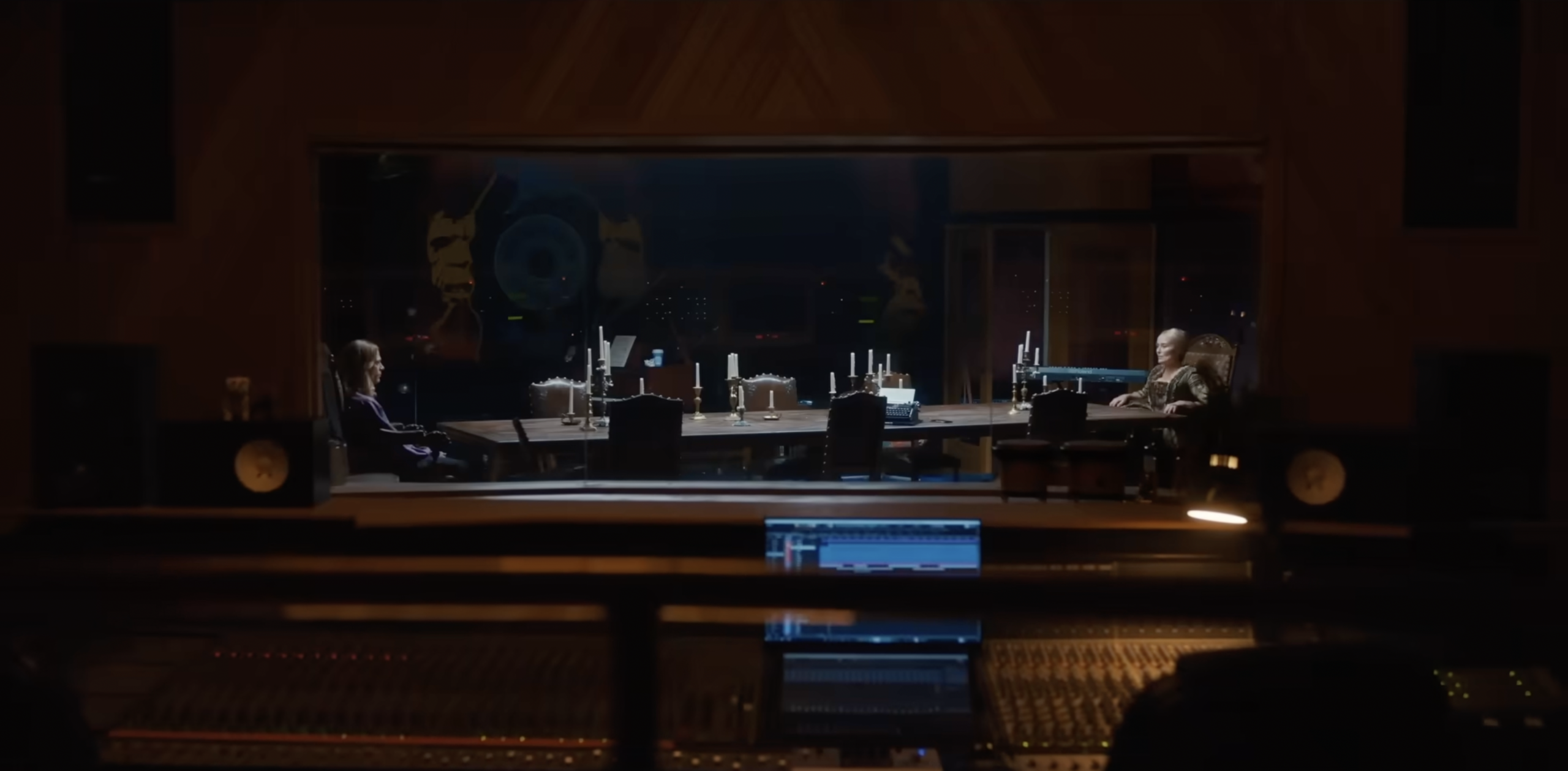
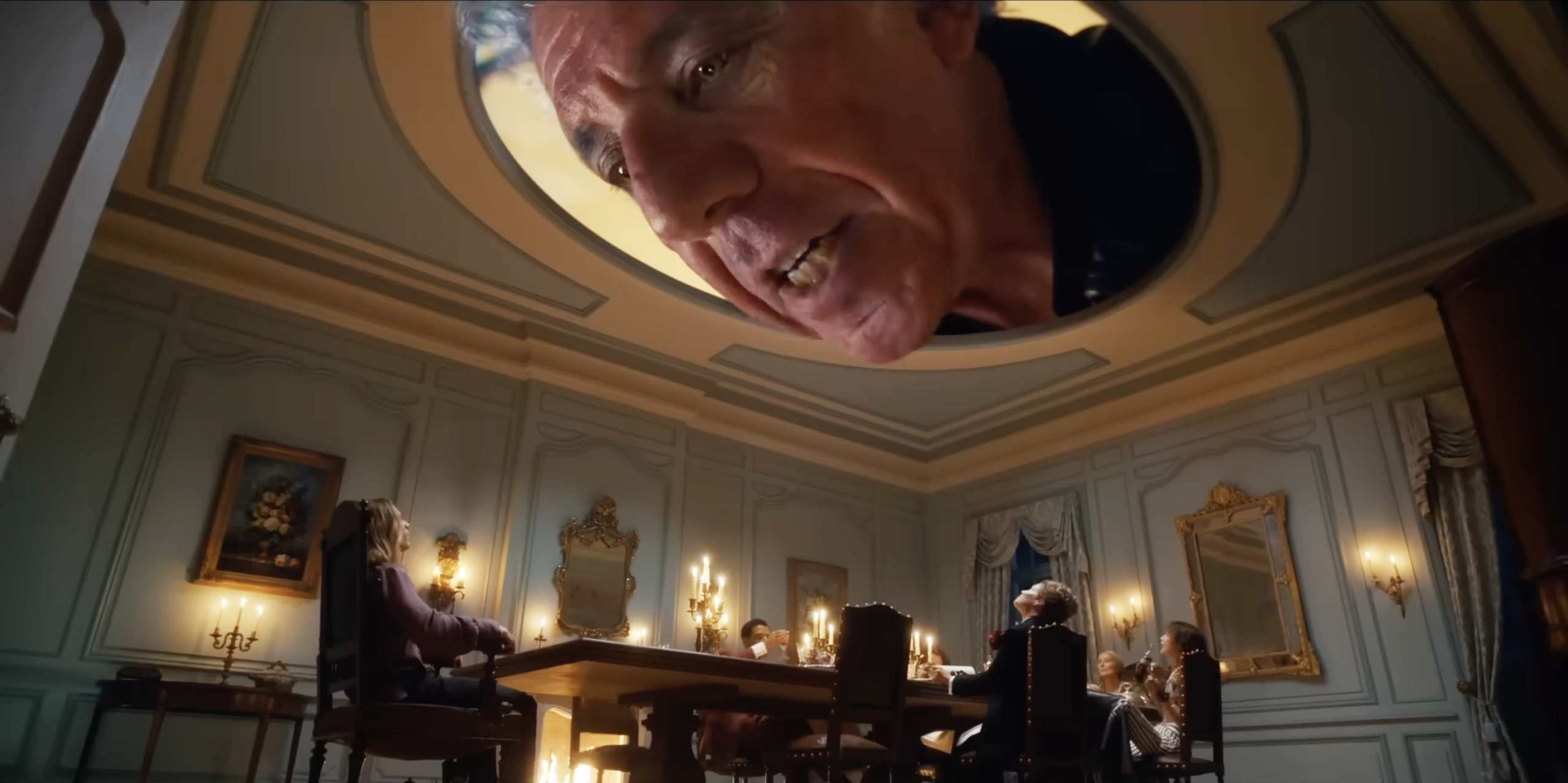
The table is moving throughout time and history, possibly because Lestat’s “failures” aren’t contained to one single moment. There’s the childhood home where his mother failed him, the Paris apartment where he failed Nicki…
If this theory is correct, then the long table isn’t really a place at all. It’s a reckoning. And it seems like the place where Lestat is going to be forced to pull up a chair.
Very odd company
Just who is seated at the long table? Well, aside from one possible exception (which we’ll get to), these seem to be Lestat’s fledglings. And I think it’s safe to say that many of them may not have the best relationship with Lestat. I mean, “we eat your soul at the long table” doesn’t sound like any kind of family gathering I’d want to be invited to.
But just who is seated at the table? Let’s review, based on Magnus’ guest list, and the ways in which Lestat has failed each of them:
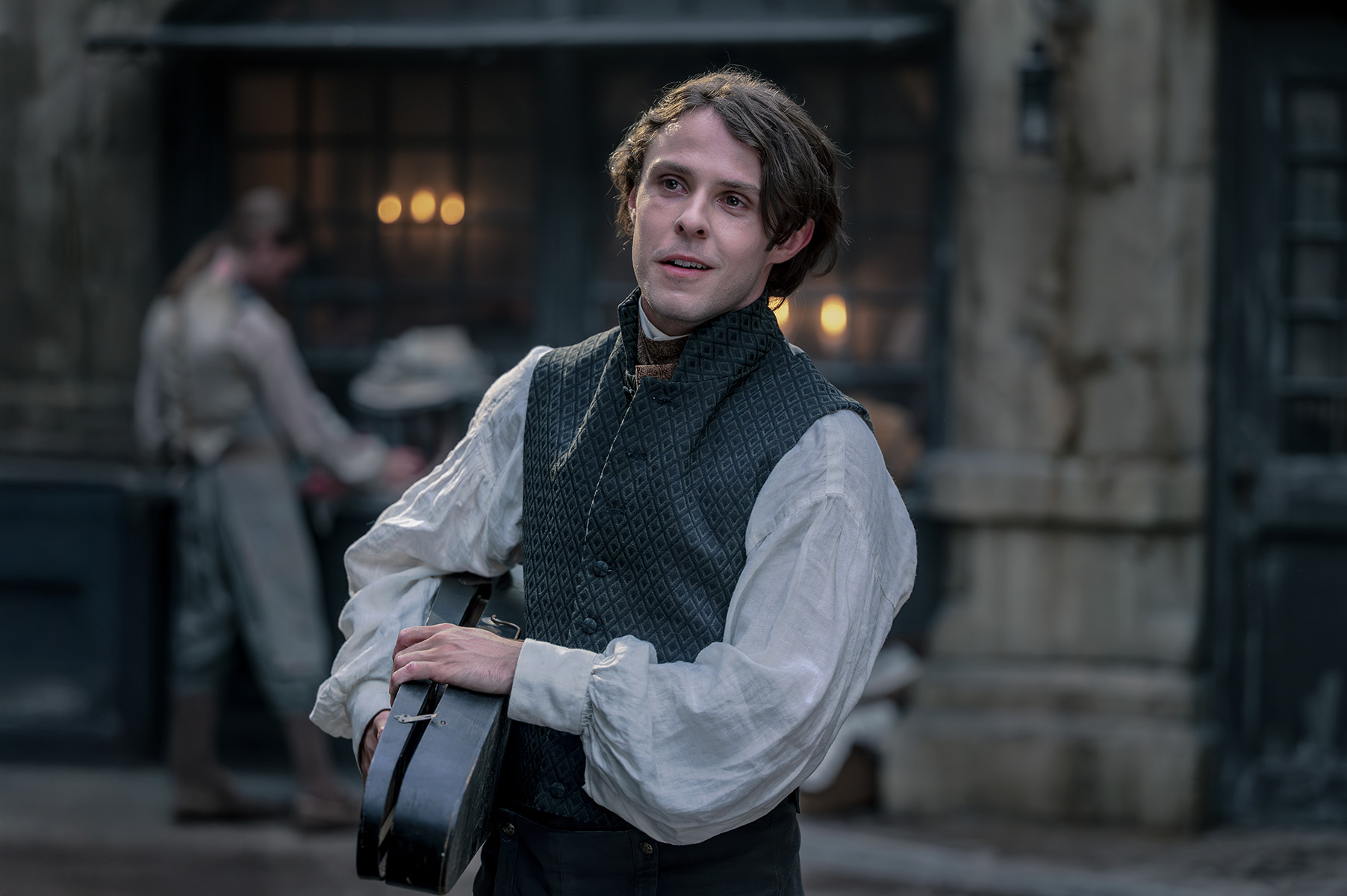
- A Hand. This feels like a very obvious stand-in for Nicki, especially with tonight’s reveal that he chopped his own hand off due to his increasing madness. Despite Lestat’s protestations, Nicki was Lestat’s great pre-vampire love, the violinist, the boy whose mind shattered after Lestat turned him. The failure here is that Lestat could not save him, and could view himself as the source of Nicki’s madness by turning him in the first place.
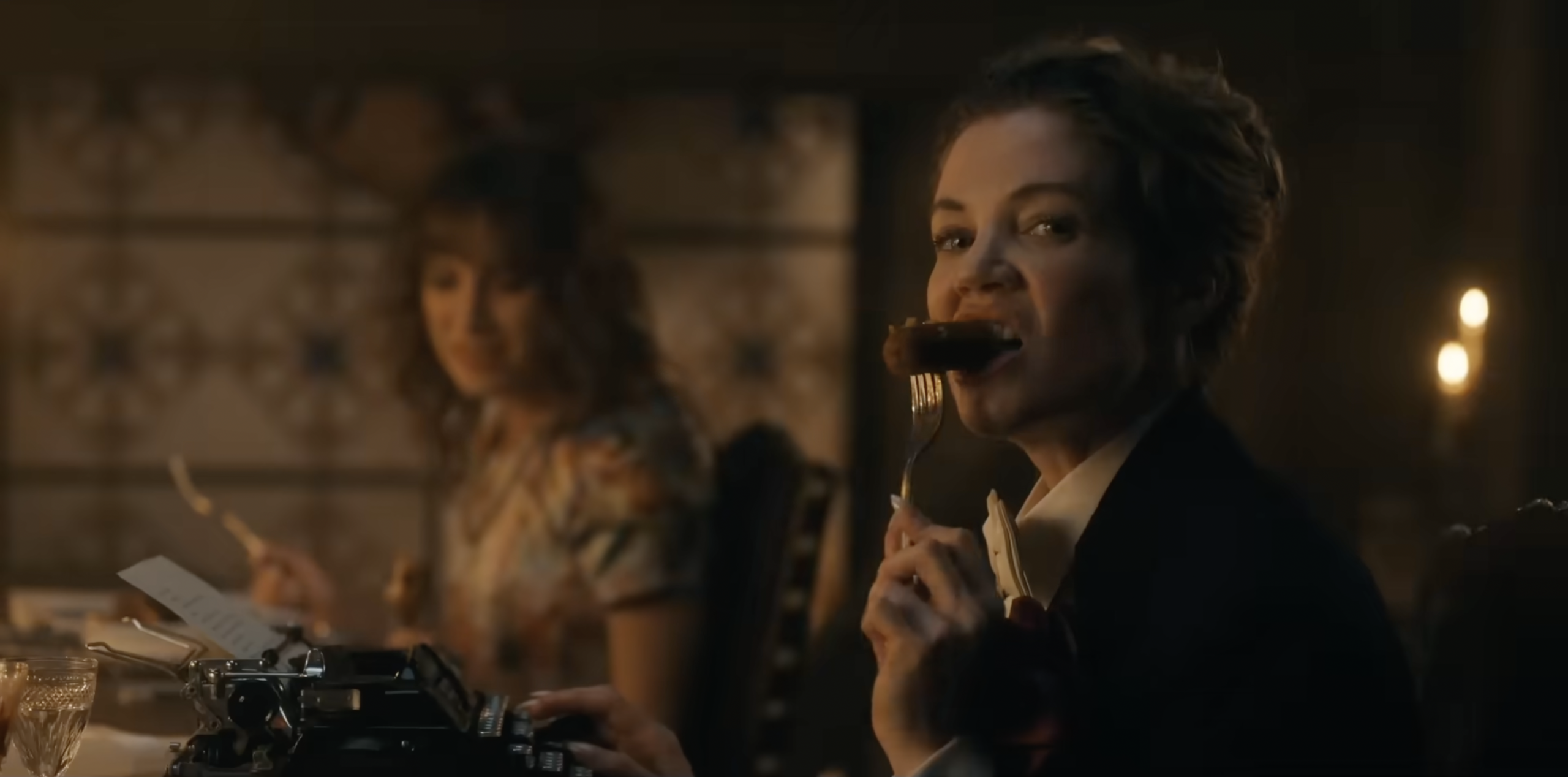
- A finger. Similar to Nicki, there’s a very literal reading here that this is Antoinette, Lestat’s mistress from season one, the on-the-side affair he kept up after promising Louis he would let her go. The “finger” refers to the one Antoinette lost during their relationship — a small mutilation Lestat and Antoinette used together to convince Louis that the affair was over and Antoinette was dead (she was very much not). And as seen in the trailer, I think the thing she is munching down on is not in fact a sausage… but rather her former digit. Lestat failed her in a lot of ways as well, including using her as a distraction for himself when his true love was Louis, promising her a bigger life than he ever intended to give her, and dragging her into Claudia and Louis’ plotting against him, which ultimately led to her death.
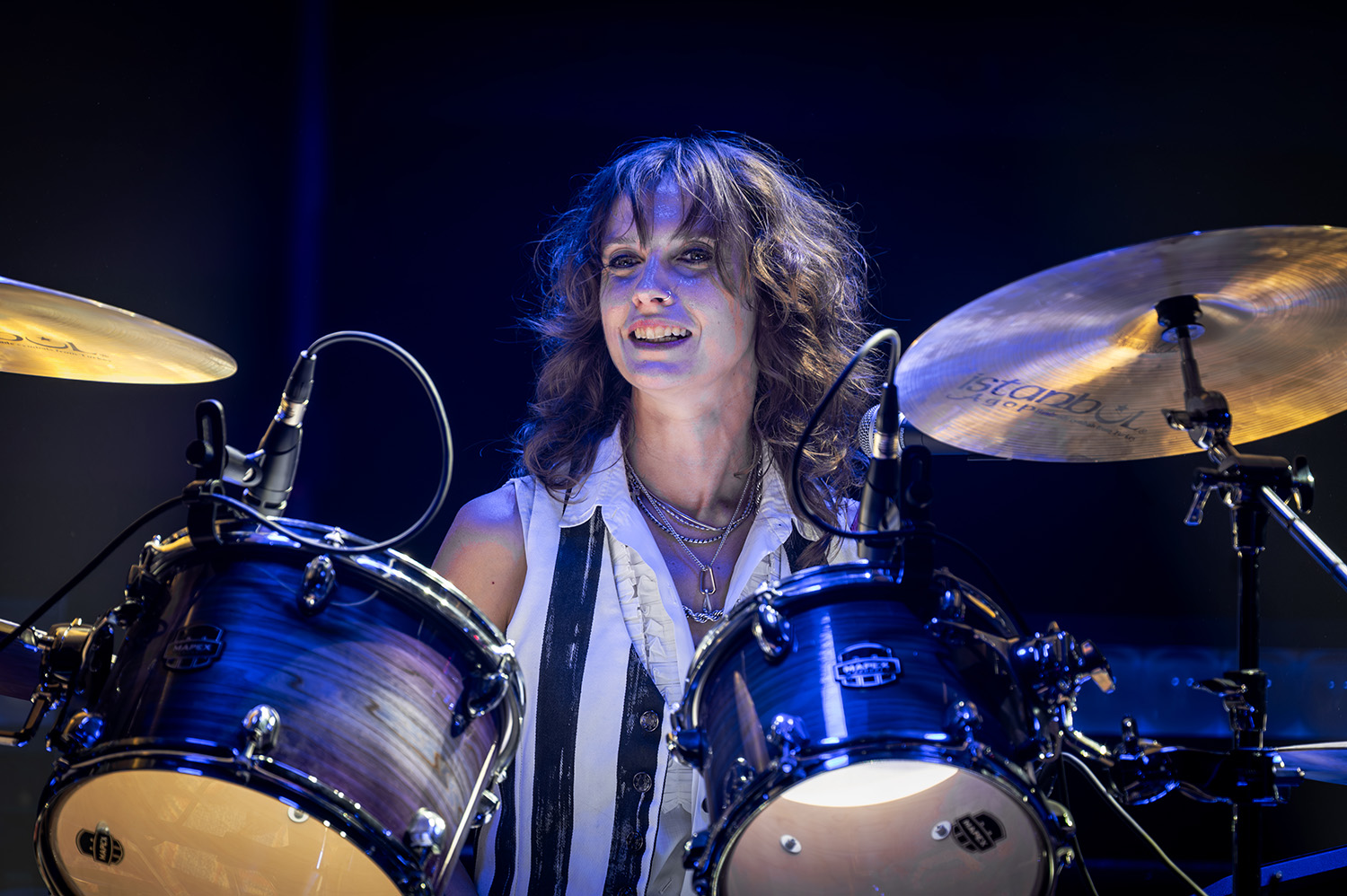
- A drummer. Again, these seem to be very literal interpretations, so the very obvious answer here is… Tough Cookie, Lestat’s drummer in the band (and you can see her seated near Antoinette above). What’s most interesting here isn’t Tough Cookie herself, but what her presence implies. If the table is populated by Lestat’s fledglings, then the show is implying something it hasn’t confirmed yet: that she gets turned. (The rest of the band, notably, is not here, which either seems to mean they don’t get turned, or they do, but are not Lestat’s fledglings). As for how Lestat fails her… well, that’s still to be seen.
- A pimp. This is clearly Louis, who in his mortal life in 1910’s New Orleans, ran a bordello. There are so many ways in which Lestat has failed Louis, and Louis failed him in return, that trying to catalog them here would require an entirely separate article. More importantly, though, every road through Lestat’s life eventually seems to lead back to Louis. If this season is forcing him to confront the people he’s hurt, there is no version of that reckoning that doesn’t involve Louis de Pointe du Lac.
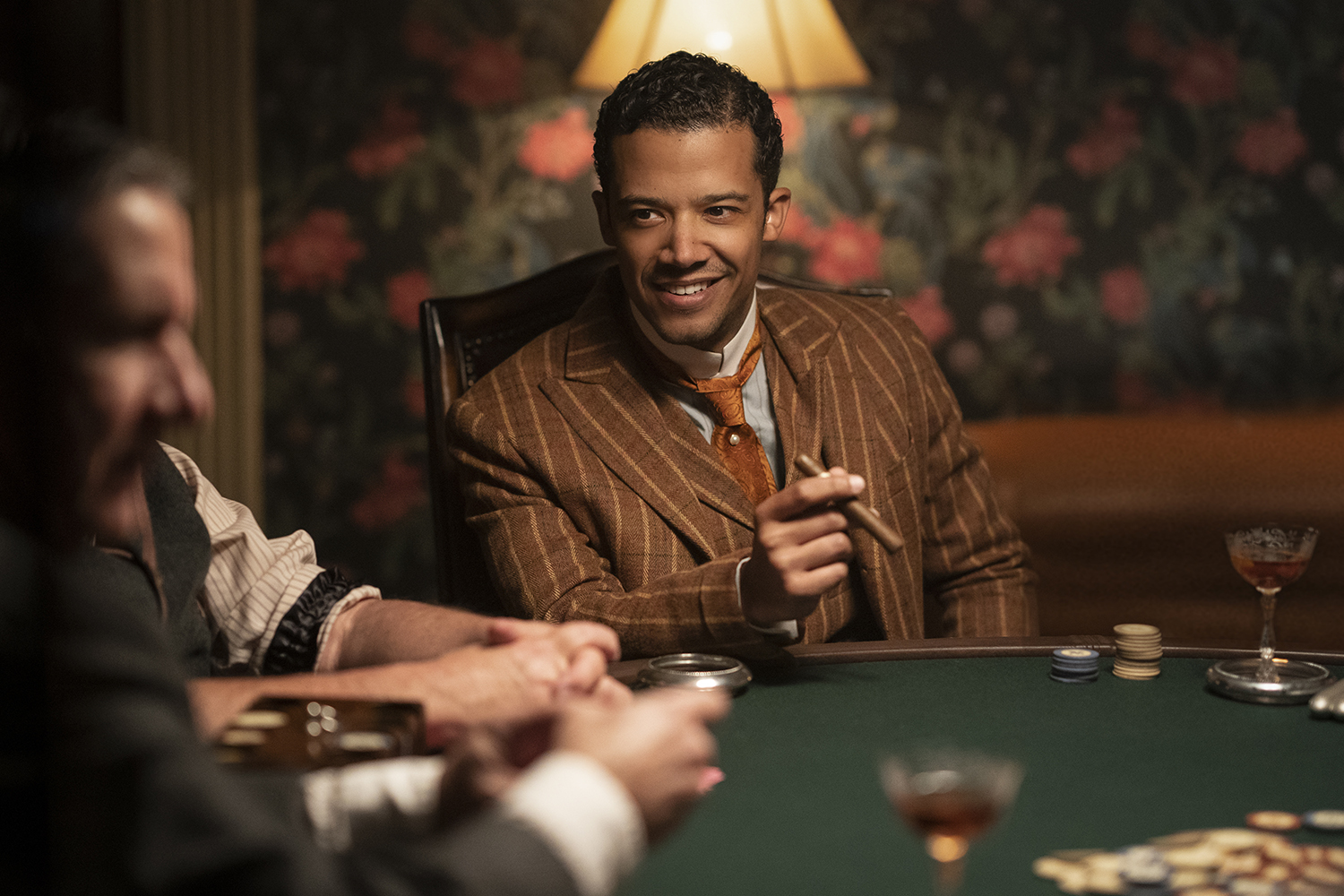
- You. Lestat himself. He has a seat at the table because, well, he’s the one who set it.

- Mommy. This is obviously Gabriella, his mother. Gabriella is the one entry on this list that doesn’t fit quite as neatly as the others (and perhaps why she is seated at the other head of the table in the snippets we’ve seen). If the table is a gathering of people Lestat failed, then arguably she should be sitting on the other side of the ledger. Gabriella has always viewed Lestat through the lens of her own desires, seeing in him the freedom and possibilities she never had, the ability to leave, reinvent himself, and start over. He has failed to meet many of the projections she has forced upon him, as Lestat is someone who desires love and companionship above freedom, and I think Gabriella has always viewed that as a failing in him. But if the table is populated not simply by people Lestat failed, but by relationships he cannot stop carrying with him, then her place here makes much more sense.
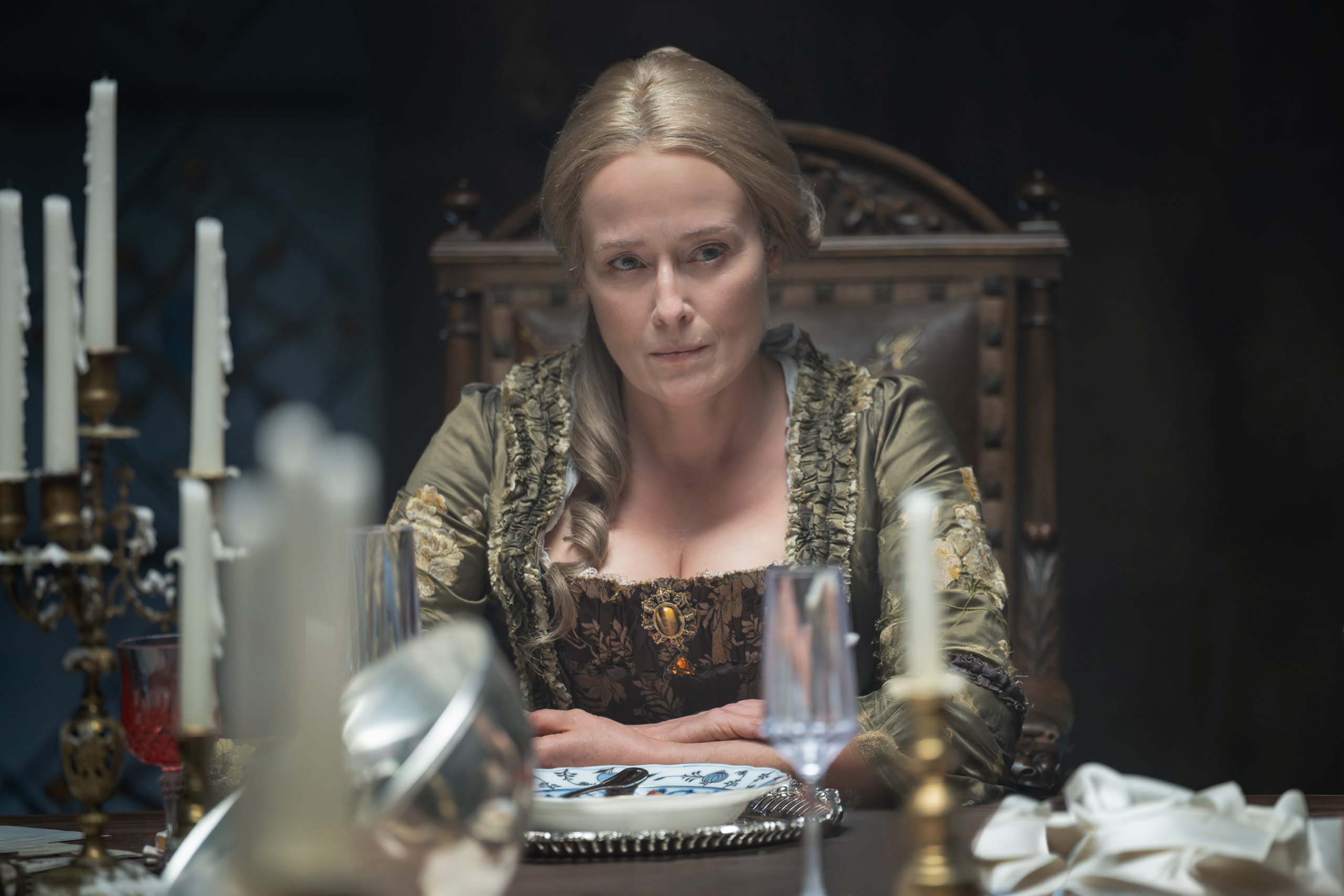
- Claudia. She is the only one mentioned here by name, which feels deliberate. She is also, interestingly, the only one not pictured seated in the trailer with the others, which could mean she simply has yet to pull up a seat in that moment, or perhaps she isn’t coming when called. Again, I don’t think I have to list out how Lestat has failed her, but it’s a very long list.
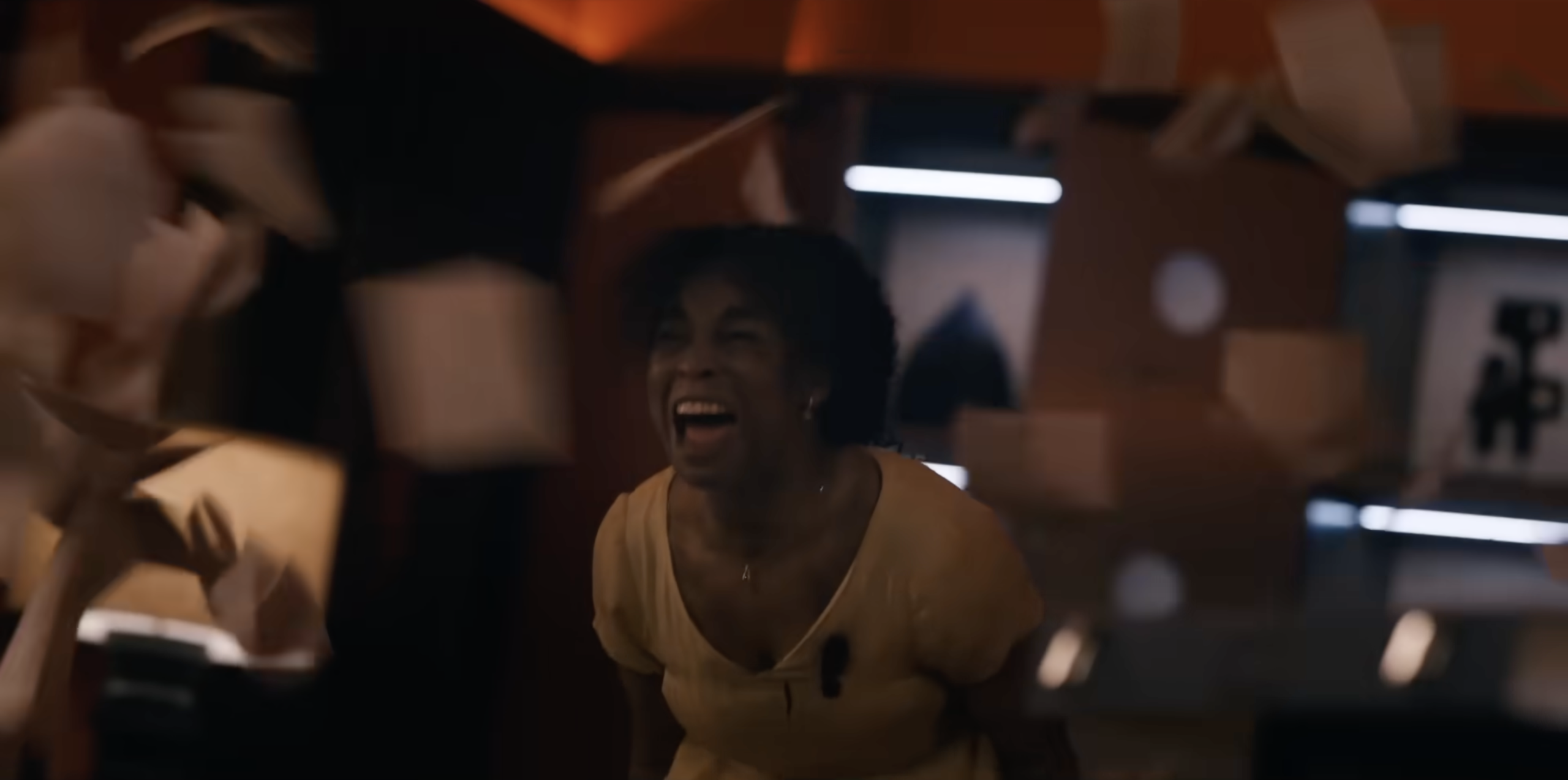
What about the empty chairs?
In the trailer footage of the long table, there are also two empty chairs. If the table is for Lestat’s fledglings, then the empty chairs raise their own questions.
One possibility is that those empty chairs are for future fledglings we haven’t been introduced to yet. Or if Tough Cookie is here, perhaps other band members have been turned and simply aren’t pictured for some reason.
Another possibility is that one of those chairs belongs to Claudia. After all, Magnus names her as part of the gathering, but she doesn’t appear seated at the table in any of the footage we’ve seen so far. But that would still leave the question of who the other open chair is for.
And one, of course, could be Magnus. He seems to imply he is also at the long table, despite not being pictured here or named. But if this is Lestat’s bloodline, then Magnus is his vampire “father”.
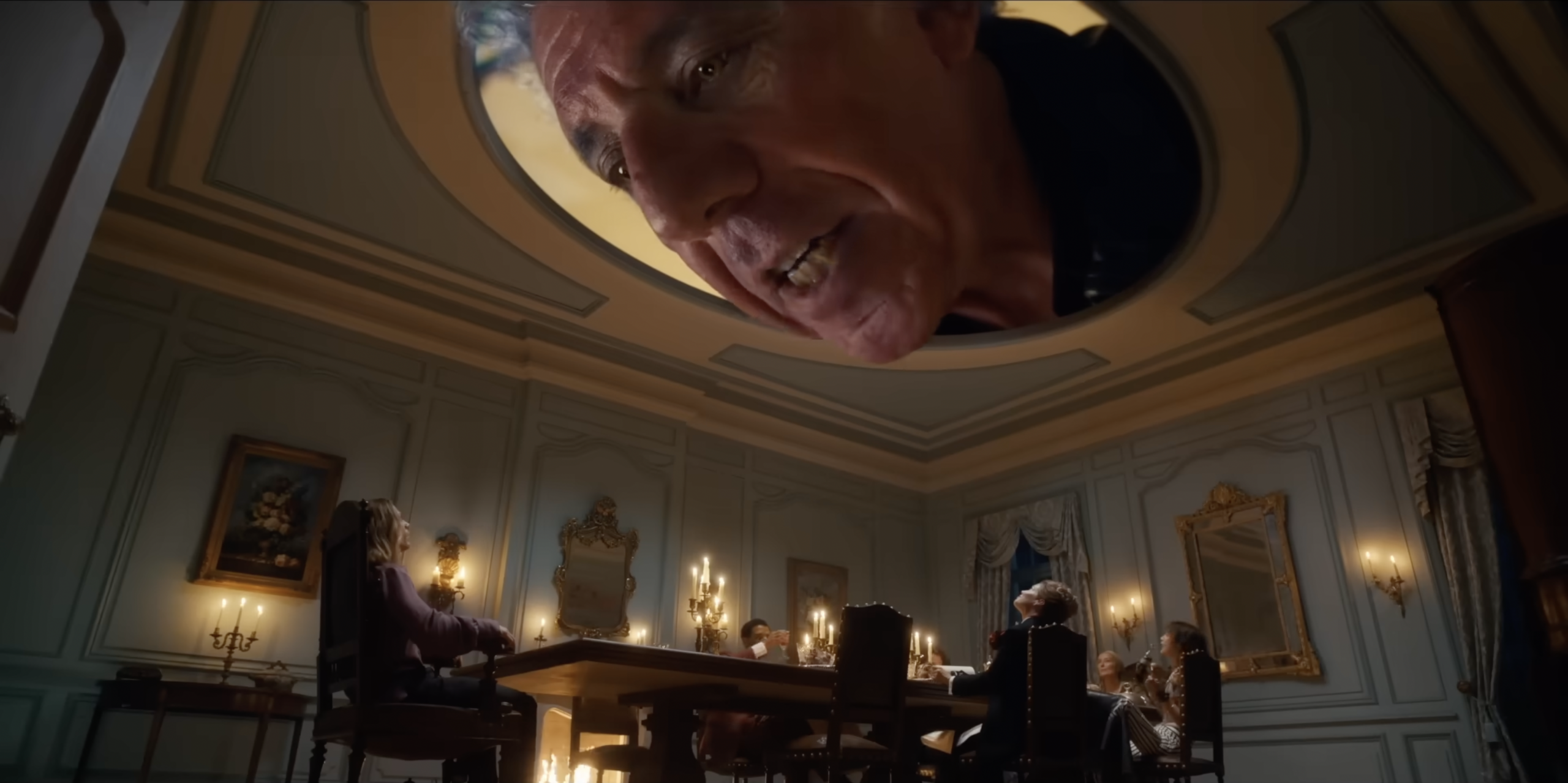
“We keep asking ourselves, when is he going to make an album?”
There are several less obvious questions raised by Magnus’ foreshadowing, including his question of, “We keep asking ourselves, when is he going to make an album?”
Lestat screams back at him, “When we are ready!”, but why does Magnus care when or if Lestat makes an album? That feels like a very odd thing for a dead ancient vampire to care about, no matter how big a fan of Lestat he was.
For me, I think the answer is simple. The music is forcing Lestat to look at the truth of his past. That’s ostensibly what he’s been telling Daniel all season, that these songs are his version of events, his answer to Louis’ book, his chance to reclaim the narrative. But every song seems to be dragging up something he’d rather leave buried.
Despite the glossy, candy-coated “Your Biggest Fan,” with all of its 1980s music video silliness to hide the disturbing truth underneath, the song itself is still Lestat addressing his maker head-on for the first time in centuries. I think this is likely closer to where the show is heading, as Lestat even tells Magnus that he “got his song” — meaning he got Lestat to re-examine his history, to look at the truth of it, even if just for a moment.
There’s a reason that at the end of this episode, Lestat seems to experience a sort of catharsis as he sings “The Loneliness”, and describes the process of creating it as “the muddy bottom, and on the other side, a marble floor polished to the horizon.” Music will make Lestat worse, then make him better.
The music may be the closest thing to a reckoning Lestat has ever allowed himself. Perhaps the table is asking for music because they’re starving for honesty, and Lestat has spent over two hundred years feeding it (and himself) lies, or at least ignoring the full weight of his history. The bill, as Magnus said, has come due.
And if Magnus is right, the people seated around that table have been waiting a very long time to hear it.
The Vampire Lestat airs on AMC and AMC+ on Sundays.