“Toronto” is the episode that asks when Lestat is telling the truth and when he’s putting on a show… and whether anyone, Lestat included, can still tell the difference.
Across 52 minutes, we get a glossy 1980s music video, a Paris memory that contradicts Armand’s version of events, Lestat’s first love, and Louis de Pointe du Lac committing possibly the most brutal act of his immortal life (and finding that it leaves him empty).
Some of it is performance. Some of it is the most exposed Lestat has ever been on this show. The genius of “Toronto” is that it sometimes not even Lestat knows the difference.
The interview
We open with Lestat and Gabriella painting the town red yet again, which here means murdering a pair of newlyweds together.
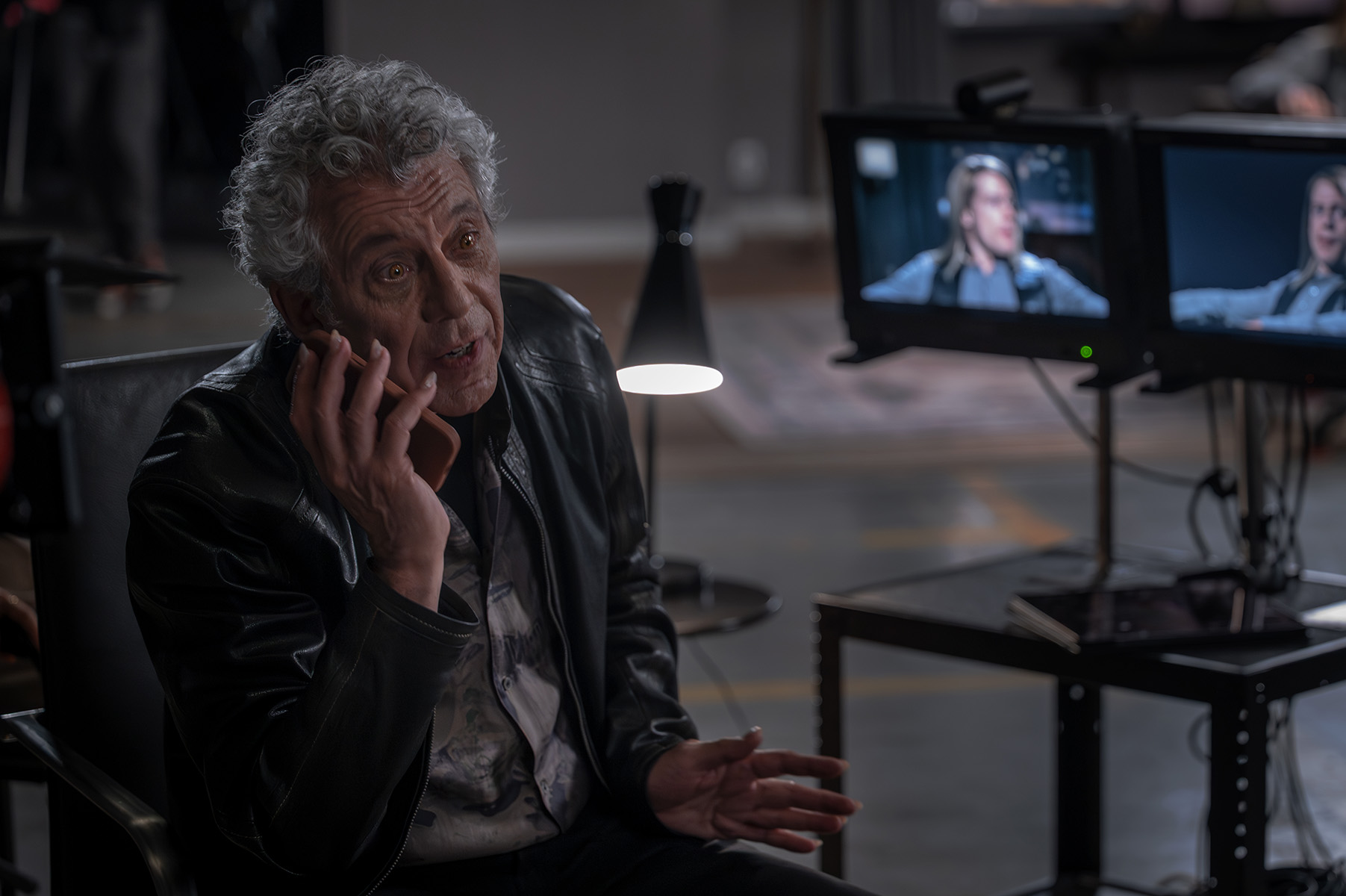
Daniel is across town, waiting impatiently to interview Lestat for the documentary. Once he finally gets his unwilling subject pinned down, he immediately establishes that he is not going to be lobbing softballs or giving Lestat an easy time. Provocation is still the primary tool of Daniel’s interviews, as Louis suggested back in season one. He opens by teasing Lestat about his own lyrics, to Gabriella’s delight and Lestat’s clear annoyance (though Lestat definitely more hurt by his mother’s laughter than anything Daniel could say to him).
But for Daniel, this is the best high. His real drug isn’t the cocaine-filled blood of his nightly feedings, fun as that is. Daniel’s drug is the story, and always has been. Even back when he was a human, he was always a predator on “the hunt” for the next story. And here, he can tell that he can draw blood if he just digs in deep enough. Eric Bogosian is playing this with the barely contained excitement of an addict about to take a fresh hit. Daniel is feeding off Lestat’s pain throughout this entire interview, and he doesn’t have to bare his teeth to do it.
For now, Lestat isn’t falling for it. When Daniel pushes him on his stutter, he performs the breakdown Daniel is fishing for, complete with fake tears, broken voice, and the whole vulnerable rockstar package. Then, he performs his hat trick, and begins to laugh in Daniel’s face. Got you.
It’s the perfect Lestat move: offer Daniel exactly what he’s hunting for, then yank it away to remind him who’s running this interview.
Nicki, Nicki, Nicki
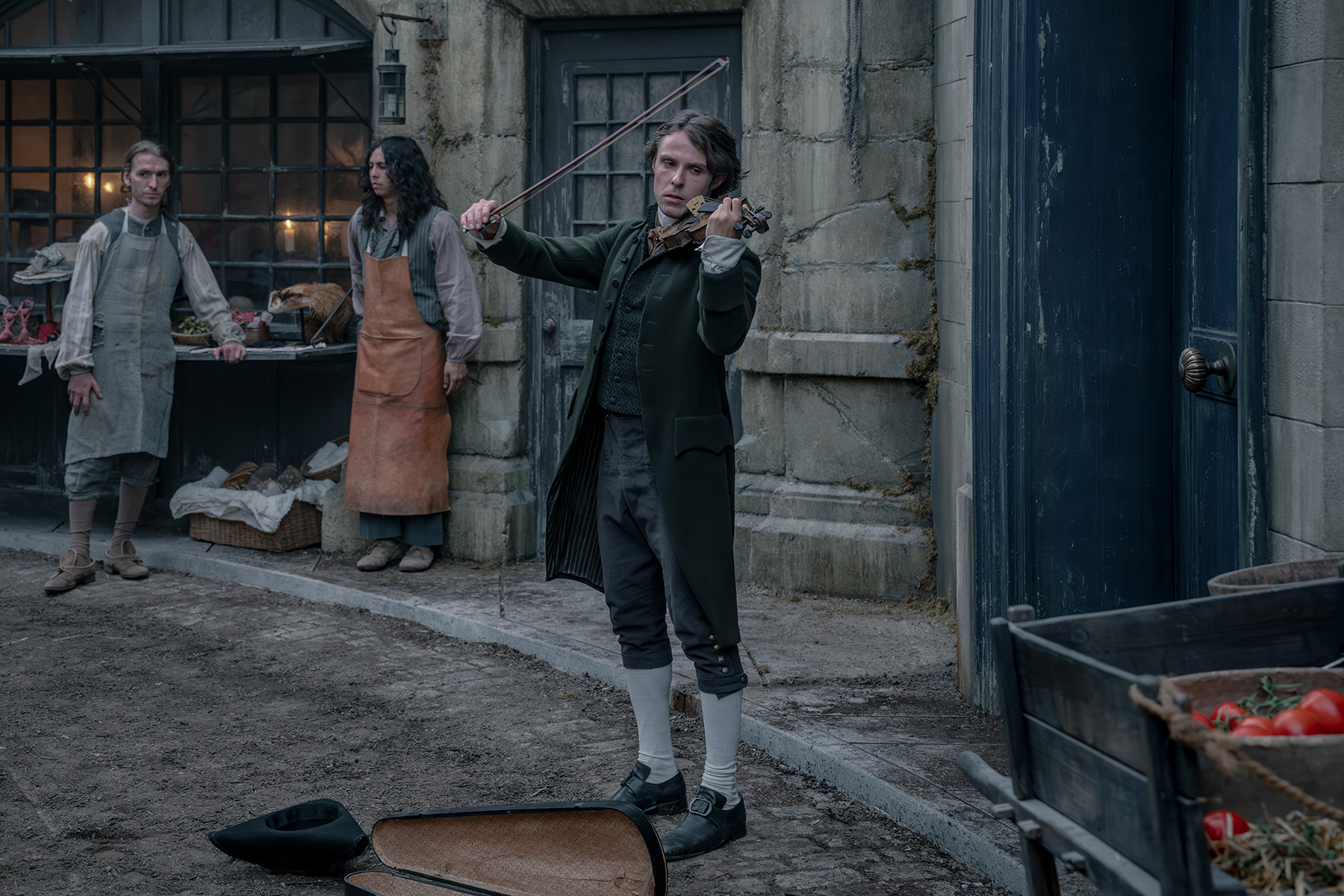
Let’s start by talking about one of the men in Lestat’s past: Nicolas de Lenfent.
The whole sequence here is surprisingly brief: meet cute over a violin, bonding over their shared emotionally distant fathers, falling into bed, falling into doom… and Lestat narrates it with the dismissive speed of someone trying very hard not to feel it: “It goes where you think it goes. All the old tropes and traps of tortured and forbidden love. Blah blah blah. Bi-polar boyfriend, blah blah blah, fast forward, stop, vape, check your phone, press play… Now he’s a vampire.”
This is obviously Lestat not wanting to look too closely at these memories. Despite his insistence that Nicki was his first love rather than his great love, there is real pain here. It also condenses one of the foundational tragedies of Lestat’s life into just a few minutes of screen time.
I do wonder whether the full weight of Nicki and Lestat will land for viewers who haven’t read the books.
But Joseph Potter brings so much life and tenderness to Nicki that the relationship lands almost instantly, despite how little time the episode actually spends with it.
So anyway, blah blah blah… Lestat hid his and his mother’s vampirism from Nicki, who was already coming apart at the seams. And then, eventually, despite Gabriella’s protestations, Lestat turned Nicki too at Nicki’s begging, and against his own better judgment.
I don’t think that Gabriella’s concern was for Lestat’s happiness, or even Nicki’s wellbeing. I think she saw it as Lestat shackling himself to a man who was only going to drag him down, the way she once shackled herself to a husband and a household that offered her no possibility of happiness. The warning is really, as all things in her life are, about her.
Your Biggest Fan
In the present, there are signs that the pressure is actually getting to Lestat. He is visibly twitchy that his mother is currently and very audibly having sex with his doppelgänger in the bathroom next door.
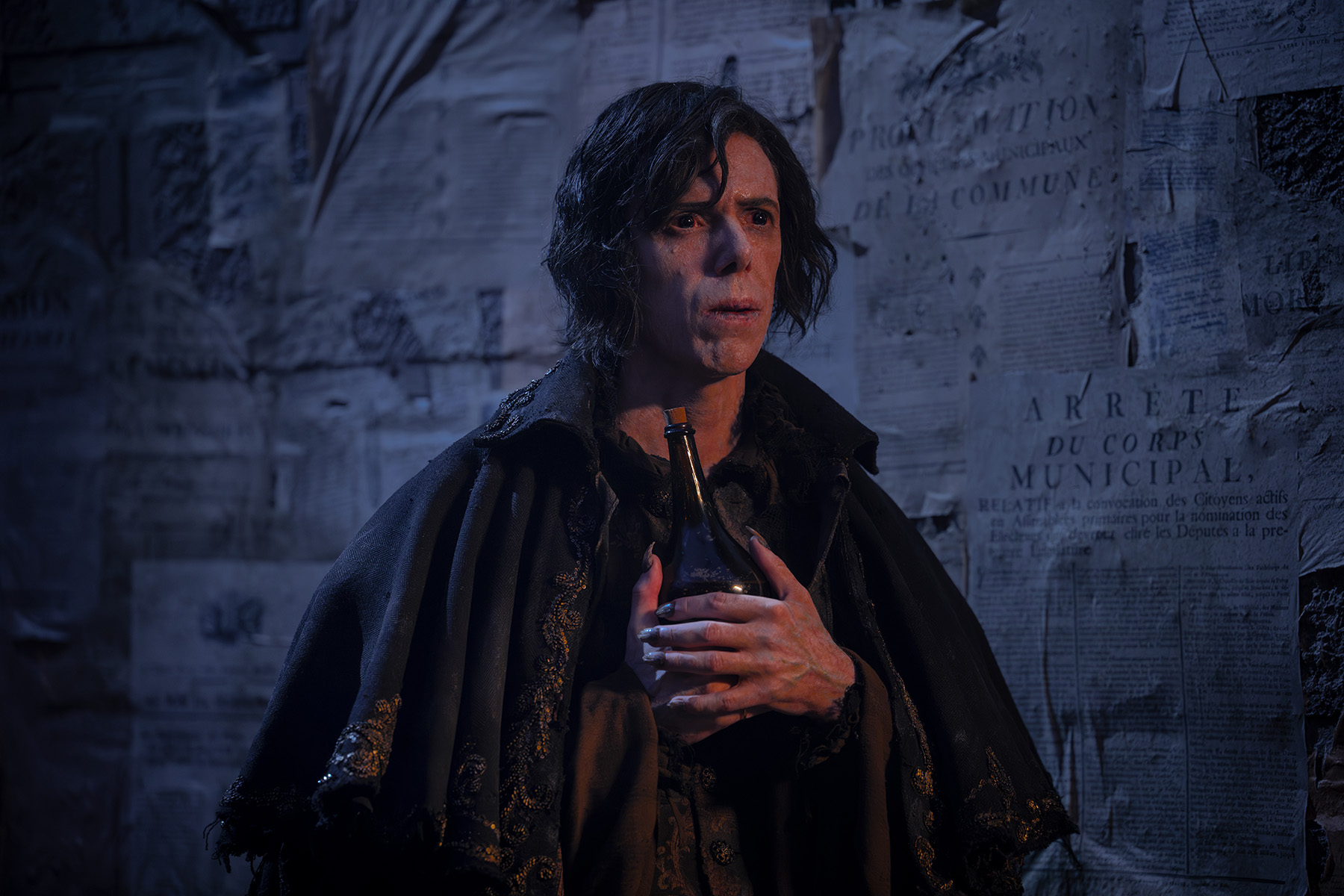
But mostly he is not okay discussing Magnus and his turning. Rather than get into the brutal details on camera, he paints a picture for Daniel, in the form of a committed 1980s music video for “Your Biggest Fan,” reframing his sadistic Maker as an obsessed groupie stalking Lestat across a stylized dreamscape.
Magnus, the man who locked a kidnapped Lestat in a tower and turned him against his will, is now superimposed, mouthing the chorus to Lestat’s own song.
This is how Lestat metabolizes the worst things that ever happened to him: he turns them into a song. He turns his kidnapper into a fan and his violation into a joke, reshaping the story into something palatable for both himself and his audience.
But glossing over the pain doesn’t actually make it smaller. And that pain festers, because by the end of the episode the “real” Magnus is back (or at least a vision of him that is likely much closer to the true, darker Magnus), ominous and looming in the backseat of Lestat’s car, causing him to crash (which we’ll get into in a bit, and you can also read more about that particular scene here).
This is “Toronto” in microcosm. What is performance? What is truth? Trick question: it’s both. The performance is just how Lestat survives the truth.
The Paris theatre, take two
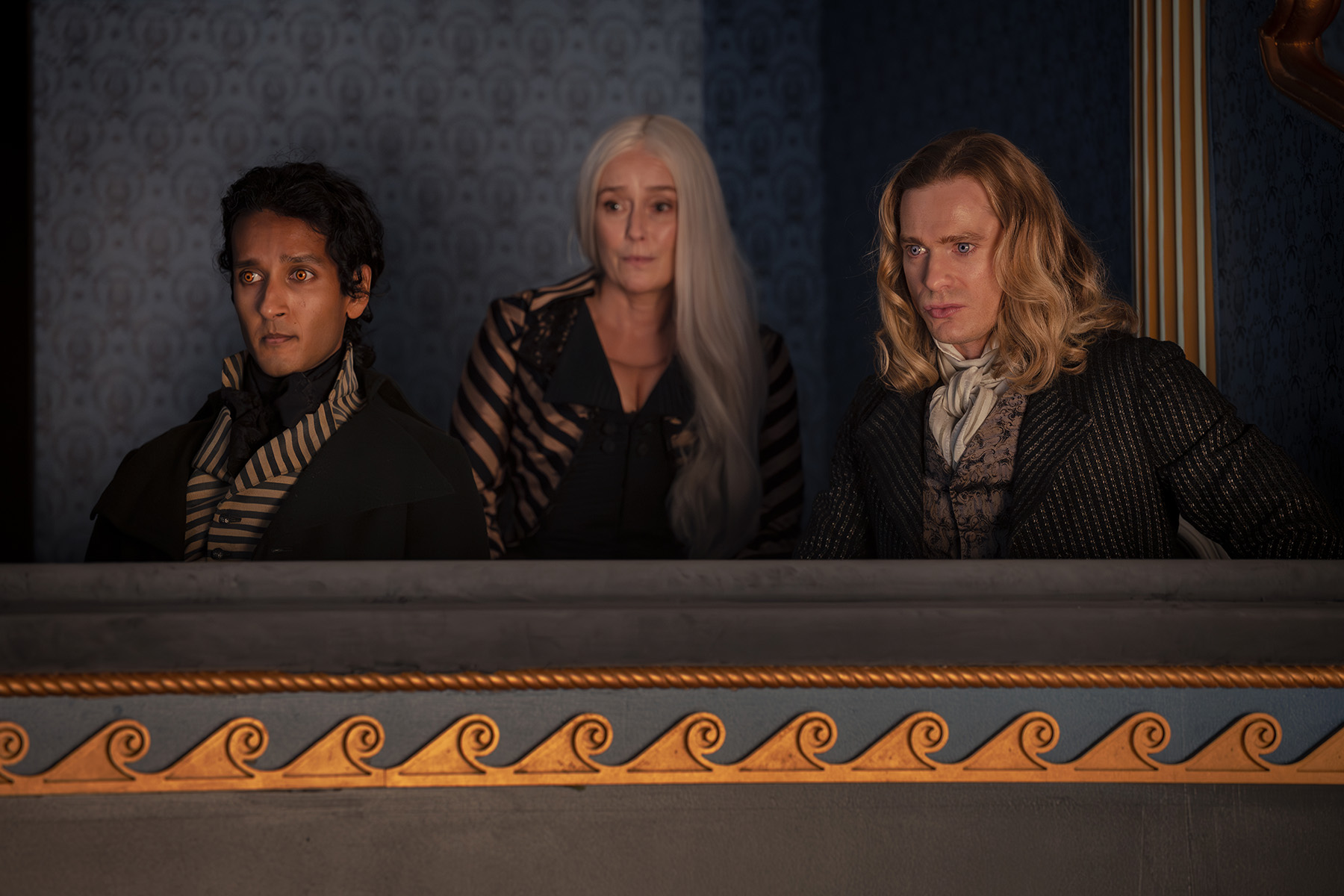
We aren’t getting many flashbacks to scenes we’ve already gone over in Louis’ and Armand’s version of events from the first two seasons, but we do get one repeat here from Lestat’s POV: a flashback to the Paris theatre with Armand, and Nicki playing down below in the box.
Armand is less delicate in this version, but more desperate. Gabriella, who Armand left out of his version entirely, is also present. And when Armand declares “I love you, Lestat” — the moment that, in Armand’s telling, led to Lestat repeating the words back and then sex on the floor of the balcony box — Lestat’s response is, “Christ.”
Amazing.
There is a long-running argument among fans of this series about whose memory we should trust at any given moment, with many fans arguing that there was no way it went down the way Armand described last season. But the real truth is, that’s the most boring way to frame the two versions, and indeed the entire show. On this series, there is no “correct” version. Nobody is reliable. Everybody is editing. There is no objective truth here, only your version, my version, and whatever exists in between.
But regardless, I think that this version isn’t actually that far off from Armand’s telling. It’s clear in both that he loved and wanted Lestat, and that Lestat wanted him enough to drink from him and meet up with him at hotels… and theatres…
The Paris flashbacks also deliver another big change. In the book, Armand cuts off Nicki’s hands; here, Nicki (by now fully gone, mind shattered by vampirism) chops off his own hand.
I personally like this change. Armand cannot always be the big bad without becoming a mustache-twirling villain, and by having Nicki do it himself, it further removes any ambiguity around Nicki’s insanity, and that he was too far gone to be saved. Armand does ultimately push him into the fire to end his suffering, which Lestat is too upset about to even picture (and perhaps also because it wasn’t in the VFX budget), and I love the framing that Lestat here is willing to admit he was grateful to Armand for doing so.
Even without witnessing the death, Sam Reid really sells the pain behind this memory beautifully. The camera holds in extreme close-ups, like we don’t get to look away from his pain the same way Lestat didn’t as he watched Nicki burn. It’s obvious that Nicki was a great love, even now, even centuries later, though Lestat still cannot say it out loud.
Lestat breaks (off camera)
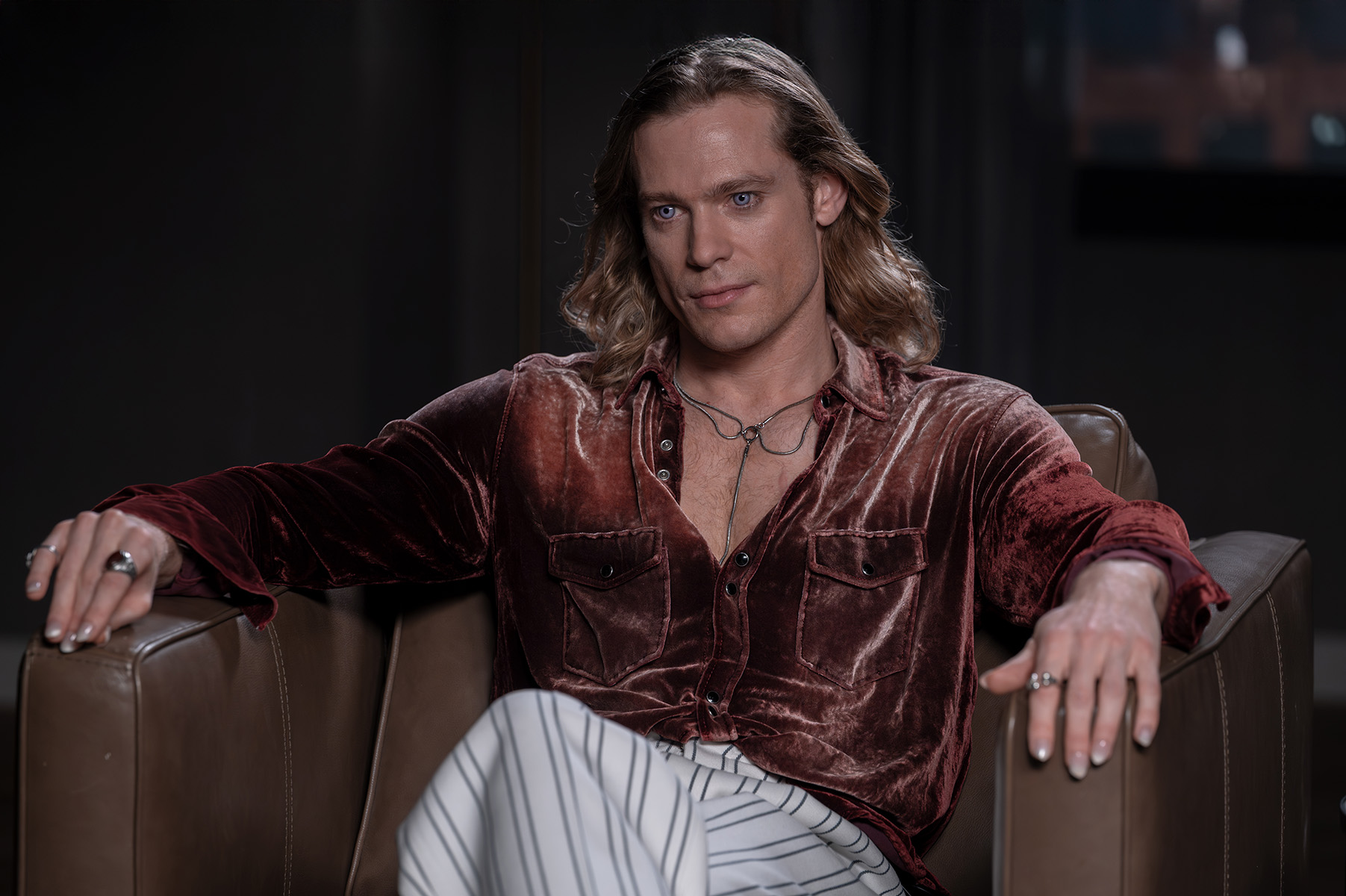
The Nicki memory is what finally cracks Lestat for real. He tears off his microphone, hyperventilates, and cries tears of blood.
This entire episode is a masterful showcase for what Reid can do with this character. He moves effortlessly between wildly different emotional registers, everything from the tenderness and awkward hopefulness of his early romance with Nicki, to the harrowing real scenes with Magnus we see later (where Reid allows the audience to see the terror, confusion, and helplessness underneath), to the actual breakdowns, which never feel repetitive or melodramatic despite how often this character teeters on the edge. If this man doesn’t get an Emmy nomination, it is a crime.
Lestat tells Daniel, with clear exhaustion, that there are no delusions here. Whatever performance he’s been keeping up, it is currently down.
And then, because even when he is being real, Lestat still has one last trick up his sleeve, we learn that none of it made the documentary. Vampire powers Daniel does not currently possess have ensured that the breakdown was not captured on camera.
And Daniel is pissed. He’s too oblivious to realize that yes, he did get what he’s been asking for, Lestat’s story, his history, the truth of the pain underneath. It was just for Lestat and Daniel, not for the world.
And as Lestat implies in his voiceover, that’s surely going to sow even more frustration between the two.
Meanwhile in Detroit…
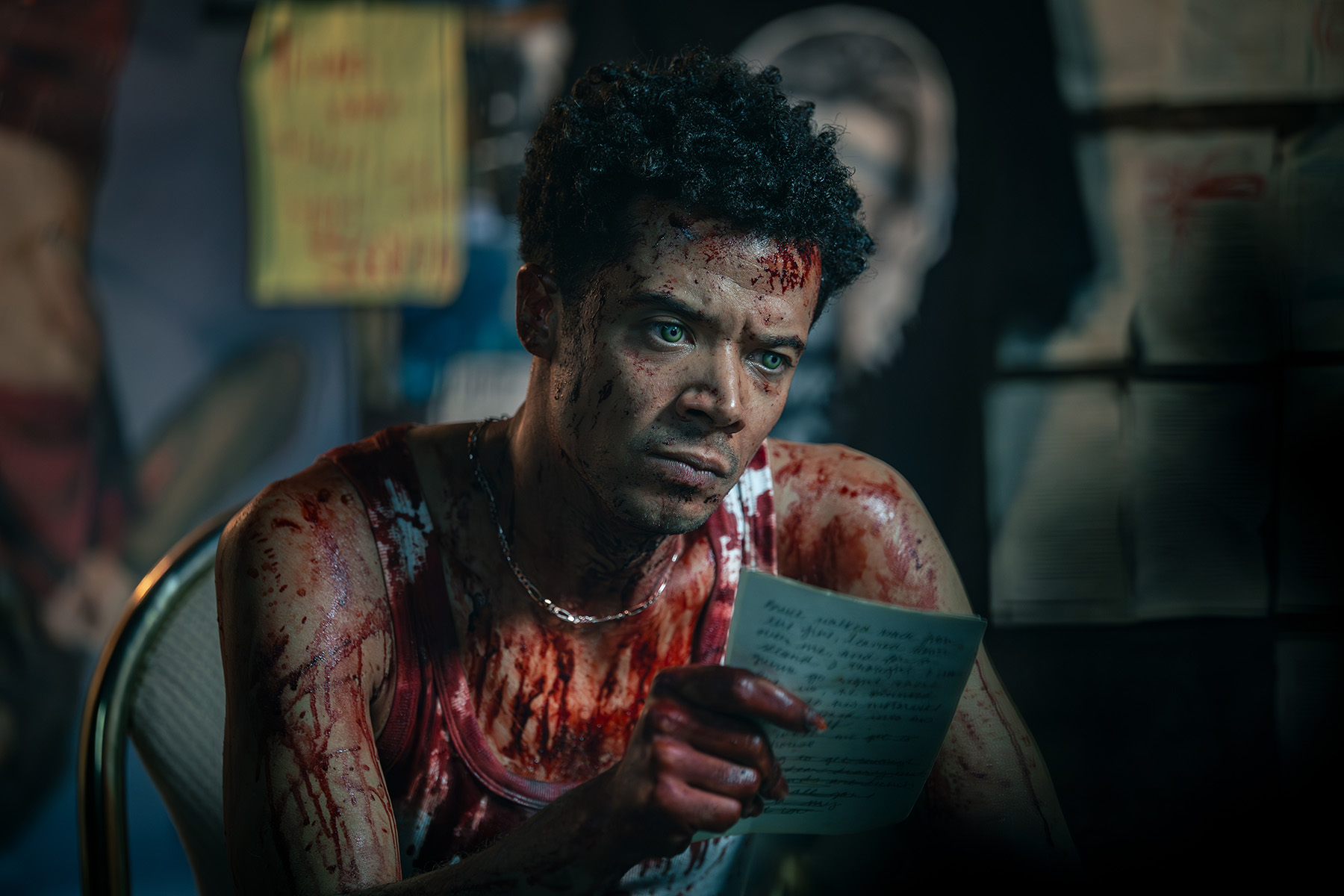
Elsewhere, in Detroit… Louis is off in his own story. He has come for the rest of the Fang Gang and for “Killer”, better known to us as Bruce, the vampire who kidnapped and raped Claudia back in season one.
The set piece that follows is fun and camp, and again makes good use of the budget this season, with most of the action (give or take a beheading) and blood-splatter taking place through shadows on the window of the houset. Jacob Anderson doesn’t often get to break out his comedy chops on this series, but he’s in full force here as he politely asks about Killer before dispatching each vampire.
(Also, Louis has been busy between seasons, as he’s taught himself to fly!).
Bruce is the last to the party, arriving later with his new bride Baby Jenks. Louis quickly overpowers him, and forces Bruce to listen as Louis reads aloud from Claudia’s diary pages describing her rape. Then he burns the page and drops the ashes on Bruce’s head.
The show juxtaposes this with Lestat’s actual memory of being turned by Magnus. Not the campy music video, but the real version. Violent, non-consensual, and making the clear comparison that this was assault and violation, plain and simple. That what happened to Claudia and what happened to Lestat are two sides of the same coin.
Lestat paints over his pain with camp music videos and “blah blah blah.” Louis tries to bury his with revenge.
Neither version heals anything. The actual killing of Bruce happens mostly off-screen, and briskly. He’s burned with a page from Claudia’s diary, and that’s the end of him. It is deliberately unsatisfying, as we see none of the action on screen, and there is no moment of catharsis here for Louis once it’s done. After all, what is killing this vampire really going to do to heal Louis? His daughter Claudia is still gone, and he is still here, alone.
The show is whispering something to him here, and I think he hears that maybe the way forward isn’t adding more to the body count. Maybe it’s the girl on the subway, the one who looked like Claudia. The one he followed to the diner, and does again…
Meet Regina (the great Delainey Hayles, back again).
Hello, my name is…
Meanwhile, Lestat — still wrecked, still recovering, still vibrating from his real breakdown that no one caught on tape — comes out to the world as a vampire onstage.
Cross-cut to a quiet school gymnasium, and Alex’s addiction-recovery meeting, where a soft-voiced gentleman introduces himself.
“Hello, my name is Arun.”
This is Armand, back in the present timeline, entering the season’s machinery from the side door. And I for one can’t wait.
Other thoughts
- We didn’t get into “The Loneliness” at all here, but it’s arguably the best song the show has released to date. The song, and the speech just before about how music can help Lestat find his way to a better version of himself, is such a powerful treatise on how music and art really can help you heal.
- We also didn’t touch on The Great Conversion earlier, but definitely feels like it’s going to play a huge part this season, and Gabriella is very obviously team pro-Great Conversion.
- The CN Tower also went down in the background in a blink-and-you’ll-miss-it moment. Not hinting at anything bad happening in the background of this show, nope.
- Daniel Death Watch: Lestat saying that Daniel lived a “brief, incidental life as a vampire” in his flash-forward monologue…. um. I have a lot of thoughts on this, coming your way next week.
- Damian Atkins as Magnus was everything. Give me a kooky comedy spinoff with him getting up to misadventures every week. I don’t care if it doesn’t make a single ounce of sense.
- They definitely didn’t go back to the Prague to film the “Paris” theatre sequence again, so this scene is a mix of VFX, re-using shots from the original scene in season two (you can especially tell with the establishing shots), and presumably filming locally in Toronto. All of this is mostly an excuse to tell you that last spring I visited the actual theatre they filmed in and sat in that box. Which was amazing, except the play I saw had someone in a gimp suit and a man eating a dog, and was the weirdest thing I’ve ever seen (and I’ve seen a lot of theatre). I mostly just want you to know the lengths I go to for this show.
- I was not at all prepared to have Lestat’s turning appear on screen as a music video, acting as a campy stand-in for how Lestat is processing his trauma around Magnus. Seriously, god bless this team’s minds.