Lestat would never dare utter the words “fake it until you make it” without a healthy dose of sarcasm, but he’s been performing some version of himself, for both his own sanity and for his own survival, for as long as he has been alive (and dead).
As a human boy in France, Lestat had a stutter so severe he struggled through most sentences. In a cold, miserable home, with a father who mocked him and brothers who openly beat him, he could barely communicate. Then a theatre troupe came through the village, and around the actors, around the make-believe, around the place where being someone else was allowed, Gabriella herself described the difference: “Lestat speaks! A verse with players in a wagon!”
For Lestat, performance and acting have always been a safe space. It’s why he became both a stage actor and a rock star. By processing his pain and trauma through a version of himself that isn’t quite the “real” Lestat (a version I’m not even sure he himself really knows anymore), he can find some space from those emotions. He can feel they just happened to the character he was playing, can gloss over the details and re-paint them as candy-coated 1980s music videos or pretend the death of his first love wasn’t a great love.
Performance lets Lestat use his own voice by handing him someone else’s first.
That’s never been clearer than in tonight’s episode. So let’s go over just some of the ways Lestat has been using performance this season to deal (often unsuccessfully) with his own trauma.
The Magnus music video
You can see Lestat’s whole survival mechanism in one song.
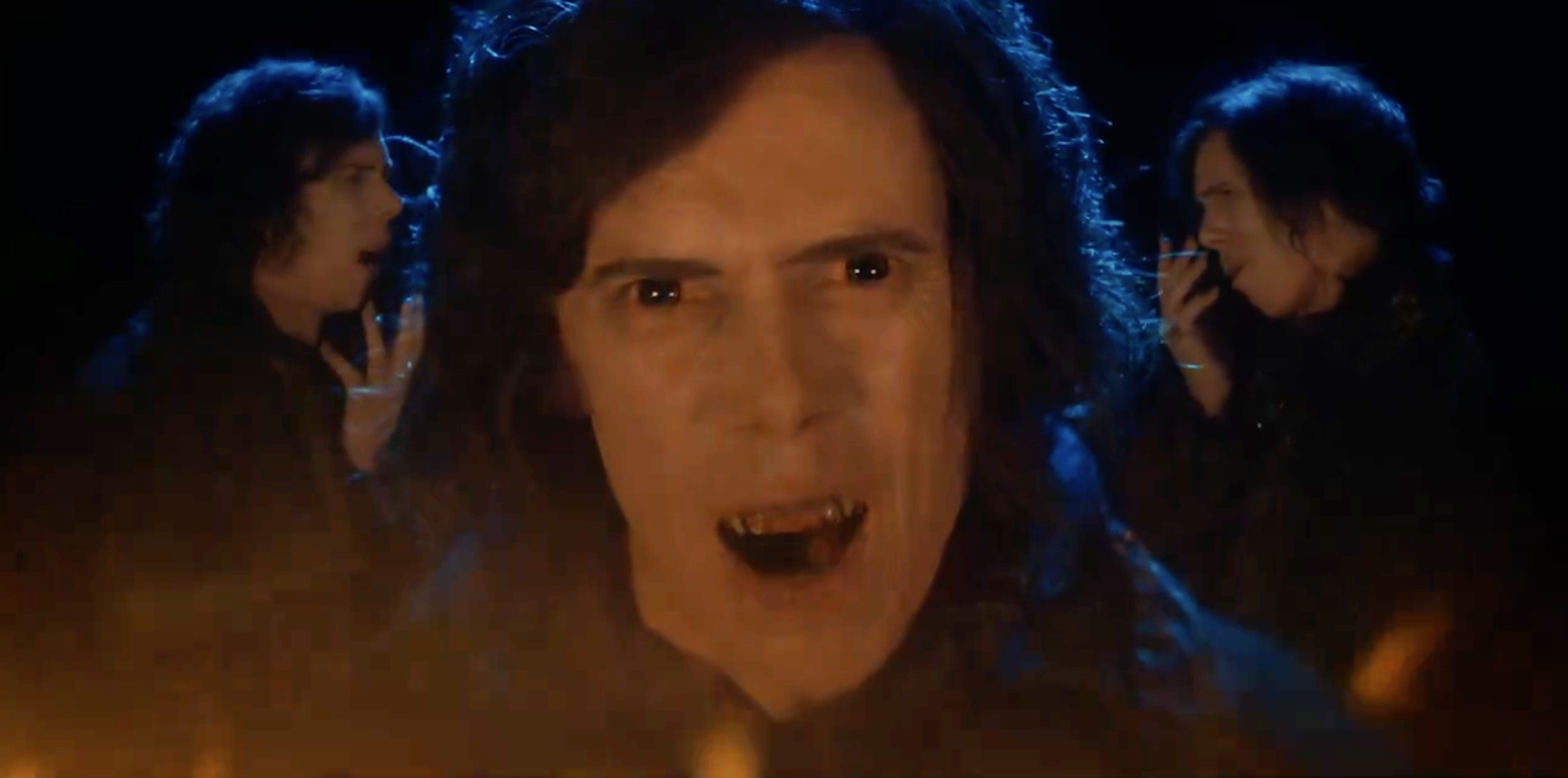
When Daniel Molloy sits down to interview Lestat about his maker, Lestat does not describe his turning the way another person might describe a kidnapping and assault. Lestat hands Daniel a music video instead.
He presents “Your Biggest Fan“ as a glossy 1980s pop confection in which Magnus (the vampire who ripped Lestat from his bed, locked him in a stone tower and turned him against his will) is shown instead as an obsessed groupie, stalking Lestat across a stylized dreamscape and mouthing the chorus to Lestat’s own song. He might as well have a hairbrush in his hand.
But it’s Lestat trying to reclaim the narrative of his turning.
Later in the episode, we’re shown the real way this scene went down, with all of the violence and terror surrounding it. It’s a moment so traumatic that the only way it comes flooding back to him is by force, with a vision of Magnus appearing in the car with him, grabbing him by the head and smashing it forward to literally force him to look at it head-on.
The scene is juxtaposed with Claudia’s rape, further illustrating the brutal sort of violation of Lestat’s body.
Let’s actually look at just a few of the lyrics in the song itself:
Don’t let me catch you cryin’
Don’t tell me the spell is breakin’
You’re so perfect in the ragin’ light
I know I’m hard to look at sometimes
But I’m here for the takin’
That isn’t just Magnus talking to Lestat. That is Lestat talking to himself. Don’t let me catch you crying. Don’t tell me the spell is breaking. The allegories to sexual abuse are right there — the spell breaking is the wine Magnus forced down his throat, the warning not to cry is something predators say to their victims.
Don’t sit there and cry about your pain, pretty boy, Lestat is basically telling himself. Don’t make yourself the victim. So he’s not. He is also literally performing and singing from Magnus’ perspective, because to write this from his own would be too horrifying.
The music video version that Lestat presented to Daniel, for at least a little while, allowed Lestat to leave “out a few of the prickly details,” to paint over that trauma in a way that turned it into cinema and like someone else’s story.
The aftermath of having to look at that pain too closely is a car crash, both literally and figuratively, for Lestat. The glossy music video version? That’s much easier to swallow.
A childhood staged like a play
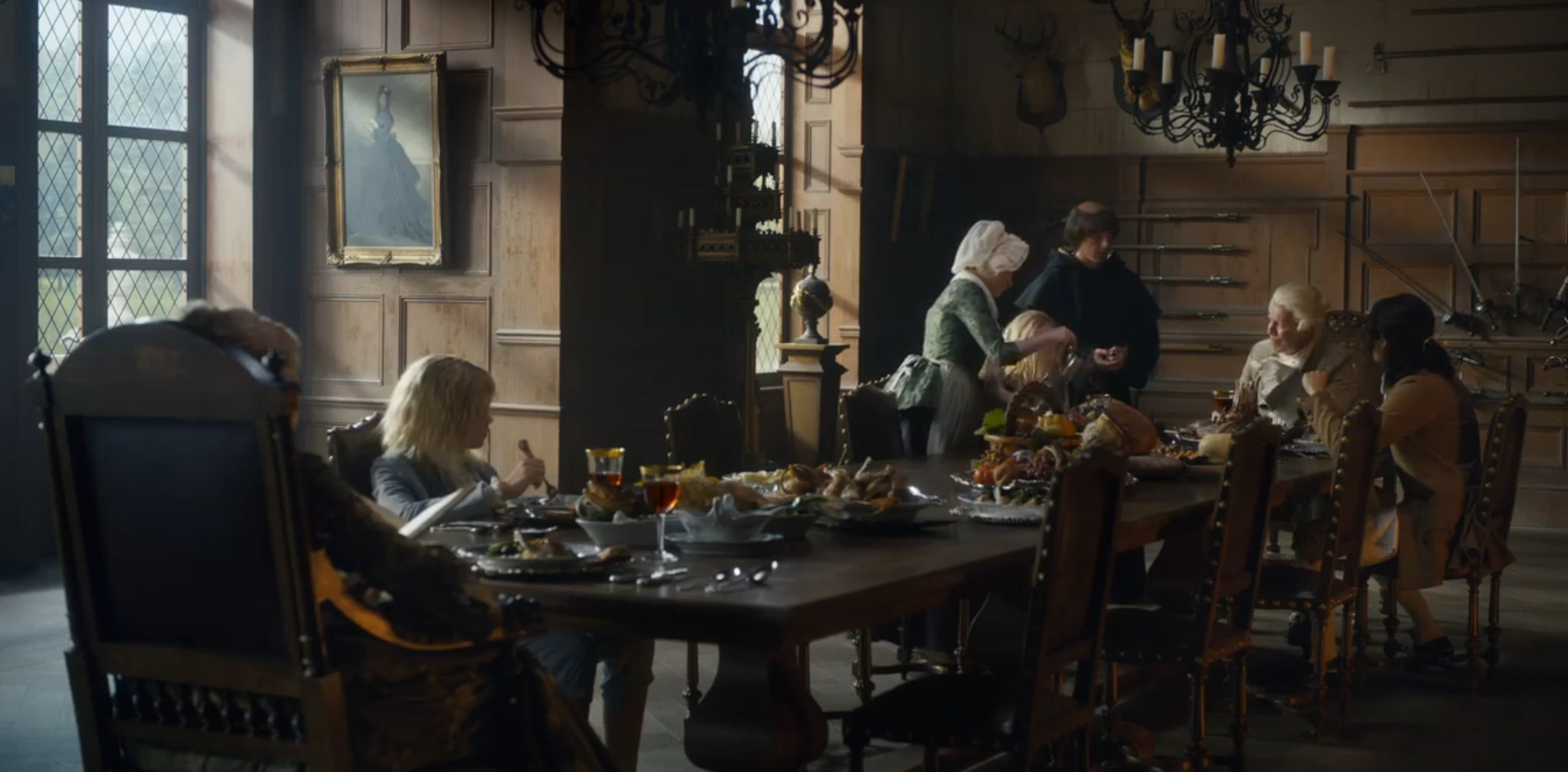
Let’s jump back to last week, and how the flashbacks to Lestat’s childhood in “Toledo” aren’t framed like memories… They’re framed like a play.
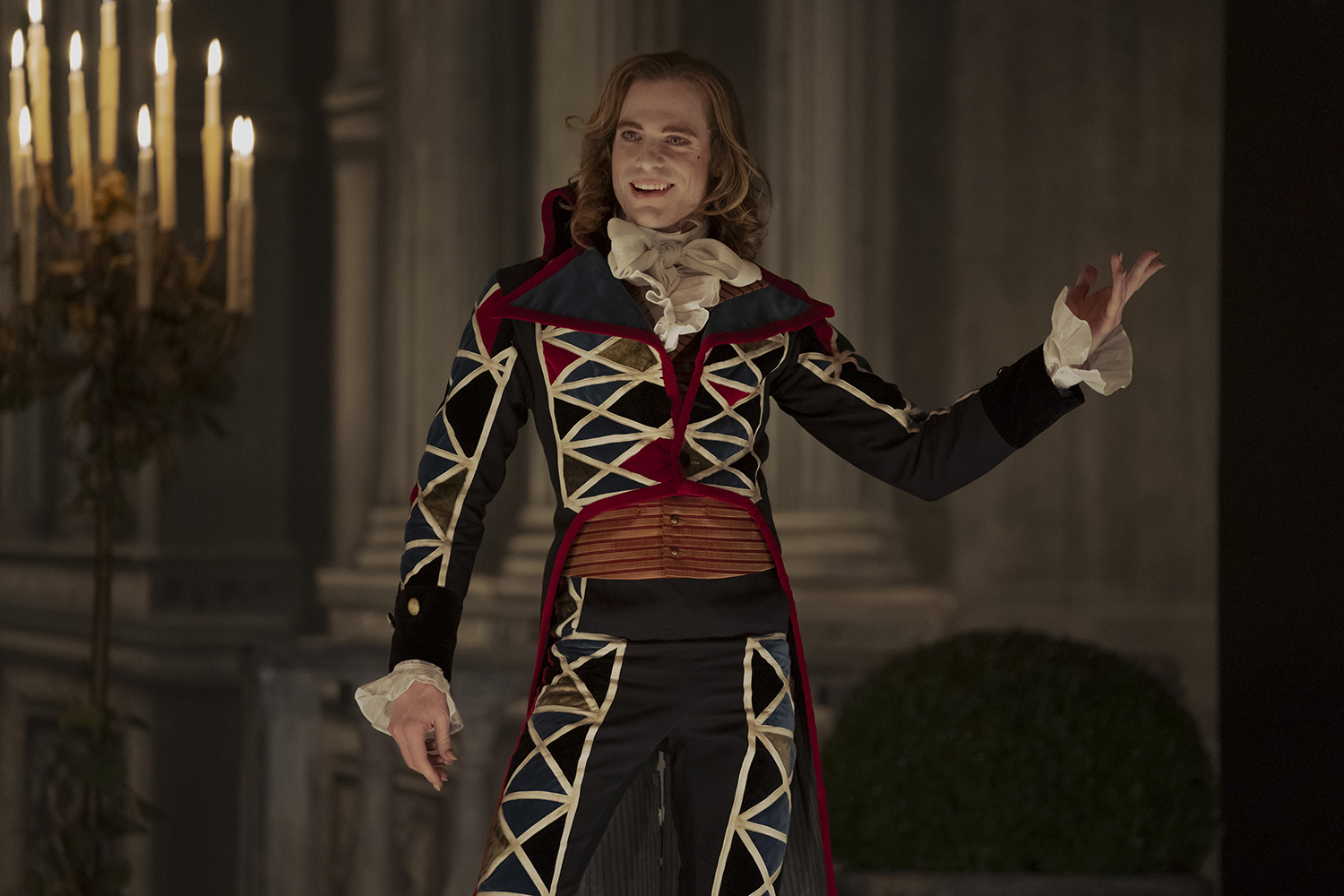
The majority of the Auvergne scenes take place around the family dining table, staged like the central set of a stage production. The same room, the same chairs. Lestat exits, but no one else does. The dialogue is delivered in heightened, theatrical registers, with everyone shouting over each other, as if they want to ensure they reach the very last row in the theatre.
This is, more or less, how theatre in the 1700’s actually worked. Especially the populist commedia dell’arte-influenced theatre Lestat would later come to know and perform on the Paris boulevards. The audience was loud, drunk, and rude. They ate during the show, they talked, they sometimes threw rotten fruit at the actors. The performers, in turn, played big enough to keep their attention.
Commedia dell’arte was built entirely around stock characters — the boastful old fool, the scheming servant, the dim-witted brute. The happy lover, the Lélio, that Lestat would later come to play. Everyone at this table, except for Lestat and arguably Gabriella, aren’t playing people so much as archetypes. His father is the blustering old patriarch in his chair. His brothers are the cruel buffoons. There’s no character growth (or even real people at all), just men playing the same role in each scene they’re in, like a recurring bit.
In one scene, the local villagers gather around that same family table, something that, in actual 18th century rural France, would never have happened. The de Lioncourts may have been broke and rotting in a freezing chateau, but they were still aristocracy. Local peasants wouldn’t have been allowed into that room, but in a play, you can extend your sense of disbelief, understanding that location has a broader sense of purpose here than specificity.
This is Lestat spinning a story, told on recording to the listener from some distant future, and he’s essentially putting on a play for you. As an actor, that’s his frame of reference for storytelling mode anyway.
And if the whole misery of that house is a production, then Lestat doesn’t have to remember it so much as perform it. The frightened child becomes another role to step into and out of, rather than someone he has to remain.

Faking vulnerability
The documentary interview itself might actually be the clearest example of how Lestat uses performance, as we’re shown both the version of vulnerability that Lestat can perform on command and the version that clearly catches him completely off guard. Let’s start with the first.
When Daniel asks about Lestat’s stutter, for the millionth time, Lestat immediately recognizes the shape of the story Daniel wants to tell. Daniel wants the breakthrough moment, the vulnerable confession about childhood trauma, the glimpse of the wounded little boy underneath the larger-than-life rockstar persona. He keeps needling, and it’s clear that he is at least starting to get under Lestat’s skin (and the fact that his mother is also provoking him during the interview in very different ways also doesn’t help).
So Lestat gives it to him so perfectly that for a moment it almost works. His voice wavers, his eyes begin to glisten, and he starts recounting the humiliation of struggling to speak. “Let them see,” he says, leaning in to the camera, only to start sobbing into his hands.
Only to immediately reveal that the entire thing was an act and laugh in Daniel’s face.
It’s a perfect little demonstration of how comfortable Lestat is with performance as a defence mechanism.
First love, not a great love
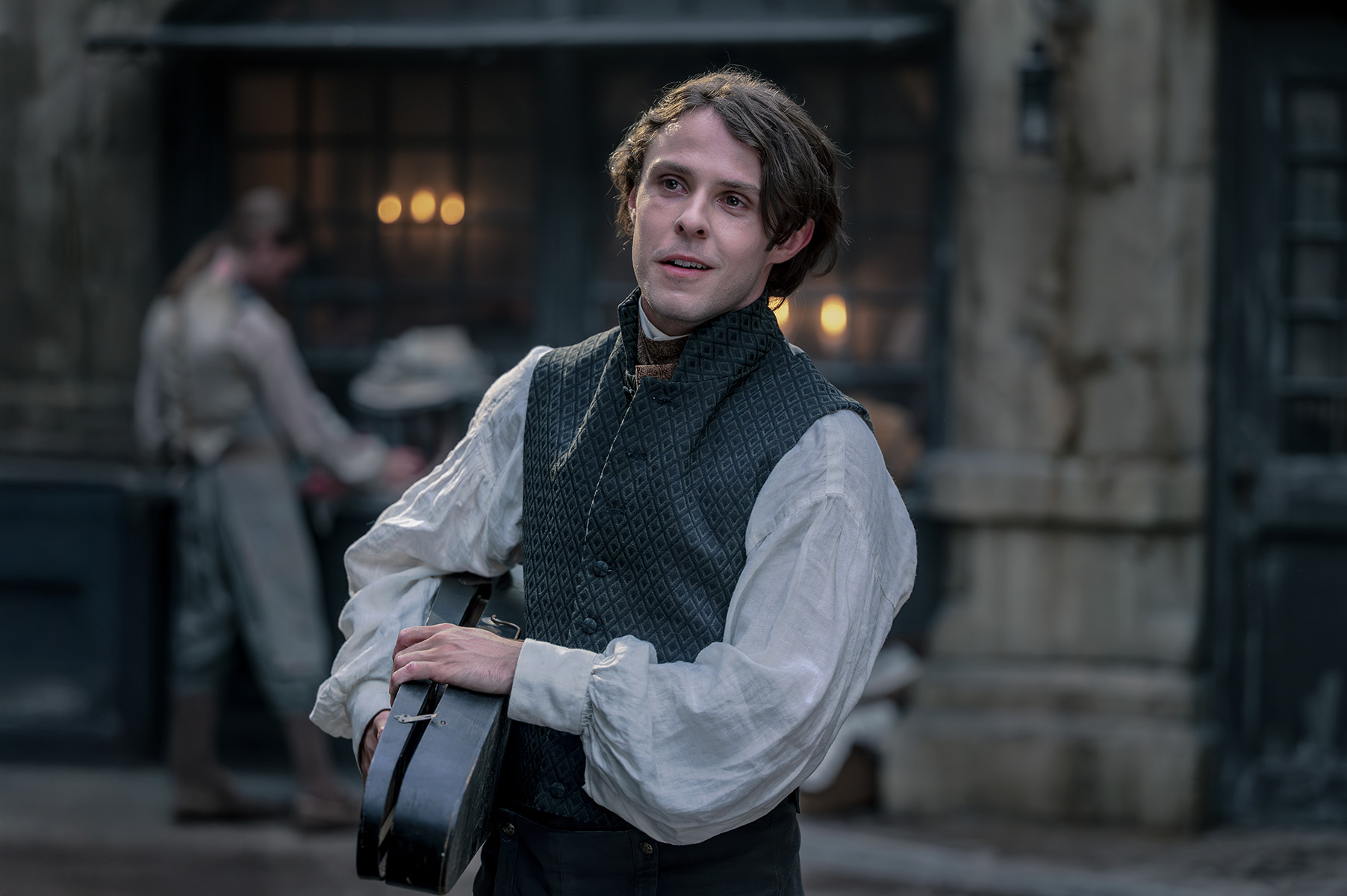
Later, when Daniel pushes Lestat to speak on Nicolas de Lenfent, Lestat performs in a different way, this time playing the role of someone who has moved on from the loss of his first boyfriend. “It was a first love, not a great love,” Lestat tells Daniel breezily.
The entire relationship gets waved away with almost comical impatience. Boy meets boy, they bond, they fall in love, it starts to fall apart… “That goes where you think it goes,” Lestat says. “All the old tropes and traps of tortured and forbidden love, blah blah blah, bipolar boyfriend, blah blah blah. Fast forward, stop, vape, check your phone, press play. Now he’s a vampire.”
Lestat narrates the whole thing like someone trying to speedrun his own heartbreak, dismissing it as a collection of familiar romantic clichés that aren’t worth dwelling on. Which is particularly funny because the harder he works to convince us Nicki wasn’t that important, the more obvious it becomes that Nicki was enormously important to Lestat.
What makes the sequence work so well is that the episode never really cooperates with Lestat’s version of events. He may be trying to rush through the story, but the camera keeps lingering on his face, moving in closer as we get to the real truth of Lestat’s emotions. He may insist Nicki wasn’t a great love, but Sam Reid plays the memories with a grief that keeps bleeding through the performance.
The entire hour is essentially built around Lestat trying to keep the audience moving past something painful while every filmmaking choice refuses to let him.
By the time the interview reaches the end of that story, the carefully maintained distance is gone, replaced by Lestat having the actual breakdown he faked earlier. He’s ripping off microphones, crying tears of blood, and admitting far more than he ever intended to.
For all of Lestat’s insistence that Nicki was his first love but not his great love, the episode paints a very different conclusion.
Lestat has always been a performer
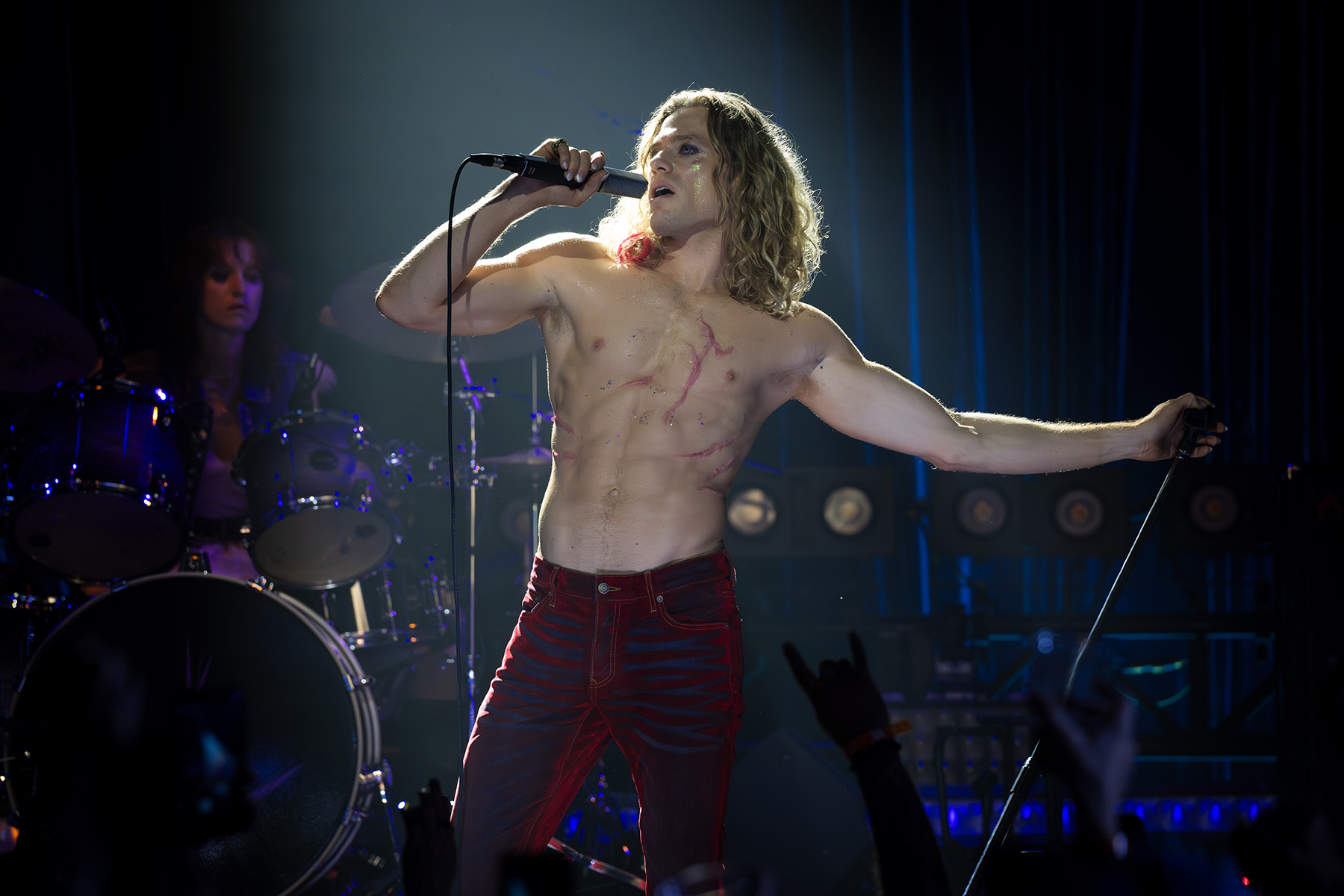
That’s why being a rock star fits Lestat so perfectly in the first place.
Long before he was a vampire, before he was a maker or a villain in someone else’s story, Lestat was a frightened boy who discovered that he could speak and find escape when he was pretending to be someone else. Performance didn’t just give him a career. It gave him a voice.
Centuries later, he’s still doing the same thing, just on a different stage. The costumes are more revealing, the spotlight is brighter, but the instinct remains exactly the same. Whenever something becomes too painful, too complicated, or too frightening to confront directly, Lestat turns it into a story. A play. A song. A music video. A version of himself that can survive it.
The irony, of course, is that the more Lestat performs, the more we understand who he really is.