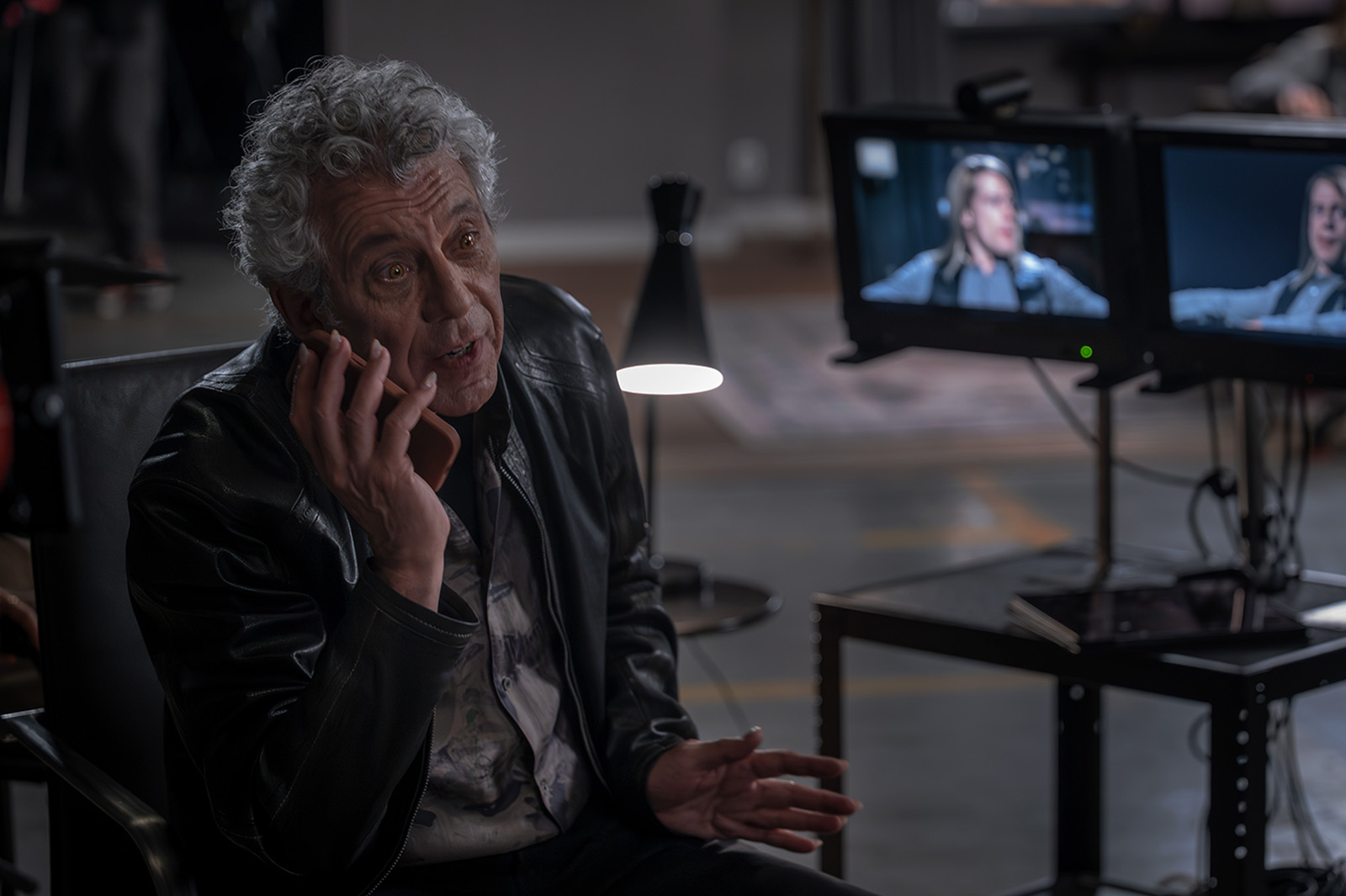
Daniel Molloy has always been a junkie, but his real drug of choice is the pursuit of the story. This week’s episode makes that clearer than ever.
He finally gets Lestat to sit down for a proper on-camera interview, and he approaches it the same way he approaches every story: by pushing until something breaks.
He needles Lestat about his lyrics. He calls him “the stuttering ape of Auvergne” (“Were you a stutterer as a child?” is this season’s “Did you eat the baby, Louis?”). He keeps circling back to Nicki, to Magnus, to every subject he knows will hurt.
Louis identified Daniel’s primary interview technique all the way back in season one: “Provocation,” Louis asked back then. “Is that the primary tool one walks away with after downloading your internet class?”
And in this episode, Daniel is in peak form. More importantly, he’s enjoying himself.
Eric Bogosian plays much of the episode with the barely-contained excitement of a man who knows he’s getting close to a good high. Every crack in Lestat’s armor, every uncomfortable question, every glimpse beneath the performance gives Daniel another hit. By the time Lestat is unraveling, Daniel is practically vibrating with anticipation.
Because Daniel is still an addict.
Not in the simplistic sense that he’s now drinking cocaine-laced blood instead of shooting heroin. Daniel’s addiction has always been tied up in the hunt for the truth itself. The pursuit. The chase. The moment when someone finally gives him the thing they’ve been trying not to say.
That’s who he was long before he ever met Lestat or Louis.
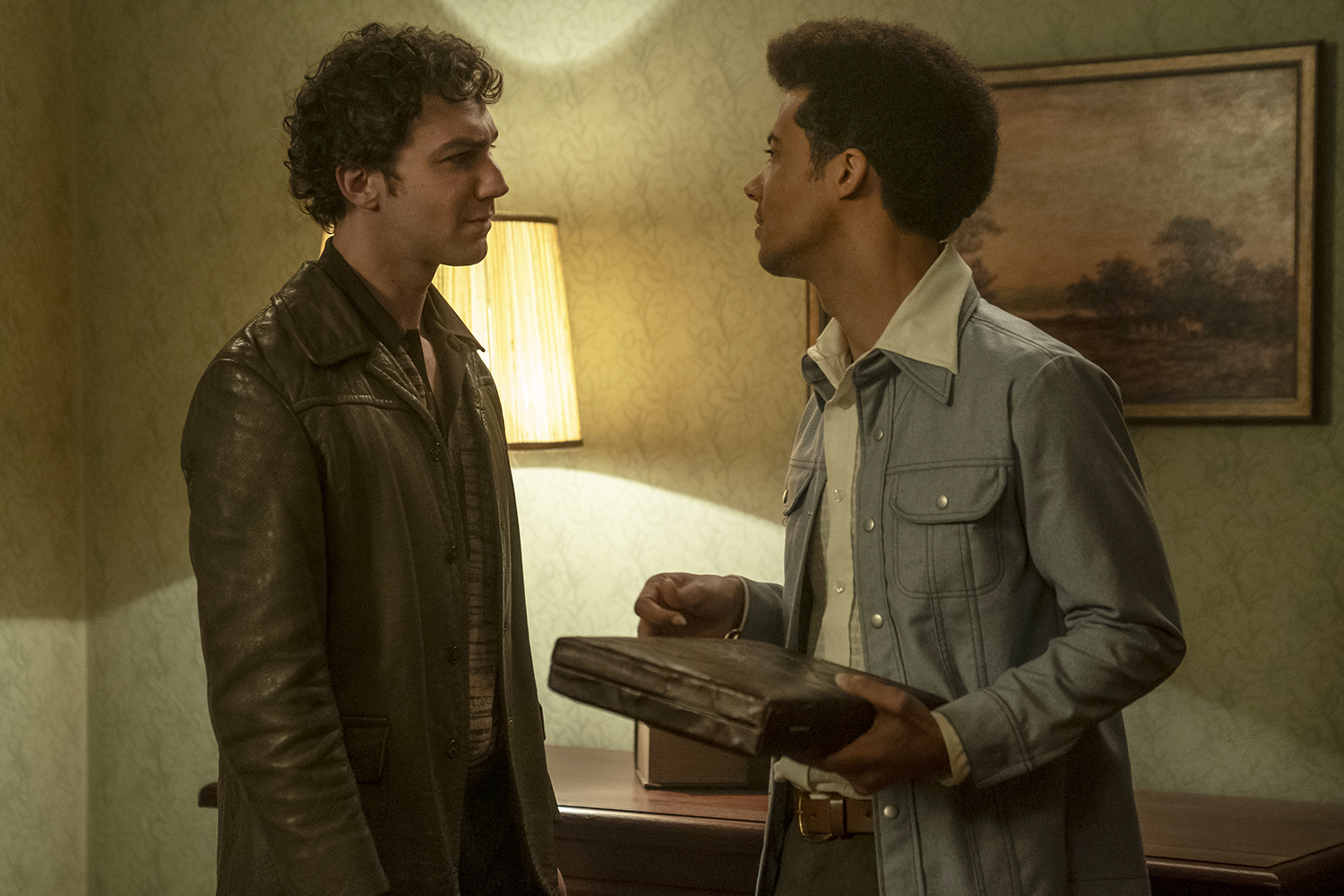
In Hate & Ashbury, Daniel’s memoir (which a fan got in the auction and shared, you can read it over here, and was written by the writing team, so I think we can assume if it’s not canon, it’s at least as close as we’ll get to supplemental material), he describes himself as “always watching. Always looking. On the hunt for a story. On the hunt for a new person to interview.”
Even at the height of his drug use, the story remained the thing he was truly chasing. The words that Armand and Louis implanted inside him and ultimately pulled him back from the edge aren’t about getting clean. They’re about journalism: “You’re not inconsequential. Or a junkie. You’re a bright young reporter with a point of view. There are stories that need to be told.”
Now, perhaps more than ever, that’s all he has left. His daughters aren’t speaking to him. His marriages are over. Louis is barely speaking to him, and Armand his maker is nowhere to be found. But eternity is stretched out in front of Daniel, so what is there left? The work. Vampirism, as we’ve been shown over and over, doesn’t fundamentally change who you are. It makes you more you.
Daniel was always a junkie and a reporter (with a “splinter of coldness”, as Armand noted). Now those identities have swallowed almost everything else.
There’s a personal element to that lifelong relentless search, as well. Daniel has spent his entire life searching for hidden truths, and perhaps nowhere more than in his own story. After all, Daniel spent most of his adult life with his memories of Louis and Armand in San Francisco edited out, leaving him with gaps he didn’t even know existed until very recently (and that’s to say nothing of the “recollection of odyssey” moments we still don’t have answers for, like that he “never owned a Buick”).
When Lestat begins talking about Magnus and his turning, Daniel immediately zeroes in on a very specific question: “Did Magnus ask your permission before transforming you into a vampire?”
It’s a striking question because we still know remarkably little about Daniel’s own turning by Armand beyond the fact that it happened on July 18, 2022, about a month after the Dubai interview ended. The last time we saw Daniel confronted with the possibility of immortality, he rejected it outright (“save it for the rent boy,” he said about who he believed was a young human Rashid, as he thought himself too old and jaded at this point to appreciate it). Yet here he is, a vampire anyway.
Maybe Daniel is asking about Lestat. Or maybe, he’s chasing another story and doesn’t even realize it: His own, and that transformational trauma he keeps insisting he doesn’t have around his own turning.
There’s a lot that Daniel doesn’t seem to realize about the actual interview he’s conducting, even beyond that. Because the real tragedy of this interview is that Daniel eventually gets what he thinks he’s been chasing, and doesn’t recognize it.
After the performances, after the fake tears and the bravado, Lestat finally gives him the truth. He talks honestly about Nicki. He tears off the microphone and has a genuine emotional collapse. For perhaps the first time in the entire episode, there is no act.
And Daniel’s response in the end isn’t empathy or relief that he got to that “truth” he thinks he’s after. It’s frustration. The cameras didn’t catch it. The footage won’t make the documentary. It’s not going to be another story he can tell. The truth of it matters less, in the end.
Like any addict, the thing he’s been chasing all night isn’t enough once he finally has it. The high is already fading.